
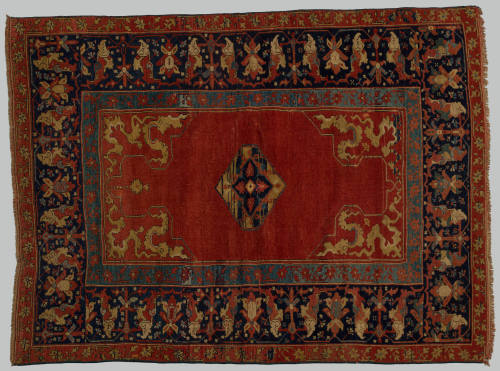
Carpet, Turkish, Ushak Prayer
OriginAsia, Turkey, Ushak
Dimensions4' X 3'9"
Credit LineMuseum Purchase
Object number1959-157
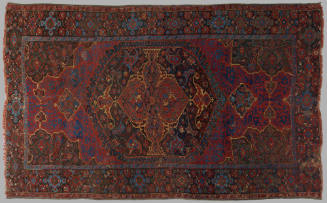
DescriptionCarpet: ghiordes knot; about 108 knots per square inch; 2 shoots of red wool wefts after each row knots. Colors: Ground; field-red, central medallion-yellow and blue, border-dark blue, inner guard band- light blue, outer guard band- red. Pattern: creamy-white, yellow, orange, red , light blue, dark blue, green, brown. The field of the rug has 2 niches, on at each end. The top one has a conventionalized mosque lamp hanging on a chain. The 4 spandrels have a pair of stylized cloud bands. In the center of the field is a double lozenge medallion with four palmettes. The border has a floral scroll with lotus palmettes interlaced with an arabesque bearing composite half palmettes. The inner and outer guard bands have a wavy scroll with palmettes and leaves.Construction History
Date unknown: Initial constructionLabel TextWith its detailed double-lozenge medallion, its opposing niches,and its hanging lamp motif inside the top niche, this carpet belongs to the Ushak prayer rug classification. The design draws on elements of Islamic symbolism, such as the niches that evoke the Mihrab (a recess found in the walls of mosques that point towards Mecca and indicate the direction of prayer), as well as the mosque lamp. Futher note this carpet's dragon-like decoration surrounding each niche.
It is ultimately unclear whether this rug would have been used for prayer, as decoration, or was produced specifically for a European audience in the 19th or 20th century.ProvenancePrior to 1959, Beshir Galleries (New York, NY); 1959-present, purchased by The Colonial Williamsburg Foundation (Williamsburg, VA)
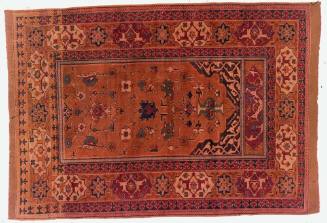
20th century (probably)
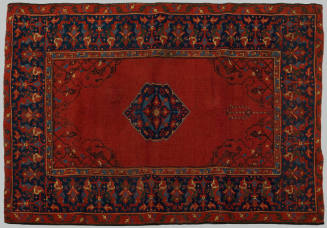
18th century, possibly
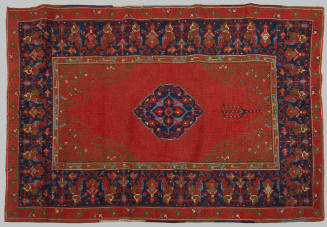
20th century
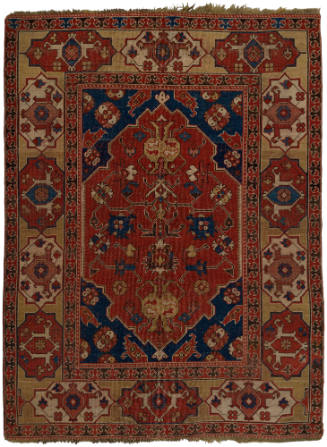
17th or 18th century
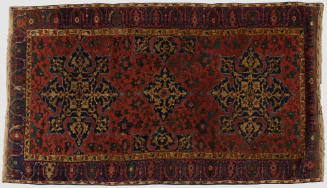
17th century
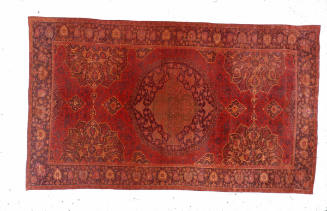
18th century
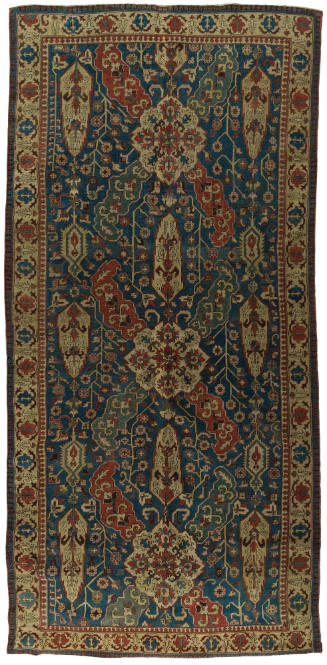
1700-1750?
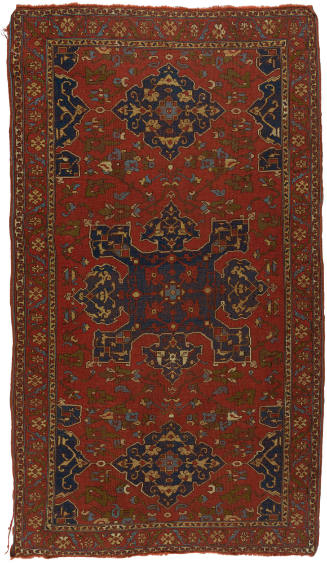
Probably 19th or 20th c.
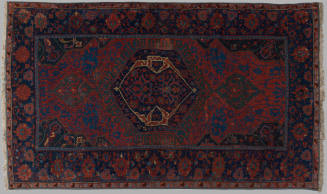
18th or 19th century
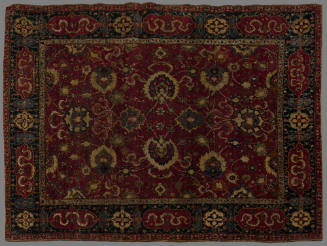
Probably 17th century
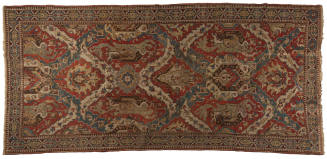
18th century
18th c.