
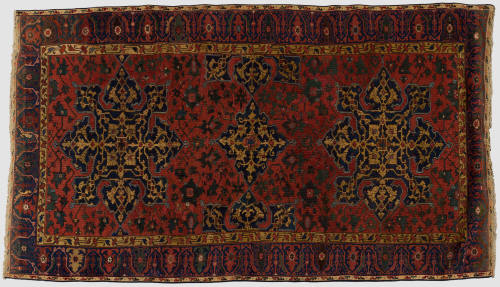
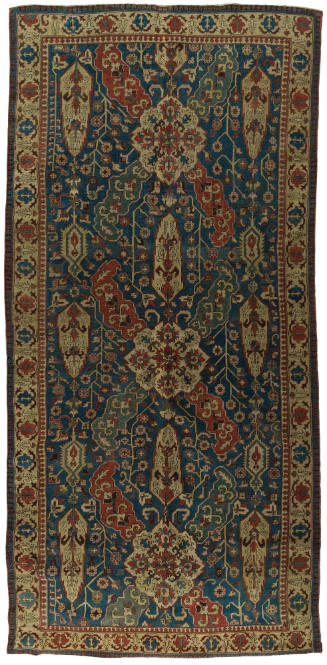
Carpet, star medallion
Date17th century
OriginAsia, Turkey, Ushak
MediumWool pile, natural wool warps, tan wool wefts.
Dimensions9'8" X 4'6"
Credit LineMuseum Purchase
Object number1954-58
DescriptionCarpet: Ghiordes knot; about 56 knots per sq. inch; two shots of light tan wool weft after each row of knots. Eleven colors: Ground; field-red, star medallions-dark blue, border-dark blue, guard bands-yellow; Pattern: white, yellow, pink, orange, red, brown, light blue, dark blue, green, lt.green, dark brown. The field has two star-shaped medallions and a central lozenge medallion containing an interlaced arabesque with half-palmettes forming various geometrical devices. Along each side of the field are two sections of star-shaped medallions. The rest of the field has a symmetrical pattern of floral scrolls bearing palmettes and leaves. In the border an arabesque scroll with half-palmettes form arches filled with stylized palmettes and "candelabras". The inner guard band has a wavy scroll with leaves. The outer guard band has a series of geometrical hook motifs.Construction History
17th century: Initial construction
1973: Cleaned and restored by Beshir Galleries (New York, NY)Label TextUshaks were among the most prominent types of "Turkey carpets" imported to Western Europe and America in the 18th and 19th centuries. A "Turkey carpet," alongside a "great variety of household furniture, of the newest fashion," is advertised in Williamsburg's Virginia Gazette as early as 1751. Though period inventories and wills did not describe the type of Turkish carpet, we can use paintings to identify the prevalence of certain designs.Inscription(s)None foundMark(s)None foundProvenancePrior to 1954, Beshir Galleries (New York, NY); 1954-present, purchased by The Colonial Williamsburg Foundation (Williamsburg, VA)
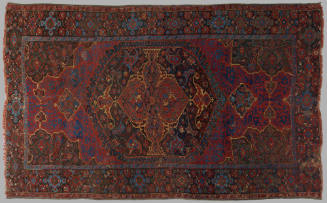
18th c.
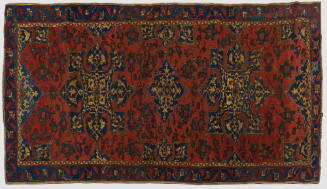
17th century (probably)
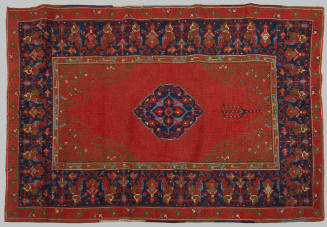
20th century
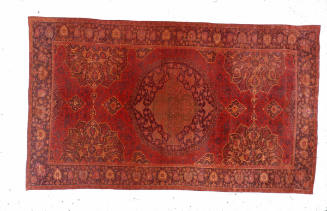
18th century
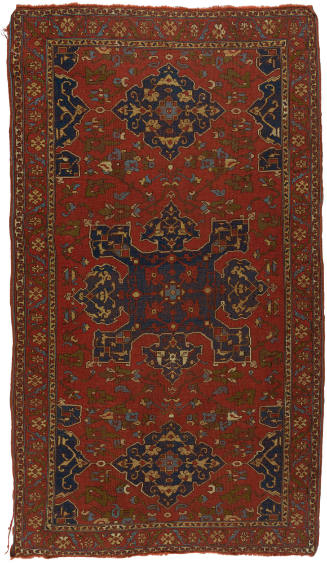
Probably 19th or 20th c.
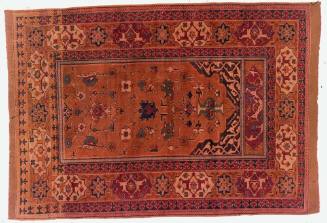
20th century (probably)
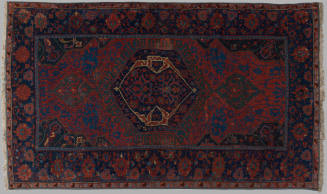
18th or 19th century
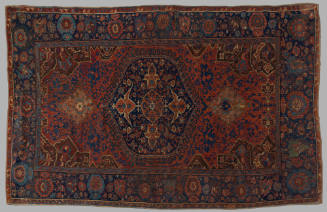
17th or 18th c.
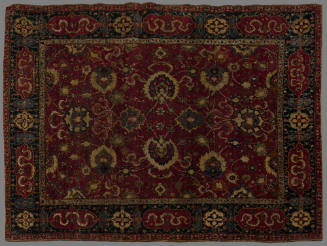
Probably 17th century
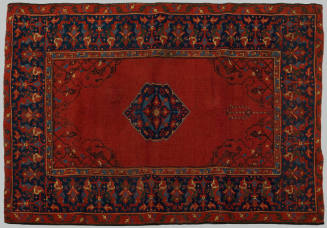
18th century, possibly
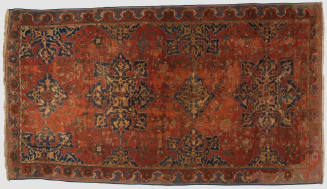
17th century
1700-1750?