

Carpet, animal design
DateLate 19th or early 20th century
OriginAsia, Iran, Kashan
MediumMohair pile, white cotton warps, blue cotton wefts.
Dimensions9' X 6'3"
Credit LineGift of Mrs. Harcourt Amory.
Object number1962-302
DescriptionCarpet: Sehna knot; approximately 280 knots per sq. inch; 2 shoots of blue cotton wefts after each row of knots. Colors: Ground: field- creamy white; main border- rose and creamy-white (reciprocal devices); secondary borders- dark blue; guard bands-creamy-white; corner medallions or spandrels-rose. Pattern: creamy-white, pink, rose, pale green (aqua), tan, sapphire blue, light blue, and black. The field has a mirror repeat design centered with an 8-pointed medallion surrounded by a larger medallion composed of meandering stems and leaves. Six cartouches, 3 at each end of the field, feature birds and bird-like figures, while scattered among the floral devices in the field are other animal figures such as cows, goats, lions, and dragons. The main border consists of reciprocal devices of small palmettes and dragons, alternating with a lion and goat motif. The secondary borders are made up of flowering vines and leaves; rosettes and reciprocal trefoils.Construction History
Late 19th - early 20th century: Initial construction
May 2015: Surface cleaned & twill tape repaired by CWF (Williamsburg, VA)Label TextIntertwined with floral details, this Kashan carpet’s depiction of animal figures (doves, peacocks, lions preying on goats and cows) creates a compelling visual landscape. “Mohtasham” Kashans are a group of Central Persian carpets renowned for their extremely fine weave quality and design; these traits are evident in this example’s figural motifs and luxurious mohair pile.
Inscription(s)NoneMark(s)NoneProvenancePrior to 1962, Mrs. Susannah Amory (New York, NY); 1962 -present, gifted to The Colonial Williamsburg Foundation (New York, NY)
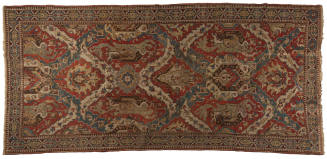
18th century
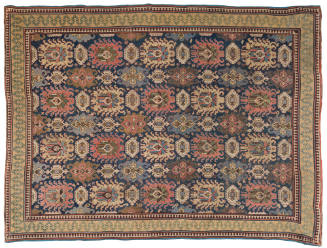
19th century
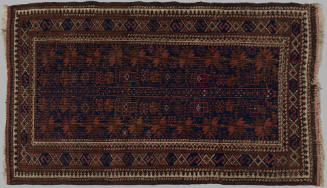
19th century
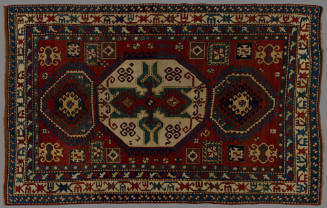
ca. 1820-1830
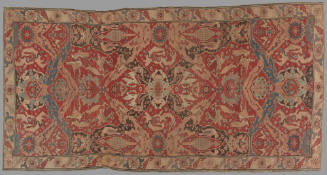
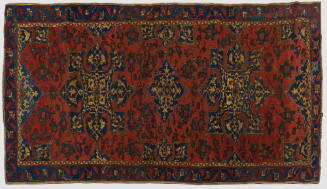
17th century (probably)
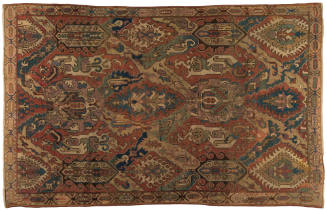
18th century
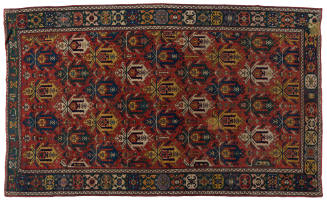
19th century (probably)
18th century
1700-1730
19th century (possibly)
1770-1830