
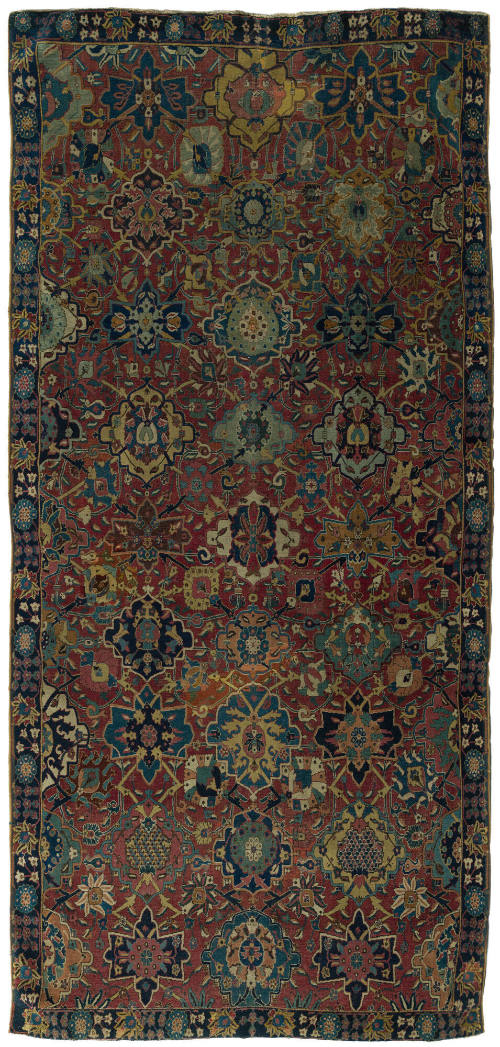
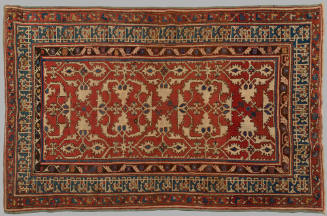
Carpet, Persian "Vase"
Date17th-18th century
MediumWool pile, white cotton warps, natural wool wefts.
Dimensions61" X 128"
Credit LineMuseum Purchase
Object number1963-729
DescriptionPersian carpet of senna knot; about 165 knots per square inch; 2 shoots of wefts after each row of knots. Colors: Ground: field-red, border-dark blue, compartments- white, pink, creamy-yellow, medium blue and dark blue. Pattern: white, yellow, orange, salmon-pink, red, brown, light blue, medium blue, dark blue, green. The field has a pattern of lobed compartments, some oval,-others cross shaped, filled with various floral motives, such as composite palmettes, rosettes, pineapples, vases with floral sprays, or heavy stems, crossing with thinner ones, forming spirals. the former bear in intervening spaces, lotus palmettes, stylized carnations, tulips, and other types of palmettes. The border has 2 wavy scrolls with palmettes, rosettes, bellflowers and plum blossoms.Construction History
17th or 18th century: Initial construction
1964: Repaired and cleaned by Beshir Galleries (New York, NY)Label TextThis Persian carpet belongs to a type known as "Vase rugs," named for the common inclusion of flower-filled vases in their fields. Though the vases are not explictly evident in this example, notice the intricate symmetrical floral motifs within the scalloped medallions, ranging from stemmed palmettes and rosettes to pineapples.
Though there is some record of "Persia" carpets in early America, they appear to have been significantly less popular than Turkish pieces. Yet, like Turkish carpets and other "exotic" imports, Persian carpets would have been fashionable expressions of status and luxury in the home.
Inscription(s)None foundMark(s)None foundProvenancePrior to 1963, French & Company, Inc. (New York, NY); 1963-present, purchased by The Colonial Williamsburg Foundation (Williamsburg, VA)
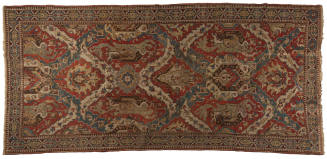
18th century
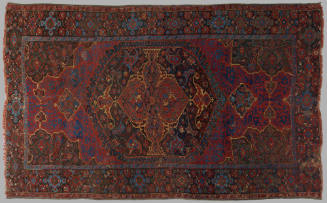
18th century
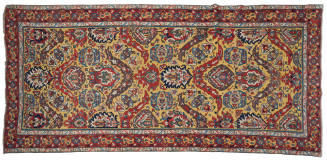
19th-20th century
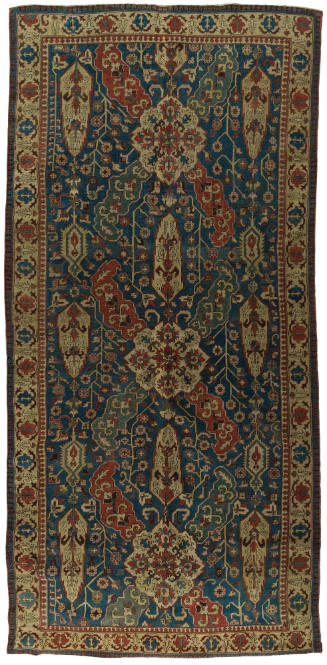
1700-1750 (?)
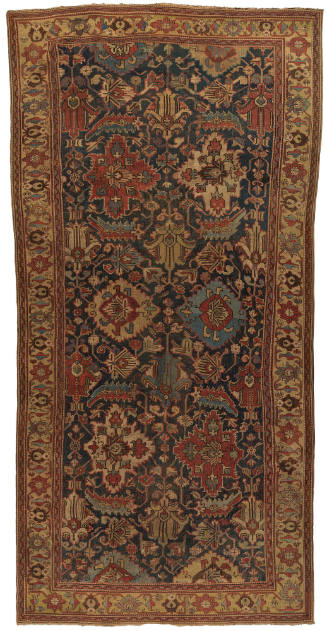
18th century
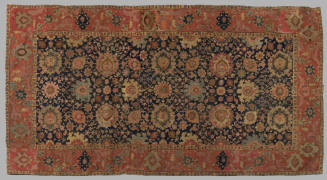
18th century (possibly)
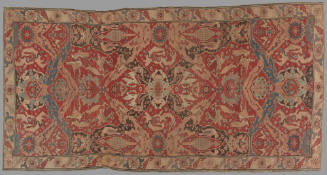
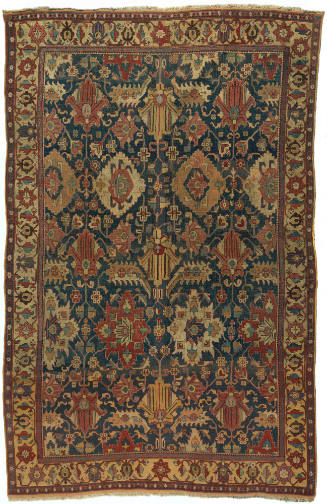
18th century
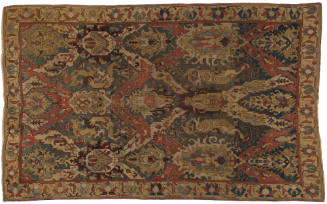
1700-1730
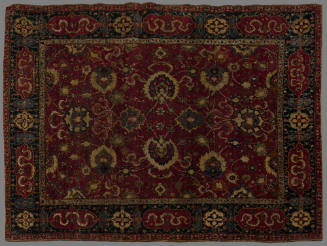
17th century (probably)
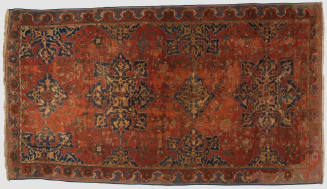
17th century
17th century (or later)