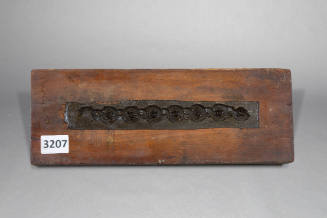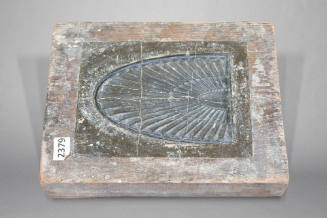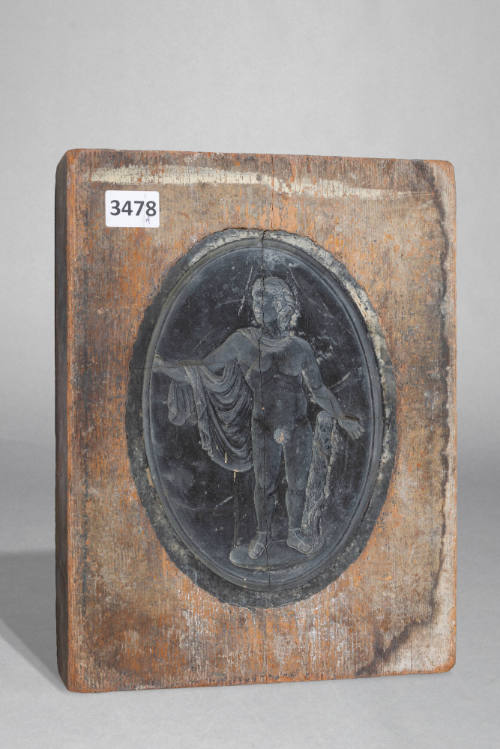
Composition Mould
OriginEngland or America
MediumResin; Wood; Stain/Paint
DimensionsImpression of man: 8 3/8" (T) (positive plinth to top of head) x 6 1/8" (W) (from positive right hand to positive left hand). Oval impression: 11" (T) x 7" (W) x 3/8" (deep). Base: 15" (L) x 11 1/2" (W) x 3" (T).
Credit LineGift of Mr. & Mrs. Elias Nassim
Object numberAF-X2023.3478A
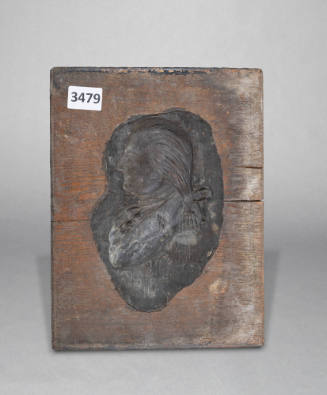
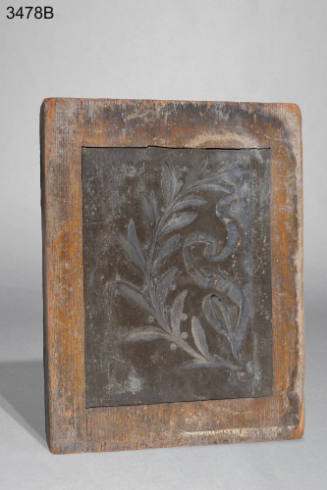
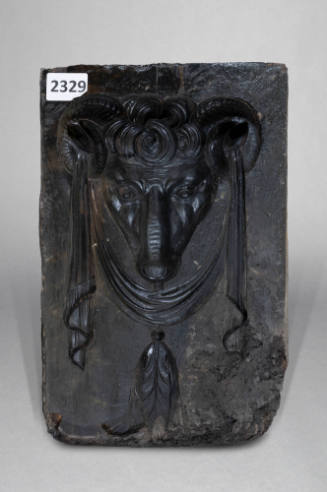
DescriptionThe overall mould consists of two different molds set into one wooden base. The moulds are on opposite faces. (A) It is a Greek/Roman depiction of Hercules(?): full-height figure with fabric draped over his left arm (positive depiction) that is secured to his neck by a strap, sandals on both feet strapped at the ankles, and a club resting from his positive right arm to right foot. He has a modesty leaf covering his groin area. He is standing on an oval plinth. The positive left hand is cut off by the edge of the impression area. He is looking left in the positive image. He is surrounded by a rope edge that measures 1/4" in diameter. There is a crack running from the top of head to positive left foot. The opposite face (B) has a laurel leaf and berry impression.Label TextThis antique composition mould represents a trade that was practiced in Virginia during the Revolutionary period and into the 19th century. It depicts a common design found in upper class homes and public buildings. Composition was a substitute for more laboriously produced ornamental plaster and carved wood and stone. It is thought that the Adam brothers (Robert Adam 1728-1792) and John Adam (1721-1792)) played a major role in the initial manufacture of composition ornament on a grand scale. The Adam style demanded a large amount of delicate low-relief ornament. These moulds are for the production of such ornament in plaster, or in composition, usually a combination of whiting, glue, rosin and oil. The finished ornament was used on furniture and other objects as well as in the decoration of rooms.