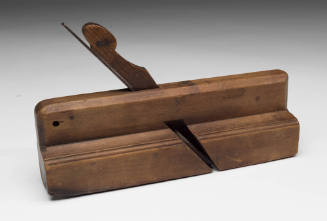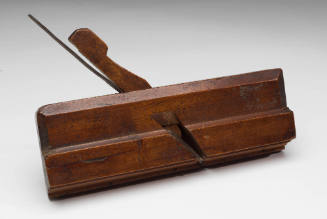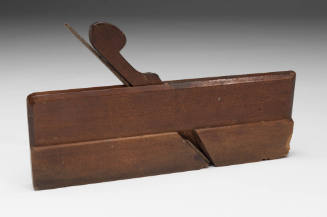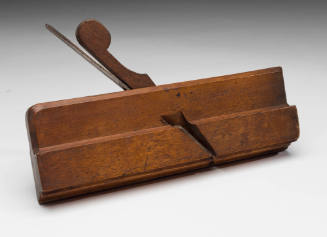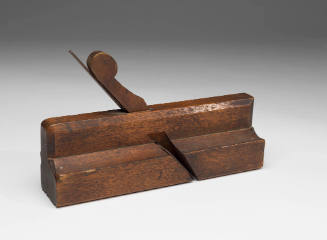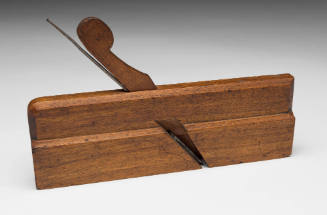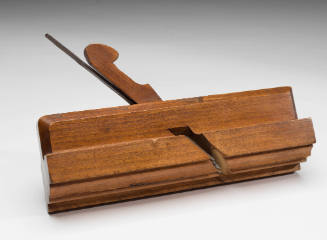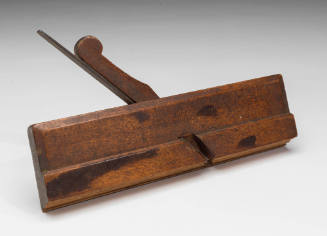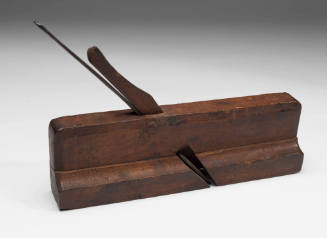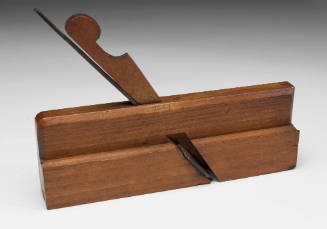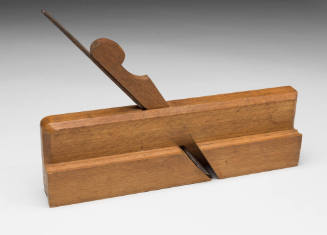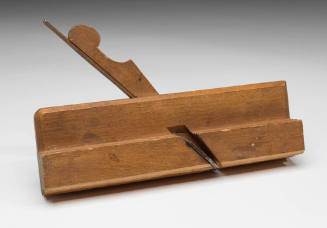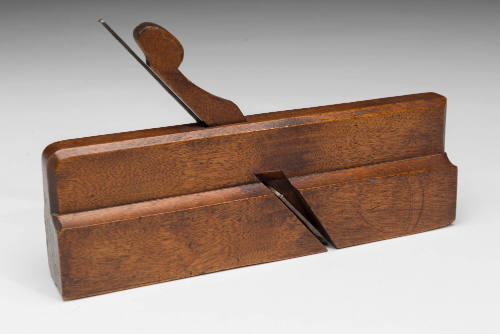
Complex Molding Plane
Dateca. 1780-1794
Maker
Luther Sampson
1760 - 1847
MediumBirch, iron, and steel
DimensionsLength: 10"; thickness: 1 7/16"
Credit LineGift of Thomas Elliott
Object number2024-310
DescriptionComplex molding plane with flat chamfers that end with a turn-out, a molded shoulder, and a relieved wedge.Label TextLuther Sampson, a housewright and shop joiner, is unique in the history of early American planemaker because his late 1780s shop in Duxbury, Massachusetts, survives.Though born in Duxbury, Luther's father Paul, a master housebuilder, relocated the family to nearby Marshfield in 1764. As a teenager, Luther enlisted in the Massachusetts Militia, earning a pension worth $80 a year for his Revolutionary War service.
After the war Sampson married, returned to Duxbury and purchased the Blaine Philips homestead, complete with a ca.1735 dwelling house. On the property he constructed his still-surviving shop, expanded to about 470 square feet and measuring 16 feet by 29 1/2 feet. One ceiling beam is painted "1789," the likely date of construction for either the shop itself or the addition.
Sampson apparently used his home as a showroom for his architectural joinery, furnishing each first floor room in a different Federal style, all of the highest quality. Sadly, the house no longer stands, though it has been documented.
Planes made for sale by Sampson have a price behind the wedge, denominated in shillings and pence, and afterwards in dollars. The price of this plane, struck behind the wedge, was 67 cents, or two-thirds of a dollar.
A severe back injury forced Luther to retire from his trade, and he sold his Duxbury house and shop in 1795. Three years later, he claimed his bounty land in Readfield, ME and founded a religious and charitable society which became the Kents Hill School. Hed died there at the age of eighty-seven.Mark(s)The toe of the plane marked with L^S in relief within a serrated rectangle (Elliott, AWP, p.322, imprint A). Heel struck with size mark 5/8, and top of body behind wedge struck with the price 67 (cents).ProvenanceOctober 1998, purchased by Thomas Elliott (Westbrook, CT); 2024, given to The Colonial Williamsburg Foundation (Williamsburg, VA)