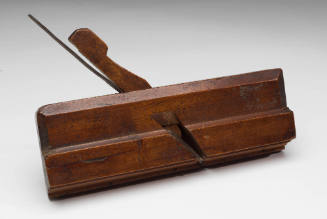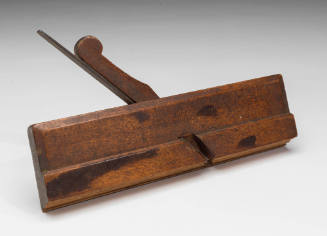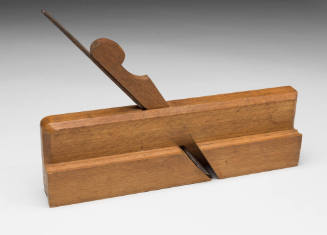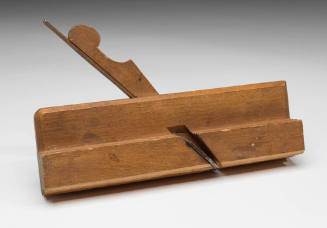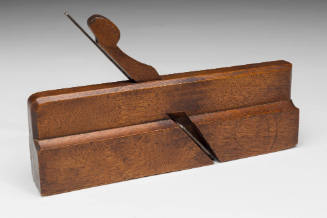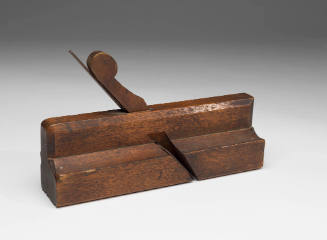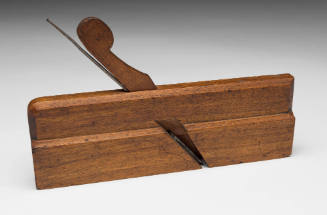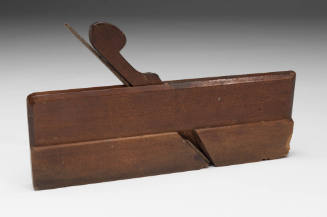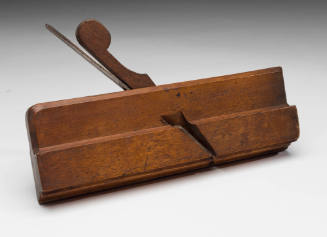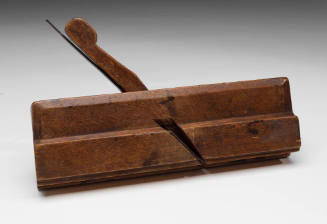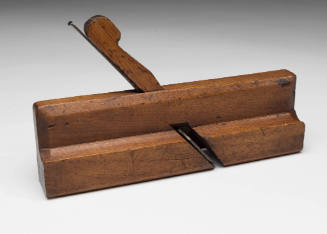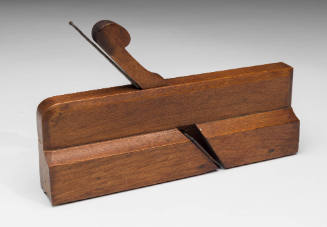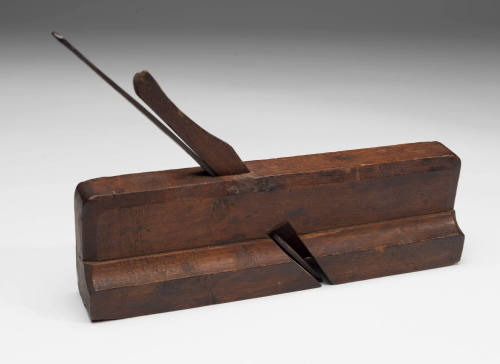
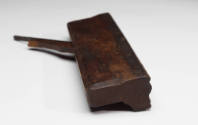
Complex Molding Plane
Dateca. 1766-1800
Maker
Jonathan Brooks
b. 1745; fl. 1766-1801
MediumBirch, iron, and steel.
DimensionsOverall: 10"; Width; 1 3/4"
Credit LineGift of Thomas Elliott
Object number2024-262
DescriptionComplex molding plane with flat chamfers which end with a line and long taper, and a wedge with an incomplete finial.Label TextPerhaps fresh from completing his apprenticeship, twenty-one year old Jonathan Brooks married Mercy Chapman of New London, Connecticut in 1766. Then working as a cabinetmaker, his earliest found advertisements in the New London Gazette date from early 1768. By 1780 Brooks is offering furniture, real estate, building frames, and shingles in his ads, showing that success had allowed him to diversify his business interests.In September 1781, when British forces under commanded of General Benedict Arnold landed near New London and took Fort Trumbull, Brooks volunteered to help protect the town alongside other armed men. Jonathan Brooks died in 1808, leaving his cabinetmaking shop on Second St. in New London to his son Nathan.
The iron Brooks built into this molding plane is a British-made import bearing the mark "GILLAT," the surname of a number of men working the cutlery trade in Sheffield during the 1790s.Mark(s)J•BROOKS in relief within a rectangle, is struck into the toe (Elliott, GAWP 5th ed., p.47, imprint B). The iron is struck with GILLAT, incuse.ProvenanceMarch 2007, purchased by Thomas Elliott (Westbrook, CT); 2024, given to The Colonial Williamsburg Foundation (Williamsburg, VA)