
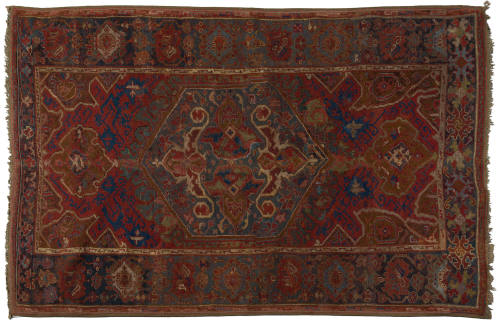
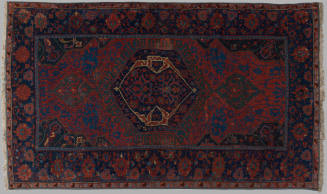
Carpet, medallion design
Date18th century (possibly)
OriginAsia, Turkey, Ushak
MediumWool pile, natural wool warps, red wool wefts.
Dimensions6' 9" x 4' 2".
Credit LineMuseum Purchase
Object number1952-142
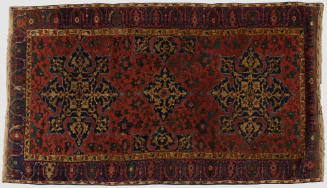
DescriptionMedallion design carpet. Ghiordes knots; about 48 knots per square inch; 2 shoots red wool wefts after each row of knots. Ground: field-red, medallion-blue, border-blue, guard bands-yellow/red. Pattern: rose, red, light blue, dark blue, green, yellow, gold, brown. The field design shows a hexagonal central polar medallion within which are two laterally opposing heart-shaped palmettes; vertically, two arabesque brackets outlined in yellow with trefoil finials. Rudimantary spandrels simualte the stellate medallion. The main border shows a series of deeply serated medallions and angular floral designs (this border on two sides of rug only); the border at one end has a cruciform, suggestion of the swastika and the so called endless knot; the other end still a third design of trefoils. The inner and outer bands have a design of S-shapes, in a detatched meander.Construction History
18th century (possibly): Initial construction
1954: Cleaned, restored, mothproofed, and lined by Beshir Galleries (New York, NY)
1966: Cleaned and renovated by Beshir Galleries (New York, NY)
May 29, 1985: To prepare for exhibition, a cotton sleeve was added to the top backside edge, central basting stitches were removed, and Velcro tabs were sewn to the back edgesLabel TextThe Turkish Ushak "medallion" carpet was highly regarded among wealthy Europeans and Americans throughout the 18th and 19th centuries. Positioned near the port of Izmir, where carpets were exported off to Europe, Ushak flourished as a center of carpet weaving in Anatolia from at least the 16th century forwards.
Enclosing palmettes and arabesque brackets, this carpet's hexagonal medallion most likely indicates the shift from the softer oval medallions of the sixteenth and seventheenth centuries, to more angular forms over time.Inscription(s)NoneMark(s)NoneProvenancePrior to 1952, Beshir Galleries (New York, NY); 1952-present, purchased by The Colonial Williamsburg Foundation (Williamsburg, VA)
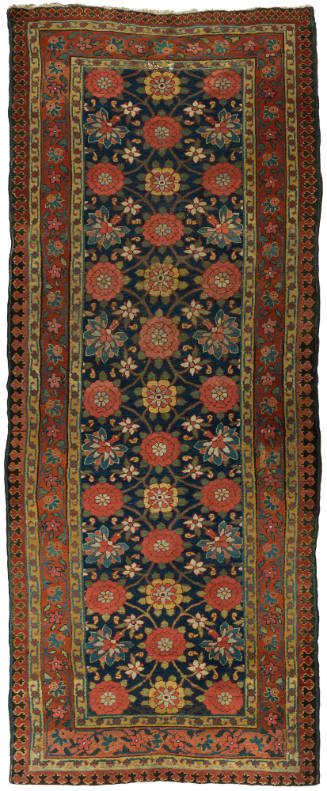
1770-1830
17th-18th century
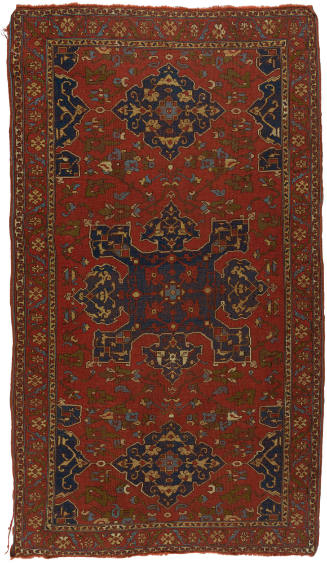
19th-20th century (probably)
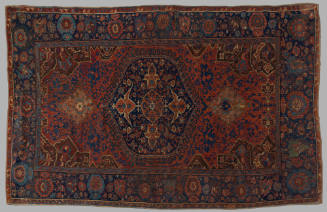
17th-18th century
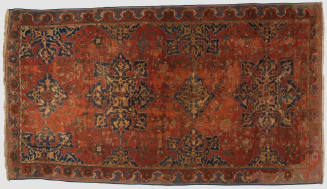
17th century
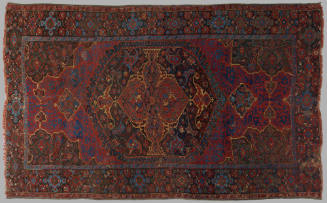
18th century
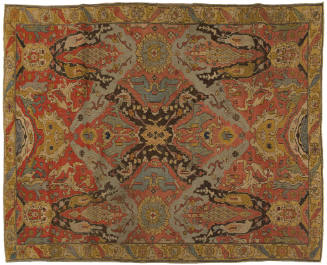
17th century
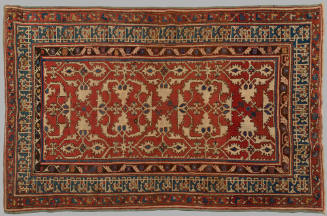
17th century or later
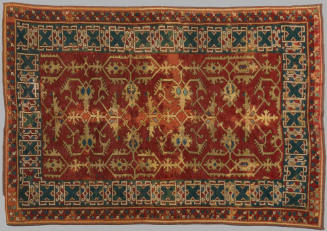
Probably late 17th century
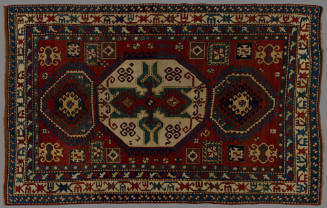
ca. 1820-1830
18th-19th century