Sable Island: The Sailors Graveyard
Date1922-1928
Attributed to
John Orne Johnson Frost
1852 - 1928
MediumWater-based paint and pencil on wallboard
DimensionsUnframed: 22 9/16 x 67 9/16in. (57.3 x 171.6cm) and Framed: 26 5/8 x 71 5/8in.
Credit LineMuseum Purchase
Object number1969.101.1
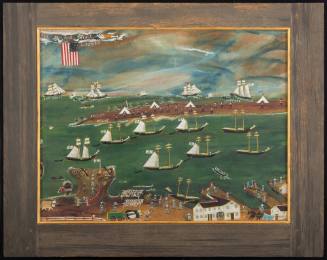
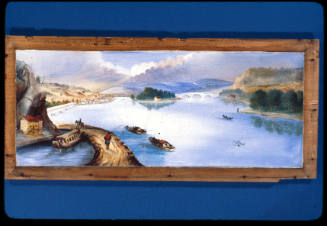
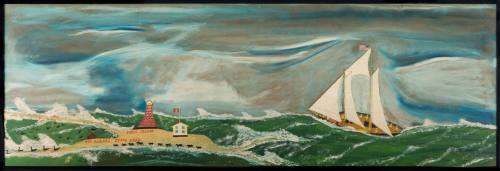
DescriptionSmall sandy island with two "spits" coming off to the left occupies the left half of the composition. A brick lighthouse and small white frame building are on the island. Animals parade across the front of the island, and many dark birds are on the island or in the air or water nearby. A sailing vessel with men in yellow oilskins aboard is in the water in the right half of the picture; it flies the American flag. The waves are very green and have white-caps. There is much movement in the scene with wind indicated by swirling motion in white acriss the blue and gray sky.Modern 2 1/8-inch flate stepped frame, painted black.Label TextFrost began to paint the history of his beloved Marblehead about 1922 and continued until his death. All of Frost's more than one hundred known paintings and carvings show incidents from Marblehead's history or recall his experiences on the Grand Banks in 1868-1869.
The artist was born in Marblehead, Massachusetts, on January 2, 1852, of parents who were descendants of early settlers of Marblehead. Frost's formal education ended in 1868 when he went to sea on a fishing vessel. He made two trips, but after the second in 1879, Frost acceded to the requests of his sweetheart, Amy Anna Lillibridge, and did not sail again.
Sable Island is a landmark for fishermen off the Grand Banks near Nova Scotia. Frost painted its common name, "The Sailors Grave Yard," on the sand beneath the island's proper name. The omninous title and wild seascape are vivid reminders of the difficulties and dangers encountered in fishing the North Atlantic.Inscription(s)In red paint on the island in the composition is "SABLE ISLAND./THE SAILORS GRAVE YARD."ProvenanceFrost family: Mr. and Mrs. Frederick Dike Mason, Jr., Marblehead, Mass.; M. Knoedler & Co., New York, NY. (At some point after the painter's death and before his house was sold out of the family, someone (perhaps the artist, or his son Frank Frost) took this painting and a number of others, turned them face inward to the wall at the artist's home --11 Pond Street, Marblehead--and painted or papered over them. This fact was not discovered until M/M Frederick Dike Mason, Jr., purchased the house (in 1952) and shortly thereafter began remodeling (1954?) Court decision was that the paintings legally belonged to the Masons. Thereafter it was sold through Knoedler's.