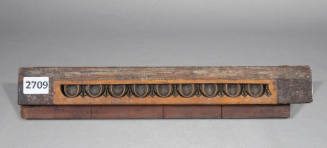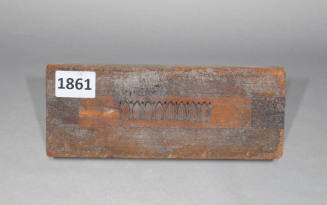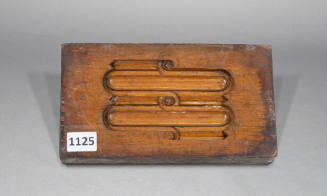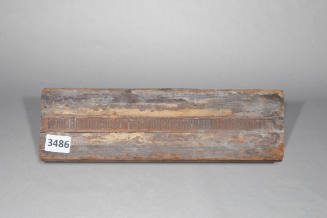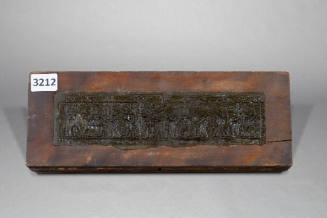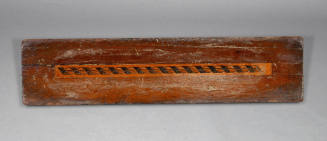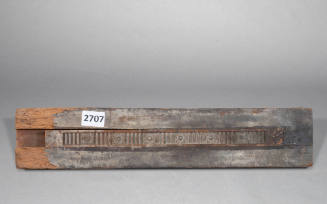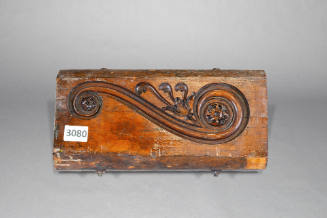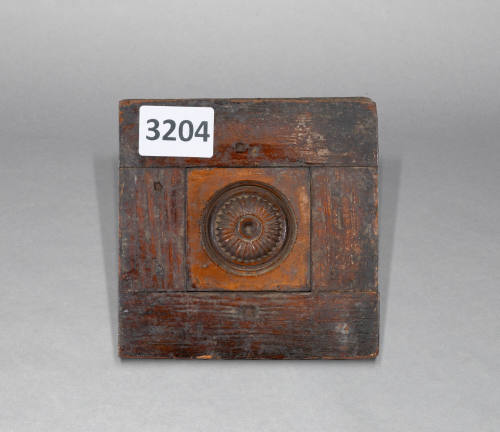
Composition Mould
OriginEngland or America
MediumBoxwood; Pine; Shellac
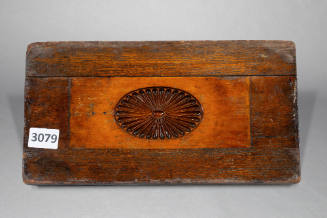
DimensionsThe boxwood is 2 1/2" (L) x 2 1/2" (W) x 5/8" (D). The patera has a 1/4" (W) double ring rim. It has a 2" (OD) x 1 1/2" (ID) rim and a 1/2" carved bead in the center of 30 spokes. Base = 5 5/16" (L) x 5 5/16" (W) x 1 1/2' (T) with two 5 1/4" (L) x 1 5/16" (W) x 11/16" (T) edge pieces on the front face.
Credit LineGift of Mr. & Mrs. Elias Nassim
Object numberAF-X2023.3204
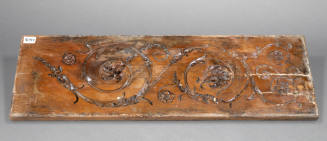
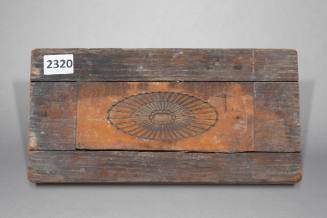
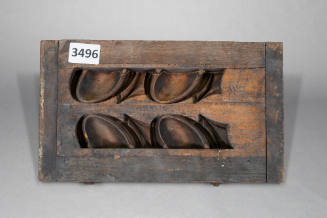
DescriptionIt is a very small round medallion/patera made of boxwood (shellacked) that is set into a three-part pine base. There is evidence of two nails holding the edge pieces to the base.Label TextThis antique composition mould represents a trade that was practiced in Virginia during the Revolutionary period and into the 19th century. It depicts a common design found in upper class homes and public buildings. Composition was a substitute for more laboriously produced ornamental plaster and carved wood and stone. It is thought that the Adam brothers (Robert Adam 1728-1792) and John Adam (1721-1792)) played a major role in the initial manufacture of composition ornament on a grand scale. The Adam style demanded a large amount of delicate low-relief ornament. These moulds are for the production of such ornament in plaster, or in composition, usually a combination of whiting, glue, rosin and oil. The finished ornament was used on furniture and other objects as well as in the decoration of rooms.