
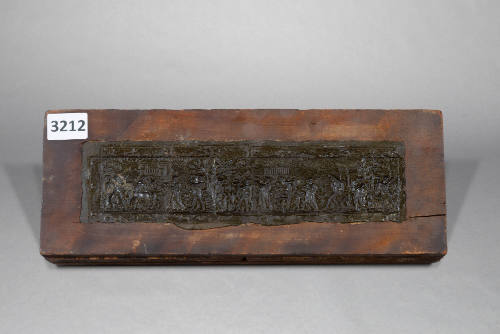
Composition Mould
OriginEngland or America
MediumMetal; Wood; Shellac
DimensionsThe base consists of three wood boards connected together. Base: 15" (L) x 5 1/2" (W) x 2 3/8" (T). Each board is approximately 3/4" (T). Matrix: inset: 12" (L) x 3" (H). Metal repousse: outer flange dimensions: 2 13/16" (H) x 11 3/4" (L) (the widths vary); scene dimensions: 11" (L) x 2 1/8" (H) x approximately 1/8" (D).
Credit LineGift of Mr. & Mrs. Elias Nassim
Object numberAF-X2023.3212
DescriptionIt is a straight-line celebration scene with various figures and Greek temples in the background. It is a metal mold (repousse) set down into a wooden frame. The figures from left to right are: a man with a club/shelale, a centaur with a cupid on his back, a woman with a double flute, man with an urn, girl dancing with a tambourine, man with two flutes, girl dancing, man dancing with a spear with a panther at his feet, woman with a club/shelale, man carrying a sheaf of wheat, woman with a lyre, and man with a club. The metal flanges on all sides have dimpled circles for some type of connection (possible nail holes) and they are spaced approximately 3/4" apart. The metal is set into resin that is depressed into the top of the wooden base. There is various foliage between all the figures and there are clouds along the upper edge of the mold. There is an Egyptian/Assyrian temple on the top right side above the woman with the lyre. There is a Parthenon image above the dancing woman (almost center of scene). There is another Egyptian/Assyrian temple at the left side above the centaur.Label TextThis antique composition mould represents a trade that was practiced in Virginia during the Revolutionary period and into the 19th century. It depicts a common design found in upper class homes and public buildings. Composition was a substitute for more laboriously produced ornamental plaster and carved wood and stone. It is thought that the Adam brothers (Robert Adam 1728-1792) and John Adam (1721-1792)) played a major role in the initial manufacture of composition ornament on a grand scale. The Adam style demanded a large amount of delicate low-relief ornament. These moulds are for the production of such ornament in plaster, or in composition, usually a combination of whiting, glue, rosin and oil. The finished ornament was used on furniture and other objects as well as in the decoration of rooms.
1825-1850
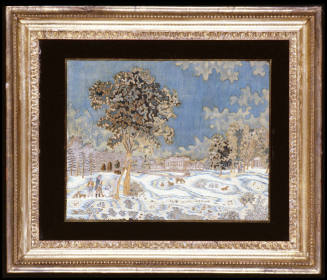
Late 18th - early 19th century
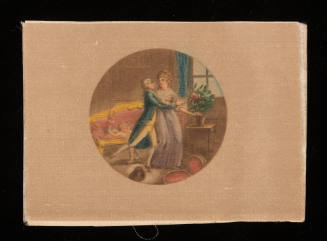
1790-1800
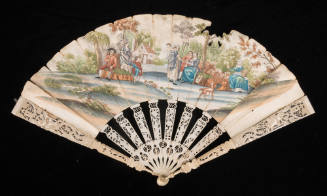
Leaf: 1790-1810; Sticks: 1745-1760
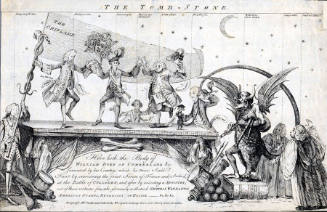
February 1765
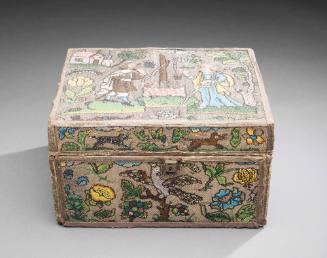
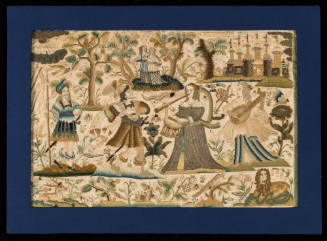
1650-1675
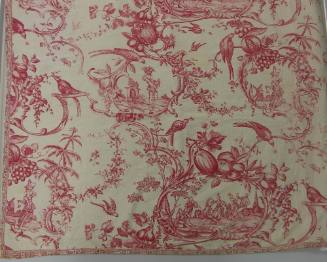
ca. 1790
ca. 1800