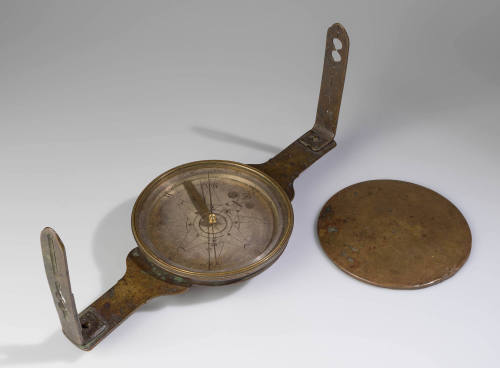
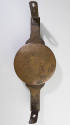
Surveying compass & cover
Dateca. 1775-1800
Artist/Maker
Goldsmith Chandlee
MediumCopper alloy, steel, glass, and silvered copper alloy
DimensionsOverall: 14 1/2" × 6 1/8" × 6 7/8"
Credit LineMuseum Purchase
Object number2001-754,A&B
DescriptionSurveying compass with outkeeper, two detachable sight vanes, needle, and needle lifter. Dial is silver plated, and has a protective cover. The parts are as follows: 1A: compass and base, 1B: cover, 1C & 1D: detachable sight vanes.Label TextThe surveyor’s compass was a pivotal tool in the mapping and settlement of the southern Backcountry. By the beginning of the 19th century, compasses made by Goldsmith Chandlee of Winchester, Virginia, were renowned for both their quality and beauty. Goldsmith was the son and grandson of scientific instrument makers. Ironically, it was a surveyor’s compass in the hands of mapmakers Mason and Dixon that changed the designation of Nottingham, his hometown, from Pennsylvania to Maryland in the late 1760s.Inscription(s)Face engraved "G. Chandlee Winchester."ProvenanceDan Morse found the compass in Missouri, suggesting that it may have made its way from the northern Shenandoah Valley along the path of settlement west. The wear on the instrument suggests that it may have had quite a long period of use.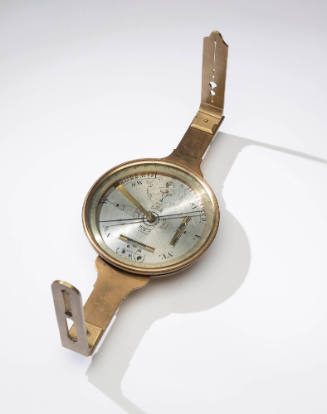

1800-1825

ca. 1890