
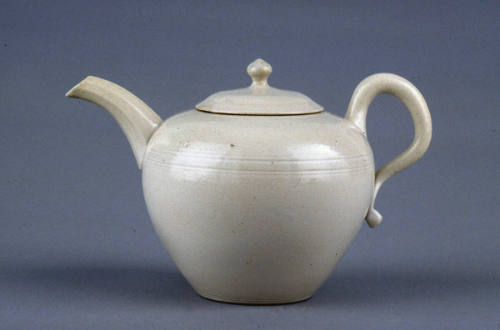
Teapot
Date1730-1765
OriginEngland, Staffordshire
MediumWhite salt-glazed stoneware
DimensionsOverall: 3 3/4 x 5 13/16 x 3 11/16in. (9.5 x 14.8 x 9.4cm)
Height is with lid
Height is with lid
Credit LineMuseum Purchase
Object number1953-288,A&B
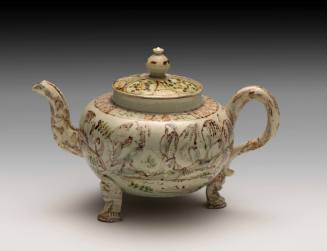
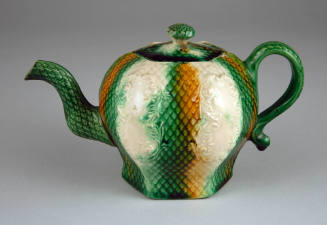
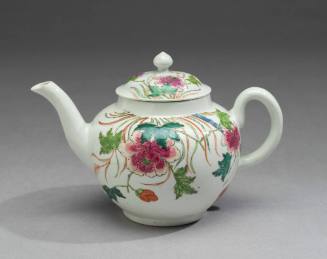
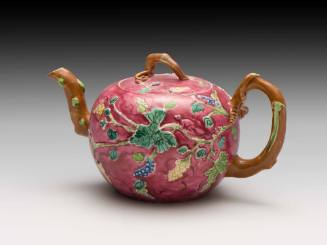
DescriptionTeapot and cover: body of depressed globular form faintly moulded around opening and shoulder; loop handle with pronounced lower kick terminal opposite the molded octagonal slightly arched spout. The cover of slightly domed collared form with flange and inverted tear-shaped knop.Label TextPlain wheel-thrown examples are the most common type of white stoneware teapot found at American archaeological sites.Simple baluster-shaped white cream pots or jugs with scalloped rims and hand-modeled handles are common survivals and are frequently
found at archaeological sites. Teapot stands, however, are less common in both contexts. The form consists of a small, flat disk with a molded rim affixed to a ring-shaped hollow base with cutouts to allow air circulation . While such a stand elevated a tea or coffeepot to a place of prominence, it also served the practical purpose of protecting the table’s surface from a hot ceramic or metal vessel. Fragments of a white stoneware stand were excavated from the site of the coffeehouse Richard
Charlton operated in Williamsburg from 1762 to 1767.ProvenanceVendor: Shreve, Crump & Low Co., Boston
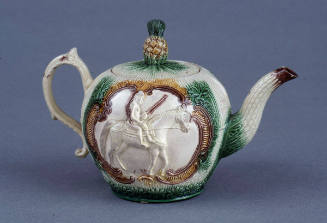
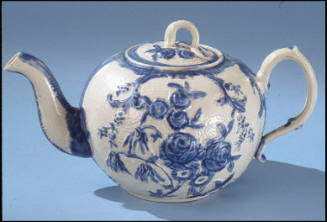
ca. 1760
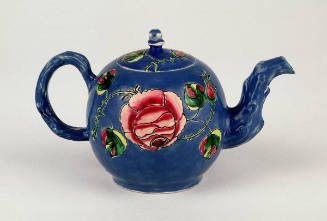
ca. 1765
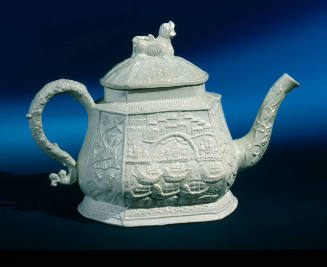
1740-1745
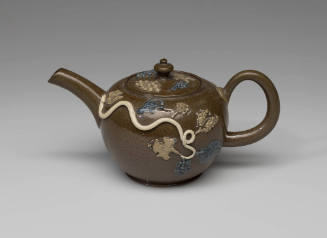
ca. 1755
1760-1770
ca. 1755
ca. 1763
ca. 1770