
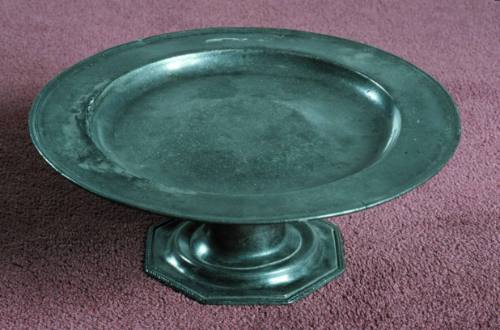
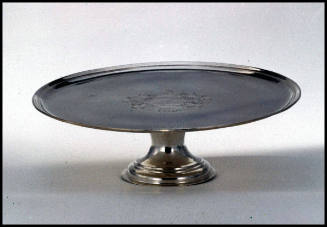
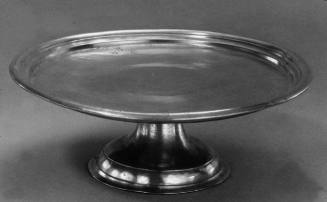
Footed salver
Date1670-1690
Possibly by
John Batcheler
MediumPewter
DimensionsOH. 3 3/4", W. (rim) 1 5/16", W (base) 4 3/4", Diam. 9 11/16"
Credit LineMuseum Purchase
Object number1958-560
DescriptionFooted salver: top or tray in the form of a circular plate with flat rim of moderate width with narrow triple-reeded molded edge; plate supported on a tall spool-shaped stem with 2 incised lines around contracted center to simulate mid-band on raised circular section flaring to base of octagonal plain with narrow band of spiral gadroons and molded edge. Uninscribed as to owner.Label TextIn the second edition of his GROSSOGRAPHIA, published in London in 1661, Thomas Blount defined a salver as a "new fashioned piece of wrought plate; broad and flat, with a foot underneath, and is used in giving Beer, or other liquid thing, to save or preserve the Carpit and Clothes from drops." Most English salvers in pewter were used for the same and additional purposes in the service of food and drink, and they are of this enlarged paten form. It is especially clear that this rare example is nothing more than a standard plate with an applied central foot because the foot was cast in a mold that was also probably used for the lower section of table salts (see 1956-85). A salver with the same touchmark is in the collection of Arlington Court near Barnstaple, England.Inscription(s)NoneMark(s)Touch mark of a fleur-de-lis with T or I to the left and B to the right within a beaded circle on underside of well within foot (Cotterell, OLD PEWTER, 5468)ProvenanceVendor: A. H. Isher & Son, Cheltnham, Eng.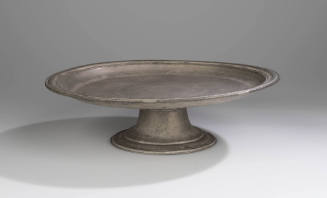
1680-1700
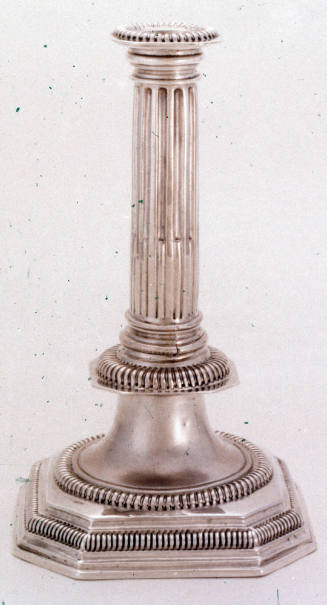
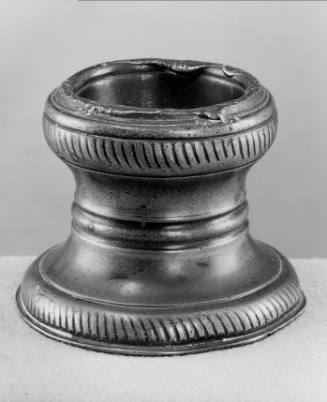
1680-1700
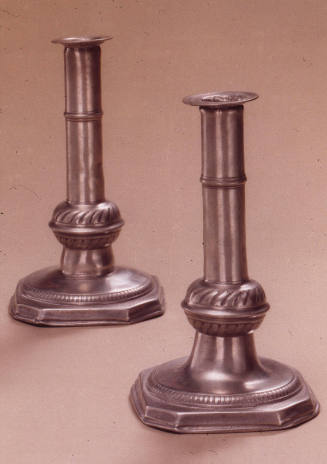
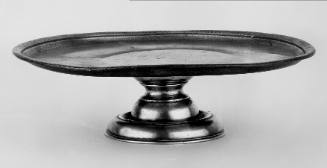
1685-1710
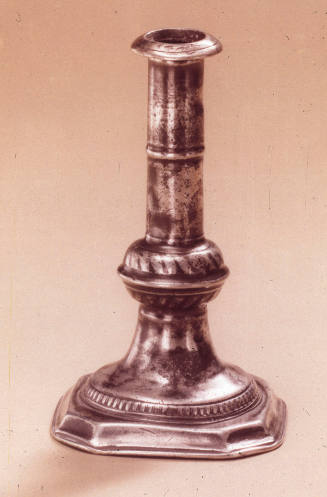
ca. 1765
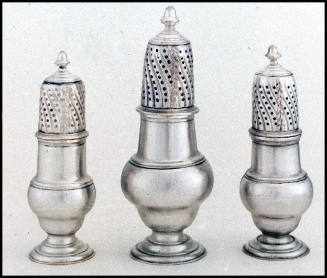
ca. 1765