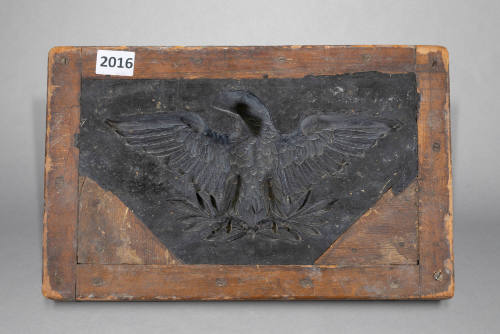
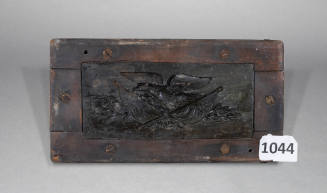
Composition Mould
OriginEngland or America
MediumResin; Wood
DimensionsImpression: 11 3/4" (L) wing tip to wing tip x 6" (H) x 1 3/8" (D) from the protruding head x 1/4 (D) at the claws. Inset: 13 3/16" (L) x 7 3/8" (H) x 1 3/8" (D). Base: 16" (L) x 10 1/8" (W) x 2 1/4" (T).
Credit LineGift of Mr. & Mrs. Elias Nassim
Object numberAF-X2023.2016
DescriptionIt is a resin impression of a large eagle perched on laurel sprays set into a wooden base. In relief, the eagle's head and tops of the wings would protrude out from the main body. The image has very defined feathering along the entire body, wings, head and legs. The legs are highly defined and have three claws each. The smaller laurel leaves are stippled and the larger are heavily veined. There is a knot at the meeting of the laurel sprays. On the head, he has a highly defined eye pupil and curved beak. The diagonal corners of the inset are blocked by triangular wood pieces (possibly to save on the amount of resin needed).Label TextThis antique composition mould represents a trade that was practiced in Virginia during the Revolutionary period and into the 19th century. It depicts a common design found in upper class homes and public buildings. Composition was a substitute for more laboriously produced ornamental plaster and carved wood and stone. It is thought that the Adam brothers (Robert Adam 1728-1792) and John Adam (1721-1792)) played a major role in the initial manufacture of composition ornament on a grand scale. The Adam style demanded a large amount of delicate low-relief ornament. These moulds are for the production of such ornament in plaster, or in composition, usually a combination of whiting, glue, rosin and oil. The finished ornament was used on furniture and other objects as well as in the decoration of rooms.
ca. 1825
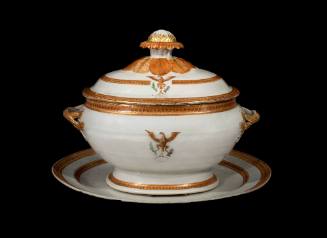
1800-1810
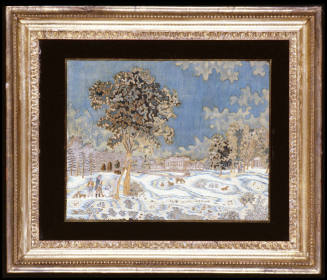
Late 18th - early 19th century
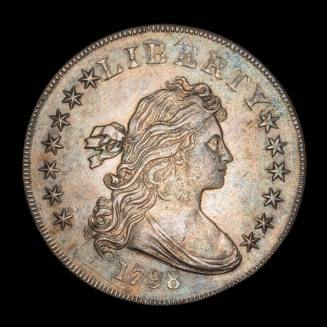
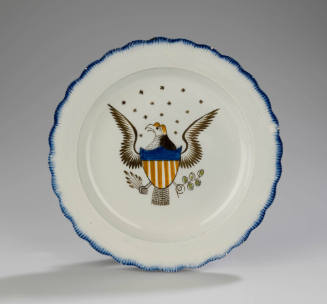
1815-1830
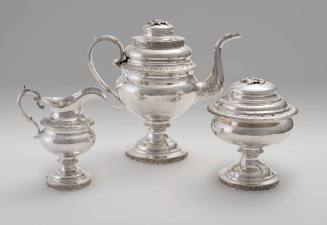
Jehu Williams (1788-1859) and John Victor (1793-1845) (Williams & Victor)
ca. 1835