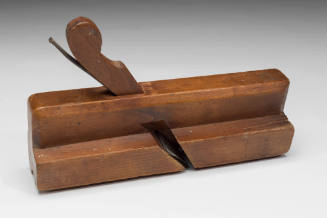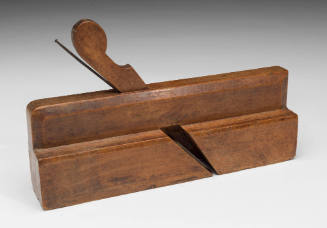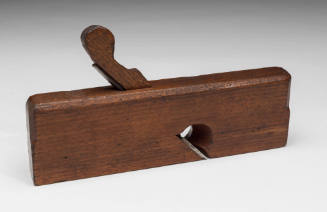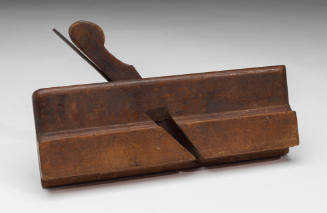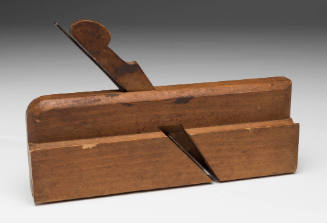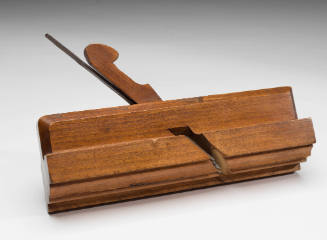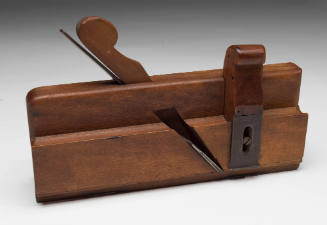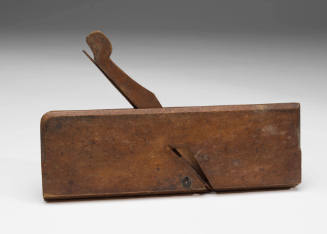
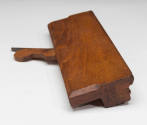
Bead Plane
Dateca.1790-1810
Maker
John Sleeper
1754 - 1834
MediumBeech, boxwood, iron, and steel
DimensionsLength: 9 3/4"; thickness: 1 5/16"
Credit LineGift of Thomas Elliott
Object number2024-314
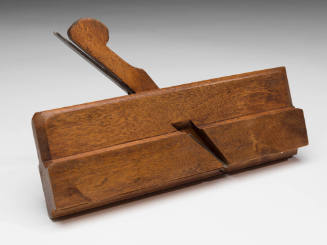
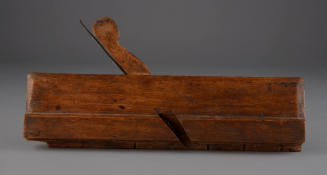
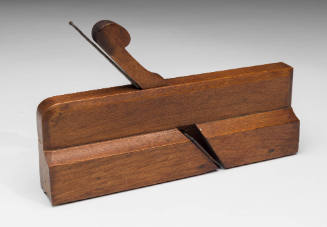
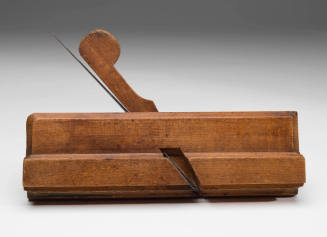
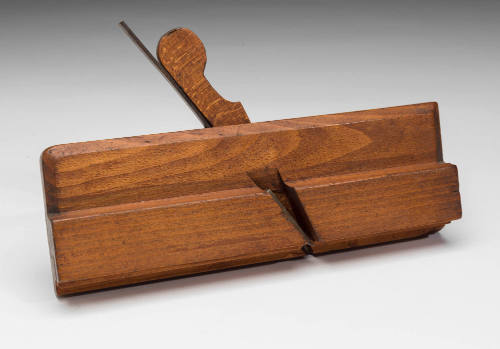
DescriptionBead plane with flat chamfers that end with a turn-out, a molded shoulder, two strips of boxing, and his distinctive "I. Sleeper" styled wedge.Label TextThe youngest son of Newburyport, Massachusetts cabinetmaker Henry Sleeper, it is no surprise that John became a woodworker himself. Spending his life in the town he was born, Sleeper styled himself a cabinetmaker, joiner, and toolmaker. In fact, he is considered one of early America's most prolific and influential planemakers, having an idiosyncratic wedge style named after him.Sleeper also had a colorful career during the Revolutionary War. He answered the Lexington Alarm of April 19, 1775 and is purported to have fought at Bunker Hill on June 17th of that year. Enlisting in Col. Moses Little's 17th Massachusetts Regiment, Sleeper survived the miserable and disastrous attack on Quebec the following winter. Following General Montgomery's death at the gates of the city, Sleeper was taken prisoner, and was held prisoner for nine months.
His elder brother Moses left a diary of the war, now in the collection of the Longfellow House-Washington's Headquarters National Historic Site. In it the elder Sleeper, a Corporal, recounts the Battles of Bunker Hill, the Siege of Boston, and the New York campaign of 1776, including the Battle of Long Island. Since the siblings were in the same unit, it is likely some, if not most of Moses's experiences were shared by his brother.
Along with his sister Mary and her husband, John, a certified bachelor, moved to Chester, New Hampshire in 1814. There, he continued to practice his trade, focusing on toolmaking and describing himself as a "planemaker" in his 1825-dated will. At the time, his heath was failing, but he recovered, and lived another nine years.Mark(s)The toe of the plane marked with I.SLEEPER in relief within a rectangle (Elliott, AWP, p.341, imprint A). Toe also struck with three sets of overlapping owner’s initials and names, all later, and incuse.ProvenanceApril 1988, purchased by Thomas Elliott (Westbrook, CT); 2024, given to The Colonial Williamsburg Foundation (Williamsburg, VA)