
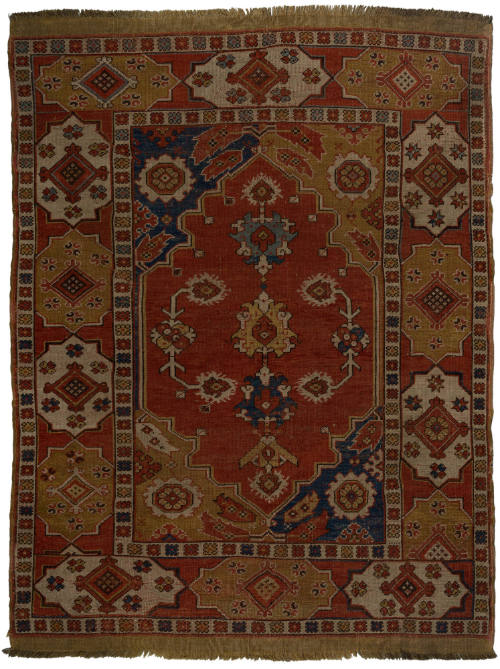
Carpet
DatePossibly 18th century (may be earlier or later)
OriginAsia, Turkey, Bergama
MediumWool pile, wool warp, wool weft
Dimensions5'2" X 4'1"
Credit LineMuseum Purchase
Object number1954-57
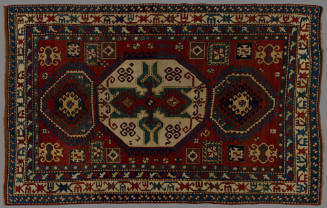
DescriptionCarpet: Ghiordes knot; about 64 knots per sq. inch; two shoots of red wool wefts after each row of knots. Six colors: Ground; field-red, spandrels-blue and yellow, border-red, cartouches-white and yellow: Pattern; white, yellow, red, light blue, dark blue, dark brown. The field of the rug has a double arched niche, one at each end. The four spandrels have a design of large compostie rosettes, leafy rosettes, and large leaves. The field is decorated with a symmetrical pattern of stylized floral scrolls with lotus palmettes, rosettes and leaves. The border shows a series of angular cartouches with lozenge and small leafy rosettes. The inner and outer guard bands have a row of angular rosettes.Construction History
Possibly 18th century (may be earlier or later): Initial constructionLabel Text"Turkey carpets" were highly prized in the seventeenth and eighteenth centuries--so much so that their owners often placed them on tables rather than on the floor. Because of their expense, very few American colonists owned carpets, and the floors in most people's homes were bare wood without the softening effect of the many carpets we use today.Inscription(s)None foundMark(s)None foundProvenancePrior to 1954, Beshir Galleries (New York, NY); 1954-present, purchased by The Colonial Williamsburg Foundation (Williamsburg, VA)
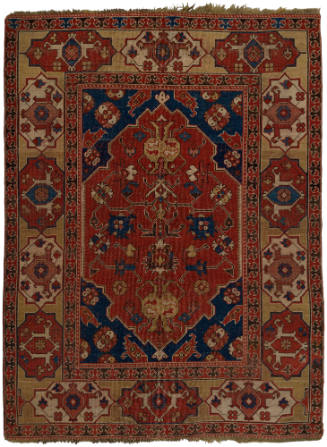
17th-18th century
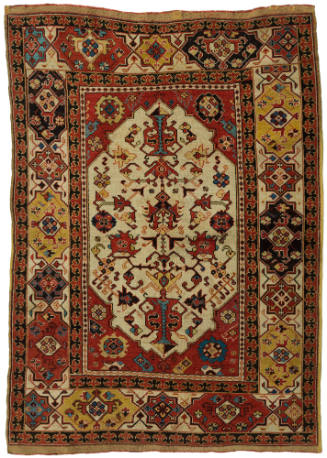
19th century (possibly)
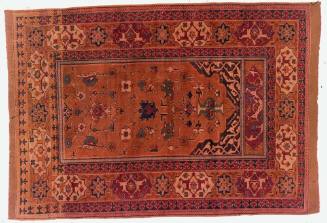
20th century (probably)
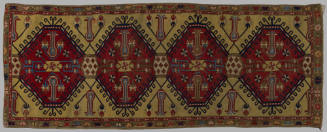
19th-20th century
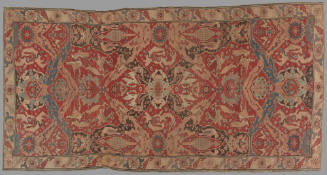
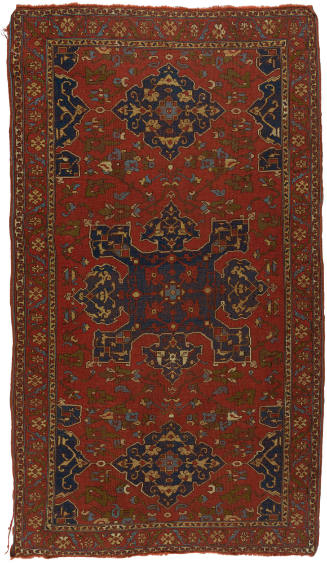
19th-20th century (probably)
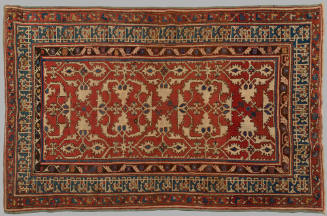
17th century (or later)
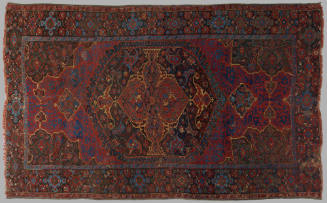
18th century
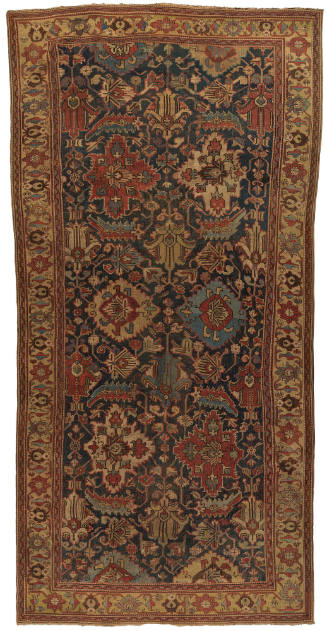
18th century
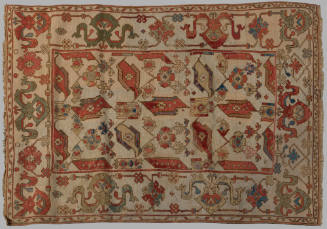
Probably 17th century (original parts)
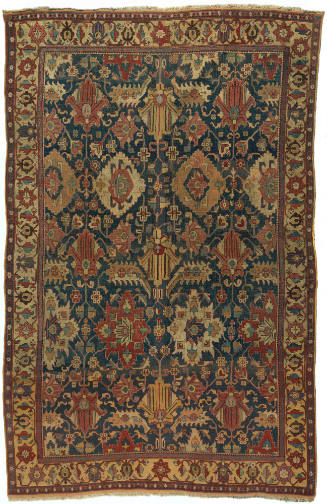
18th century
ca. 1820-1830