
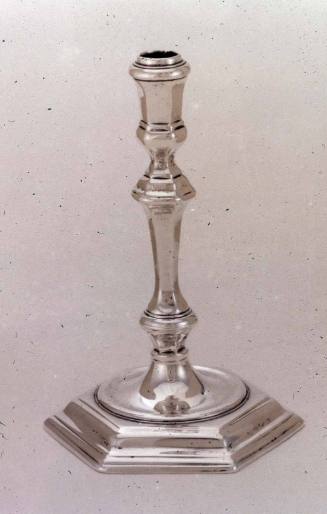
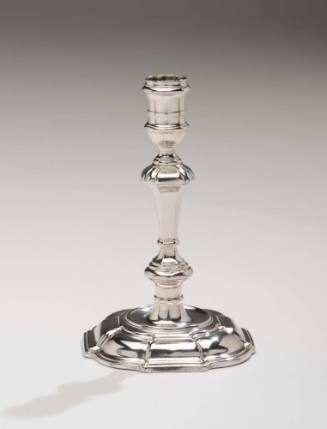
Taperstick
Date1725-1726
Artist/Maker
John Bignell
OriginEngland, London
MediumSilver (Sterling)
DimensionsH: 4 1/16"; Base: 2 9/16" square.
Credit LineMuseum Purchase
Object number1954-550
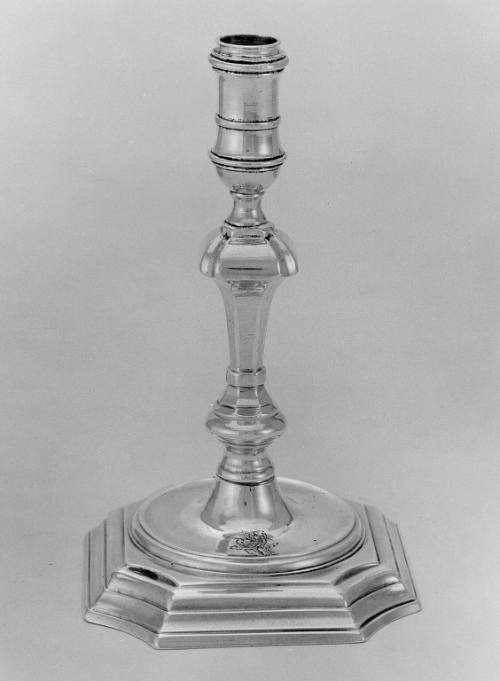
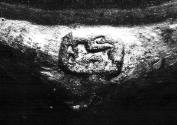
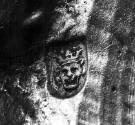
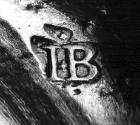
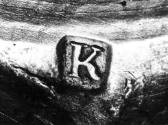
DescriptionTaperstick: cylindrical socket with applied moldings around top, center and base. Stem in form of square vase with concave corners. Stepped square base with concave corners. Crest of demi-lion rampant engraved on base.Label TextTapersticks, which first appeared in the late seventeenth century, follow closely the design of larger contemporary candlesticks. Used primarily for the melting of sealing wax, they formed an important part of a gentleman's writing equipage. Although popular during the first half of the eighteenth century, their function was soon usurped by the taper stand or wax jack and the taper box or bougie box.William Fitzhugh of Stafford County, Virginia, appears to have owned a silver taperstick at an early date. "3 pair silver Candlesticks 1 small writing Do." are listed with the plate in the 1701 inventory of his estate. The latter was most likely a taperstick. "2 Taper Candlesticks" appear with the plate in the 1770 inventory of the estate of Lord Botetourt, who had served for the previous two years as governor of Virginia.Inscription(s)Unidentified crest engraved on exterior of base.Mark(s)Under base, in corners: lion passant; date letter "K" for 1725-1526; leopard's head crowned; IB with star above and below in conforming outline.ProvenanceVendor: Garrard & Co. Ltd., London
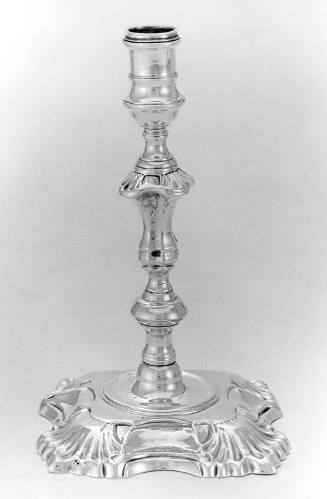
1655-1656
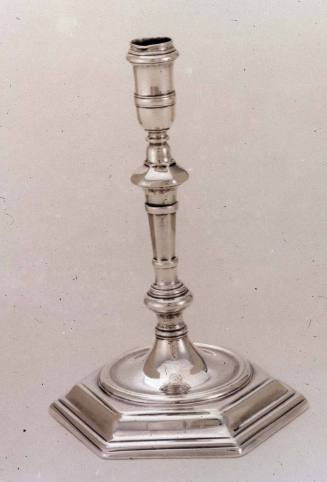
1694-1695