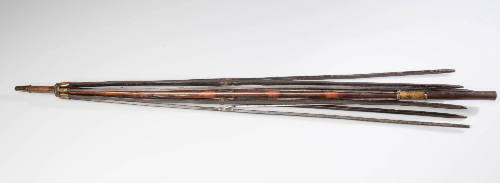
Umbrella frame
Date1775-1820
OriginEngland
MediumBamboo, baleen, copper alloy, ferrous metal
DimensionsOverall: 32 5/16 × 2 3/4 × 2 3/4 in (82 × 7 × 7cm)
Each rib approximately 27 1/2" long.
Each rib approximately 27 1/2" long.
Credit LineMuseum Purchase
Object number1947-345
DescriptionFrame for large umbrella, missing the original green cover. Bamboo handle with rib joints polished off, topped with gilt brass ferrule. Metal top notch has eight baleen ribs, measuring 1/4" by 3/16" in section, attached to the top notch by means of metal caps and twisted wire. Each rib is approximately 27 1/8" long, ending in an eyelet. An iron/steel stretcher runs from the runner (slide) to each rib, ending in forked or "pitchfork" shape where it attaches to the rib. Metal wire top spring for holding umbrells in place when raised. Small remnants of green tabby weave textile survived at top notch. Handle broken off about 24" down from top and broken near spring mechanism.Label TextFiber, Fabric, and Fortune:Whalebone refers to baleen, which grows in plates from the upper jaw of certain whale species, such as right and humpback whales. Baleen works like a sieve in the animal's mouth, allowing them to filter food from water. Despite the name, baleen is not bone, but is made of keratin, a protein that makes up human hair and fingernails. In the 18th century, most baleen was sourced from whales caught in the northern hemisphere, near Iceland and Greenland.ProvenancePrior to 1947, Edward Nield (Lancashire, England); 1947, purchased by The Colonial Williamsburg Foundation (Williamsburg, VA)
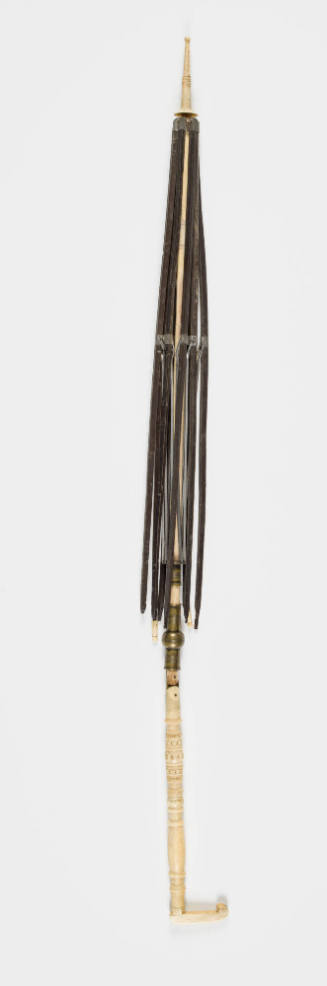
1820-1840
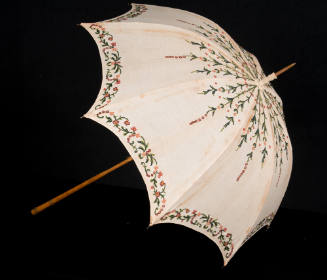
1800-1820 on later frame
1754-1764
1785-1800
ca. 1825
1800-1900

1800-1830