



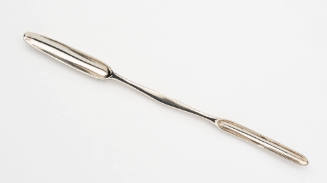
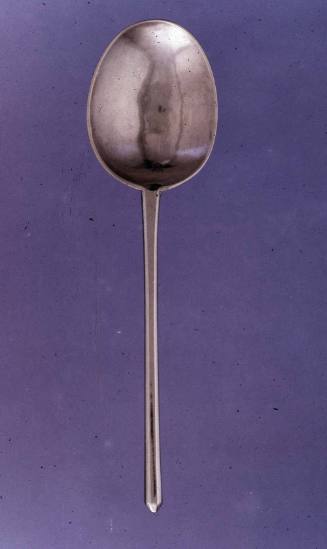
Marrow Spoon
Date1720-1721
Marked by
Henry Miller I
working ca. 1714-1729
OriginEngland, London
MediumSilver (sterling)
DimensionsOL: 13 5/16"; OW across bowl: 2 1/4"
Credit LineGift of John A. Hyman: The John A. Hyman Collection
Object number1989-11
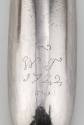
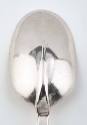
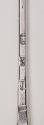
DescriptionSilver marrow spoon: Large oval spoon bowl with long rat-tail drop on back and long straight shank terminating in a long ovoid marrow scoopLabel TextThe fatty tissue inside of cooked bones, known as marrow, has long been considered a great culinary delicacy. Said to taste buttery, sweet, and nutty, it is still eaten in many cultures. Silver implements to aid in extracting marrow at the dining table began to appear in England in the late 1600s. Marrow spoons with one end shaped as spoon bowl and the other end as a narrow channel appeared first. They were soon accompanied by marrow scoops featuring two scoop ends, often of varying widths. Both forms retained their popularity throughout the eighteenth century and beyond.Inscription(s)Prick engraved in script on back of scoop: "- / WT / 1722 / -"Mark(s)Marked in relief on back of stem: 1) "H•M" in a shaped rectangle for Henry Miller I [Grimwade 1990 #1028]; 2) date letter "E" in a pointed shield for 1720-21; 3) lion passant; and 4) a leopard's head crownedProvenanceEx Coll: John A. Hyman, Williamsburg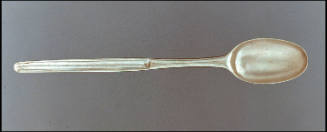
ca. 1718
ca. 1770-1800
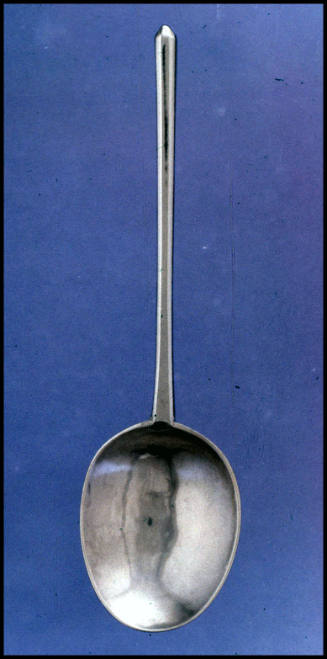
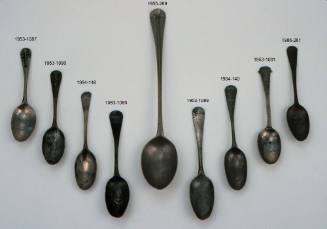
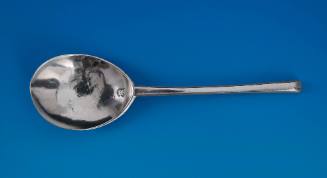
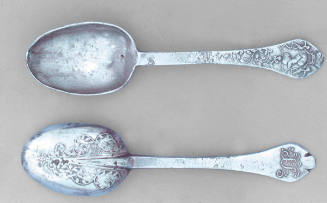
1700-1730
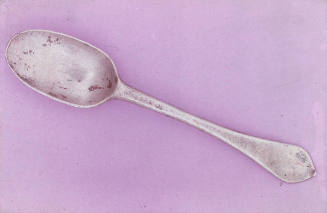
1690-1730
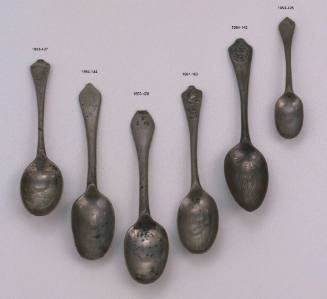
1690-1725