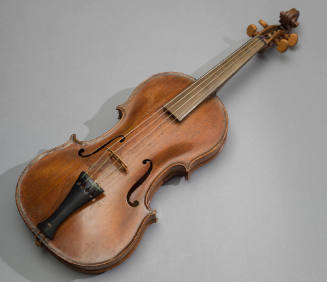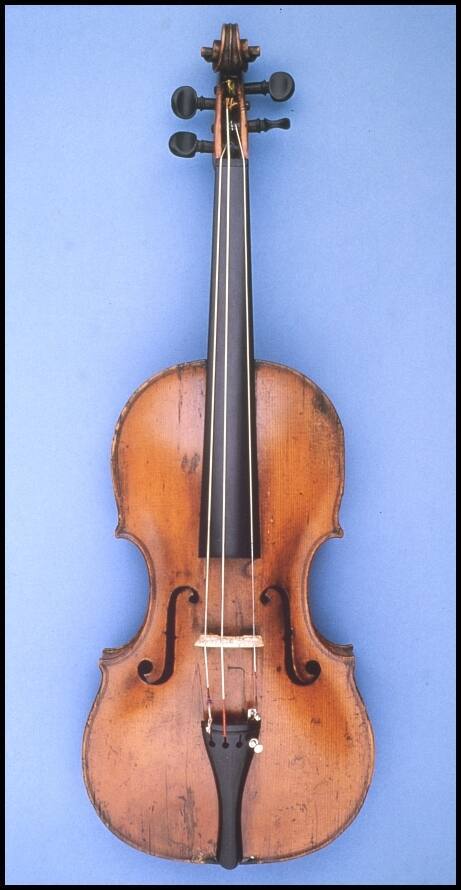
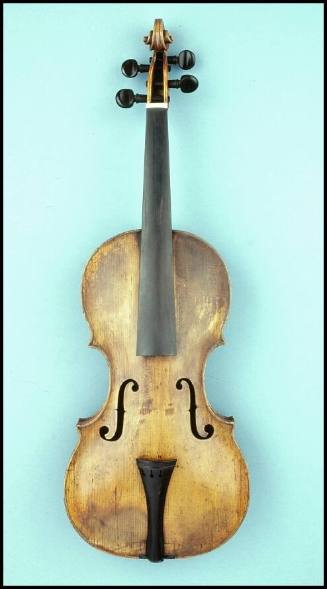
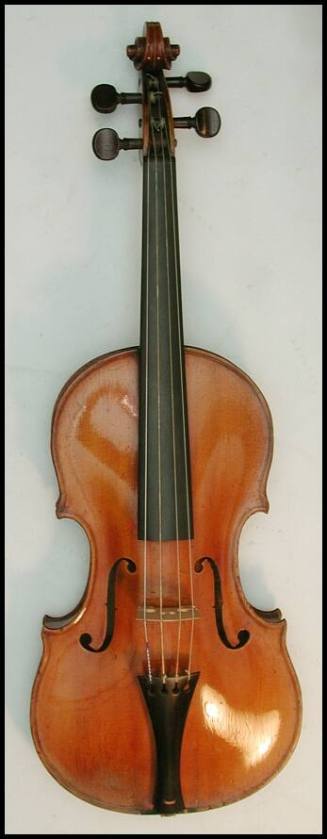
Violin
Dateca. 1794
Artist/Maker
James Simpson & Son
OriginEngland, London
MediumSpruce, Maple, Ebony, mother of pearl
DimensionsOverall: 59.8 x 20.5cm (23 9/16 x 8 1/16in.)
Credit LineMuseum Purchase
Object number1982-210,A
DescriptionThe violin is re-necked and retains the original scroll. The end button, tail piece, fingerboard, nut, and tuning pins are of ebony. The tuning pins have circular mother of pearl inlay. The top plate is of spruce; the sides and bottom plate are of curly maple.Label TextJames Simpson, the maker of the violin (1982-210) and retailer of the case (1988-18,1), sold musical instruments, instruction books, sheet music, and other musical necessities. The son of a music publisher and instrument maker, he was one of a large number of instrument makers and retailers who flourished in London during the last half of the eighteenth century.This violin is similar to other English violins of the same period, although llike many other eighteenth-century examples, the neck was altered during the nineteenth century to adapt it for the performers and music of that time. The rectangular leather-covered case has a handle on the top and is lined in baize (a type of wool cloth) and marbled paper. The ornate label functioned as an advertisement as well as a maker's identification, informing the public of the variety of goods sold at Simpson's shop.Inscription(s)see marksMark(s)Stamped on base of neck in back: "SIMPSON" Stamped on back plate: "NAVAL EXCHANGE" Printed on a paper label inside: "I SIMPSON / Musical Instrument Maker / at the Bass Viol and Flute / in Sweetings Alley / Opposite the East door of the Royal Exchange / LONDON"ProvenancePurchased by CW in 1982 from Christies, London.
1700-1800
Mid 18th century