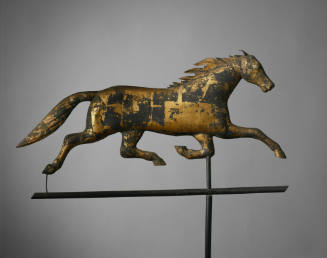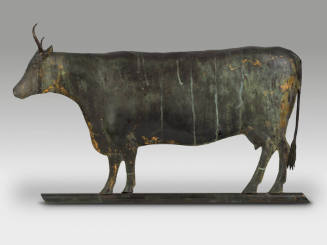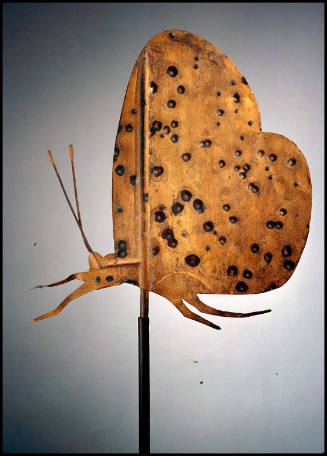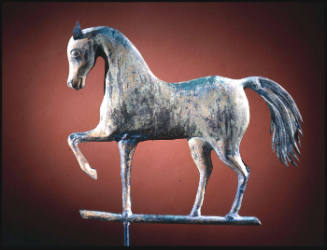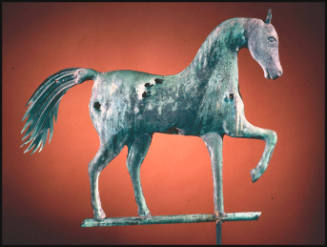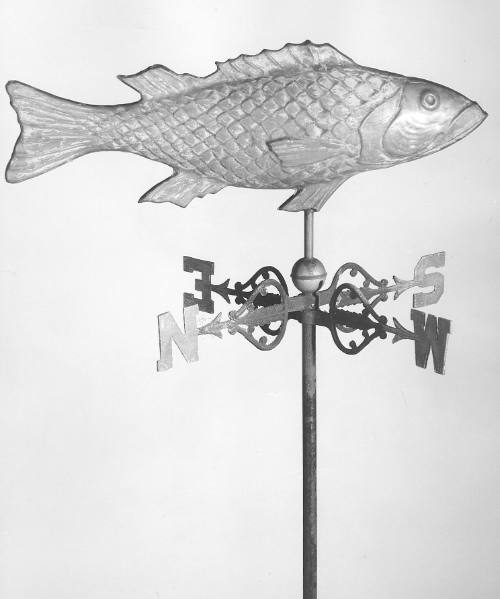
Directionals and Ball on Pole
Date1870-1930
Probably by
J. W. Fiske & Company
(active 1870-1893)
MediumIron, copper, zinc alloy, gilding, and lead
DimensionsPole alone: 49 5/8in. (126cm)
Each of the two directional arms: 21 1/4in. (54cm)
Each of the two directional arms: 21 1/4in. (54cm)
Credit LineMuseum Purchase
Object number1963.800.1,2
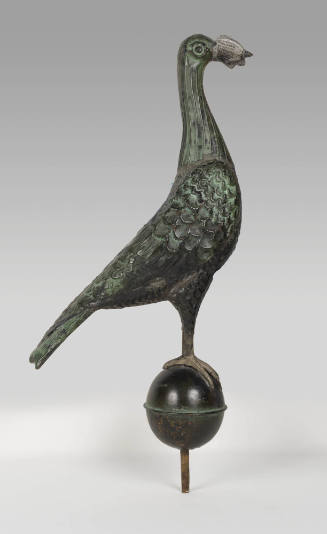
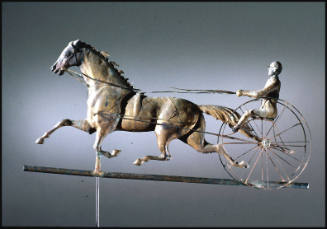
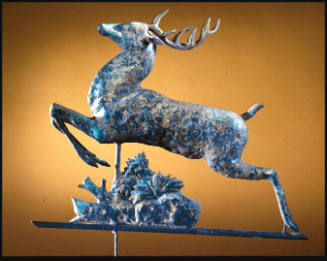
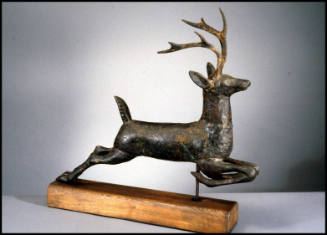
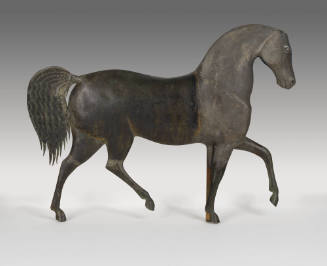
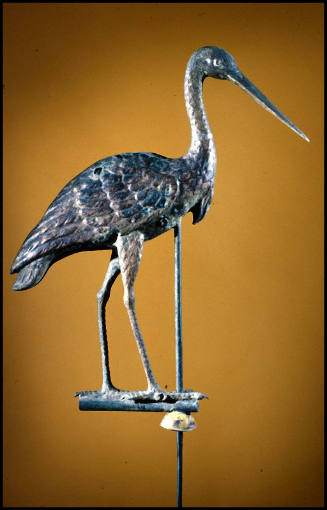
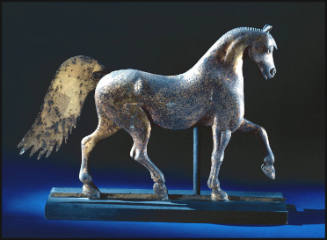
Label TextThe most prevalent form in metal sculpture is the weathervane. Like the figurehead, it has a long ancestry. As far back as 100 B.C., the swinging figure of Triton embellished the Tower of Winds in Athens. Five hundred years later, a monumental female figure served as a weather indicator in Constantinople. These isolated cases were folowed by a wide us of the cockerel weathervanes on churces as a result of a papal decree. The custom spread with new symbols and designs. Metal bannerets turned on castle turrets in England and in France. The Scandinavians used vanes on ships. After the French Revolution, the general public adopted vanes, and the popularity spread throughout Europe. The art reached these shores in the seventeenth century and continued along the Atlantic seaboard, north and south. Great quantities of weathervanes were produced by artisans until the 1850's, when replicas were commercially manufactures.