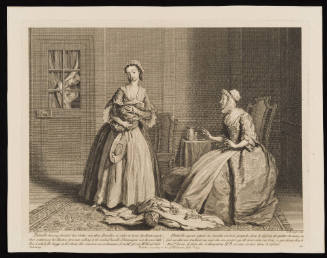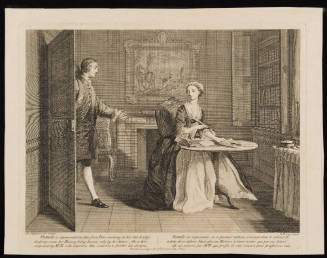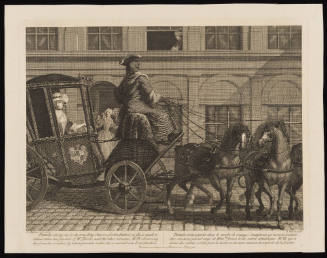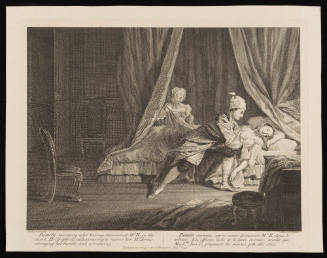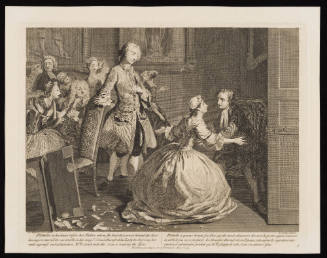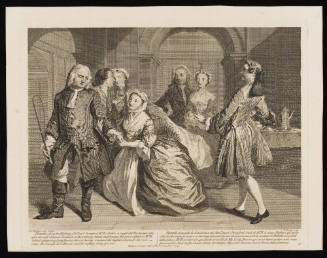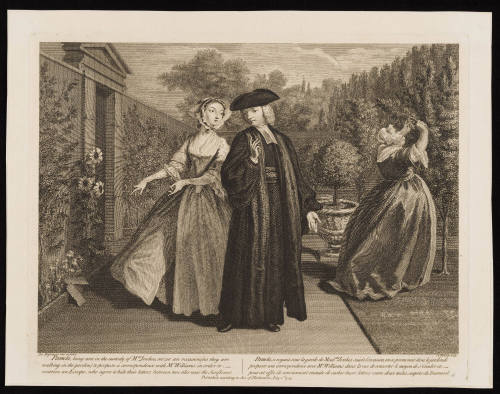
Pamela shows Mr Williams a hiding place for their letters [Pamela, Plate 6]
Date1745
After work by
Joseph Highmore
ca. 1692 - 1780
Engraver
Antoine Benoist
1721 - 1770
OriginEngland, London
MediumLine engraving and etching on laid paper
DimensionsOverall: 12 5/8 × 16 1/4 in (32.07 × 41.27cm) (includes false margins)
Other (Platemark): 11 3/4 × 14 7/8 in (29.84 × 37.78cm)
Other (Platemark): 11 3/4 × 14 7/8 in (29.84 × 37.78cm)
Credit LineMuseum Purchase
Object number1968-280,6
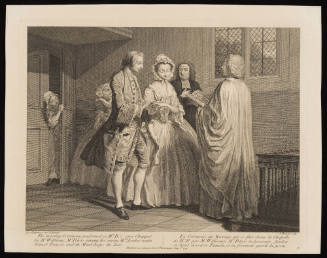
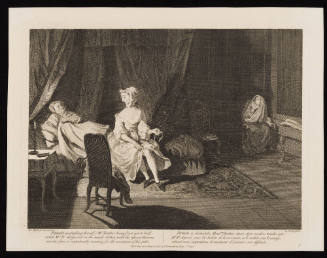
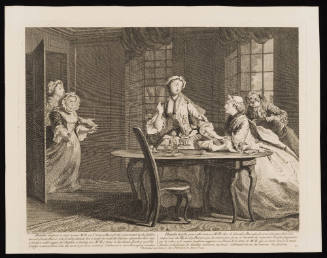
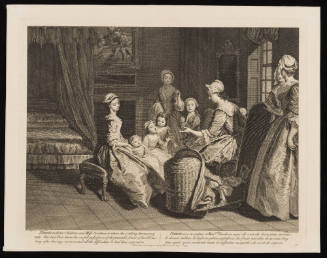
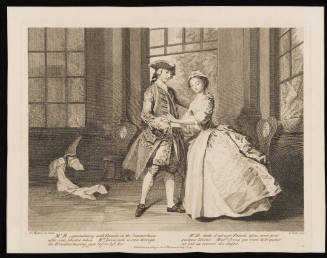
DescriptionThe lower margin reads: "Jos. Highmore inv. et pinx./ A. Benoist sculp./ Pamela, being now in the custody of M.rs Jewkes, seizes an occasion (as they are/ walking in the garden) to propose a correspondence with M.r Williams, in order to/ contrive an Escape, who agree to hide their letters between two tiles near the Sunflower./ Pamela, se voyant sous la garde de Mad.me Jewkes, saisit l'occasion, en se promenant dans le jardin, de/ proposer une correspondance avec M.r Williams dans la vue de concerter le moyen de s'evader et/ pour cet effet ils conviennent ensuite de cacher leurs lettres entre deux tuiles, aupres du Tournesol./ Published, according to Act of Parliament, July 1.st 1745."Label TextThis is part six of a twelve-part series based on Samuel Richardson's highly successful epistolatory novel Pamela: Or Virtue Rewarded which was one of the most influential works of English literature of the 18th century. Written in the form of letters and journal entries through the eyes of Pamela Andrews, a 15-year-old domestic servant, as she as she rejects the repeated failed seductions and attempted kidnappings by her wealthy employer, Mr. B. It's also a work of conduct literature about marriage, morality, and social class. It's heroine, Pamela navigates her low position in society and her religious training to remain "virtuous" against all odds. Between 1744 and 1745, the painter Joseph Highmore published advertisements seeking subscribers to support the publication of engravings based on his twelve paintings representing scenes from the novel. The prints were published with inscriptions in English and French to appeal to a wide audience.In the sixth scene, Pamela is now at Mr. B's estate in Lincolnshire where she is mistreated by Mrs. Jewkes, the housekeeper. She meets Mr. Williams, a local clergyman who tries to help her from her situation: "Pamela, being now in the custody of M.rs Jewkes, seizes an occasion (as they are walking in the garden) to propose a correspondence with M.r Williams, in order to contrive an Escape, who agree to hide their letters between two tiles near the Sunflower."ProvenanceBefore 1968, Frank Partridge & Sons, Ltd. (London, England); 1968-present, purchased by the Colonial Williamsburg Foundation (Williamsburg, VA)