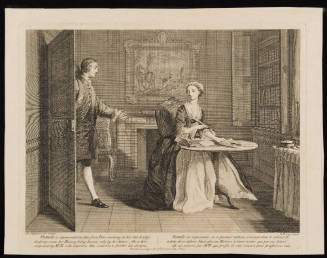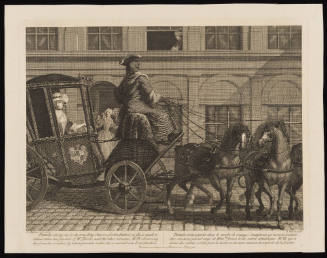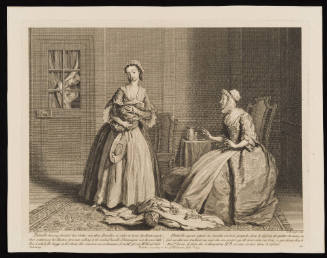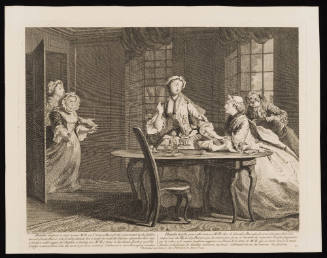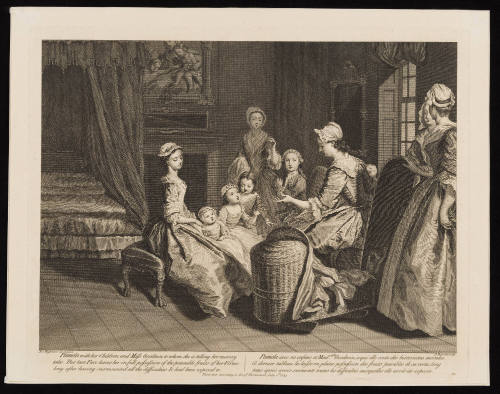
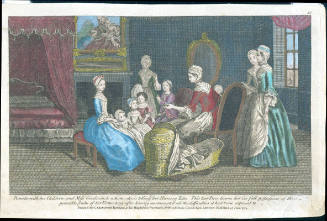
Pamela tells a nursery tale [Pamela, Plate 12]
Date1745
After work by
Joseph Highmore
ca. 1692 - 1780
Engraver
Antoine Benoist
1721 - 1770
OriginEngland, London
MediumLine engraving and etching on laid paper
DimensionsOverall: 12 5/8 × 16 1/8 in (32.07 × 40.96cm) (includes false margins)
Other: 11 3/4 × 14 7/8 in (29.84 × 37.78cm)
Other: 11 3/4 × 14 7/8 in (29.84 × 37.78cm)
Credit LineMuseum Purchase
Object number1968-280,12
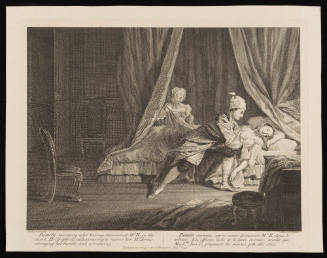
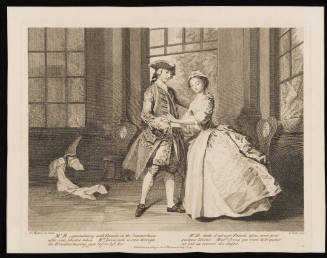
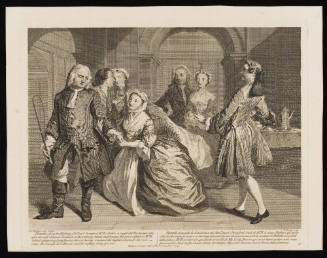
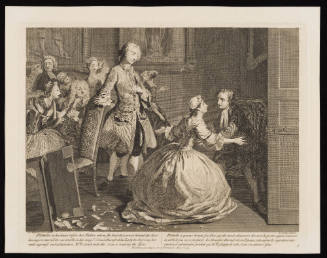
DescriptionThe lower margin reads: "Jos. Highmore inv. et pinx./ A. Benoist sculp./ Pamela with her Children and Miss Goodwin to whom she is telling her nursery/ tales. This last Piece leaves her in full possession of the peaceable fruits of her Virtue/ long after having surmounted all the difficulties It had been exposed to./ Pamela avec ses enfans et Mad.selle Goodwin, aqui elle conte des historiettes morales./ Ce dernier tableau la laisse en pleine possession des fruits paisibles de sa vertu, long/ tems apres avoir surmonte toutes les difficultes auxquelles elle avoit ete exposee./ Published, according to Act of Parliament, July 1.st 1745."Label TextThis is final part of a twelve-part series based on Samuel Richardson's highly successful epistolatory novel Pamela: Or Virtue Rewarded which was one of the most influential works of English literature of the 18th century. Written in the form of letters and journal entries through the eyes of Pamela Andrews, a 15-year-old domestic servant, as she as she rejects the repeated failed seductions and attempted kidnappings by her wealthy employer, Mr. B. It's also a work of conduct literature about marriage, morality, and social class. It's heroine, Pamela navigates her low position in society and her religious training to remain "virtuous" against all odds. Between 1744 and 1745, the painter Joseph Highmore published advertisements seeking subscribers to support the publication of engravings based on his twelve paintings representing scenes from the novel. The prints were published with inscriptions in English and French to appeal to a wide audience.In the tweleveth scene, Pamela tells nursury stories to her numerous children of different ages and her adopted daughter Miss Goodwin (Mr. B's daughter from a preivous relationship). The scene takes place in a bedchamber furnished with a wicker crib, a bed with hangings, mirrors, and a painting. The inscription reads: Pamela with her Children and Miss Goodwin to whom she is telling her nursery tales. This last Piece leaves her in full possession of the peaceable fruits of her Virtue long after having surmounted all the difficulties It had been exposed to."ProvenanceBefore 1968, Frank Partridge & Sons, Ltd. (London, England); 1968-present, purchased by the Colonial Williamsburg Foundation (Williamsburg, VA)
Carington Bowles
June 25, 1774