
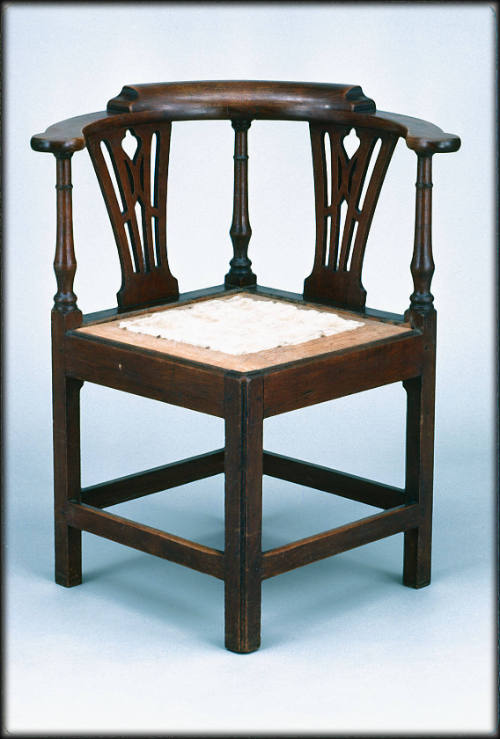
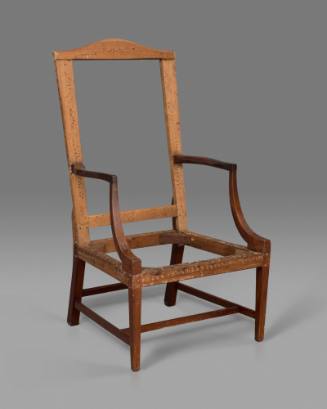
Corner chair, one of pair
Dateca. 1775
Attributed to
Samuel Cornwell
MediumBlack walnut, yellow pine, and linen
DimensionsOH: 32 1/4"; OW: 26 3/4"; OD: 25"
Credit LineMuseum Purchase
Object number1993-14,1
DescriptionCorner or smoking chair with rounded arms and arm terminals topped by a shaped crest; two pierced splats with vertical lozenges, strapwork, and a trefoil-like motif flanked by three swelled baluster turned arm supports; square seat with molded upper edge of seat rails, and slip seat with original webbing and foundation linen; four straight legs, square in cross section with chamfered inner corners, the front leg molded on the front corner; four box stretchers.Label TextChairs of this form were known by various names in colonial America. “Corner chair” and “roundabouts” were two popular names. In Virginia, North Carolina, Maryland, and sometimes Britain they were often called “smoking chairs”. Lord Botetourt’s 1770 inventory for the Governor’s Palace in Williamsburg listed four smoking chairs, two in the parlor and two in the dining room. Other 18th century inventories located the form in bedchambers and halls. These chairs were often employed for writing, reading, and related activities. Some with deep, concealing skirts were fitted with supports for chamber pots (this one was not).New research suggests that these chairs were made by Quaker cabinetmaker Samuel Cornwell. Born in Sussex County, Virginia to Samuel and Mary (Symons) Cornwell around 1755, Samuel was the stepson of cabinetmaker John Cornwell, who Mary married in 1763. A member of the Black Water Monthly meeting, Samuel married Sarah Bailey, neice of cabinetmaker Samuel Pretlow, in 1781. Samuel was also nephew to John Sanders (d.1777), cabinetmaker in Perquimans County, NC. When he died in 1813, Samuel bequeathed his "joiners tools" to his son, Samuel B. Cornwell.
Samuel Cornwell is one of a group of Quaker cabinetmakers working Southampton, Surry, and Sussex County, Virginia to whom chairs previously called the "Southampton County Chair Group" have been attributed. Other cabinetmakers identified in this group include Samuel 's stepfather, John Cornwell (c. 1735-c.1808), and his wife's uncle, Samuel Pretlow (1726-1782).
Features that distinguish the work of Samuel Cornwell's chairs are: a two-part rear seat rail; heavy chamfer on the inner corners of the legs, and angular shaping (rather than rounded) on the rear stile.Inscription(s)NoneProvenanceEstate of Bessie Thomas Shands of Courtland, VA, a descendant of John and Martha Rochelle Tyler and Gen. William B. Shands of Southampton County, VA.
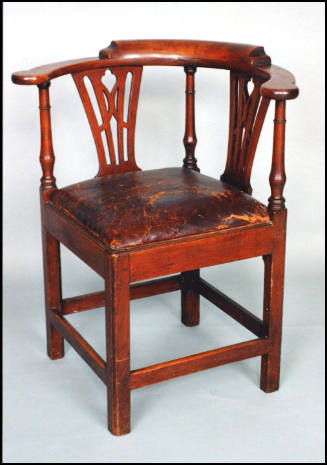
ca. 1775
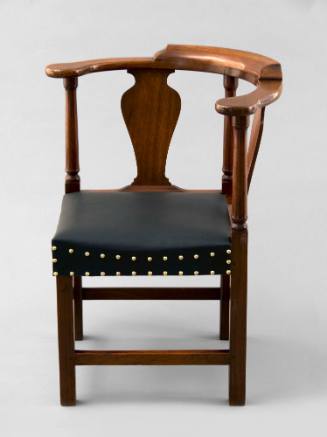
1765-1785
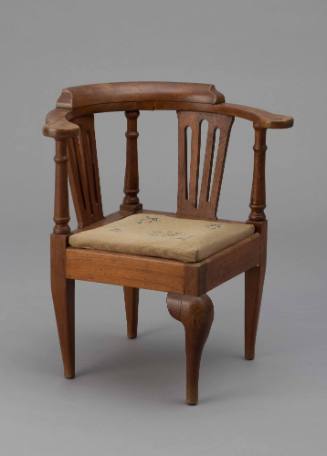
1750-1780
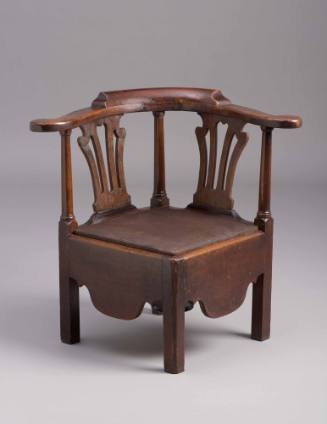
1771-1776
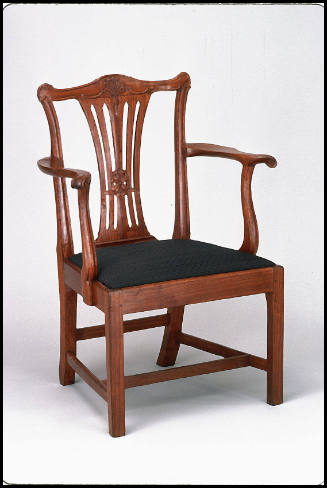
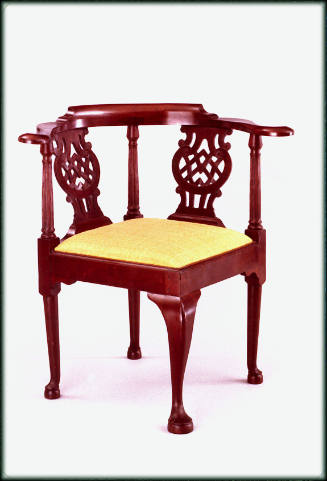
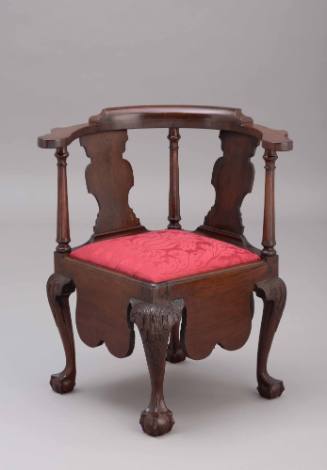
1740-1760
ca. 1725
1760-1780
1730-1760
1760-1775
1790-1810