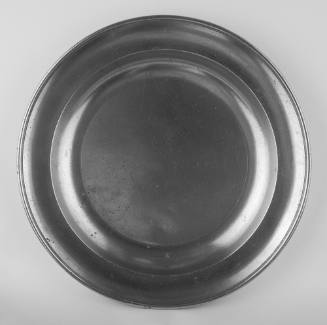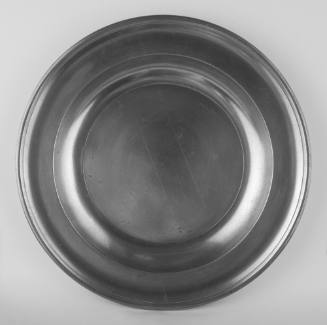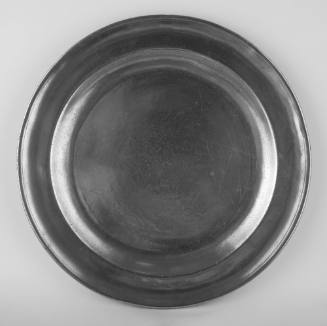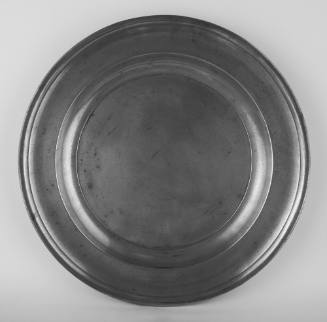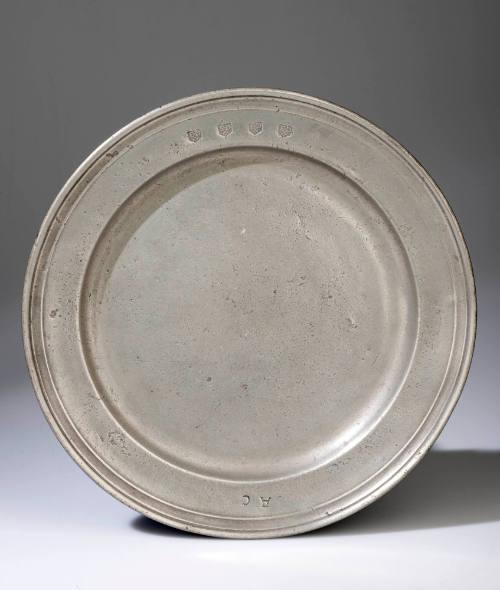
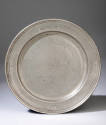
Reeded-Edge Plate
Dateca. 1690-1710
Maker
Edmund Dolbeare
MediumPewter
DimensionsDiameter: 8 7/8"; Height: 5/8"
Credit LineGift of Meredith Tonnesen
Object number2026-22
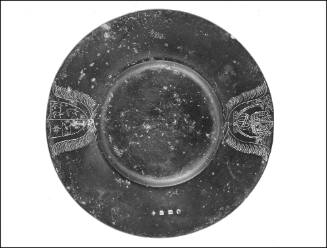
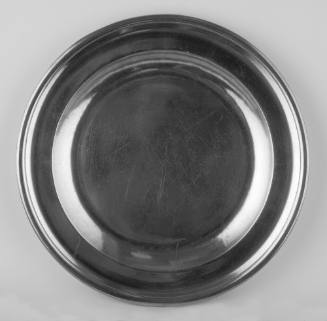
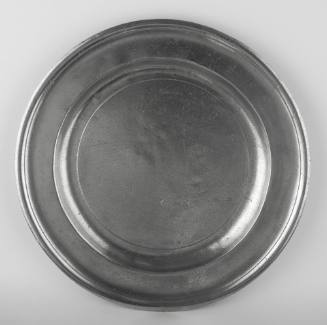
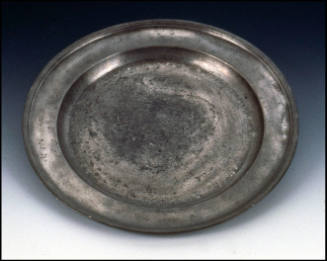
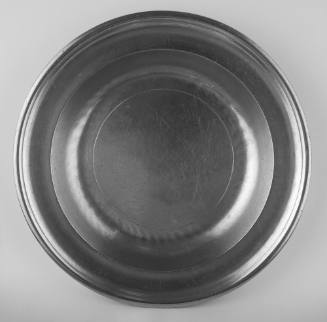
DescriptionCircular pewter plate edged by a thickened rim and a concave band, reinforced from the bottom, a plain booge, and a shallow well.Label TextCrafted in late 17th century Boston, this humble plate was made by Edmund Dolbeare, one of the earliest pewterers working in America whose identifiable work survives. He was born around 1644 to John Dolbeare of Ashburton, Devon, a member of a family of prominent pewterers, but is believed to have emigrated to Boston around 1670. Finding limited commercial success there, he relocated to Salem, Massachusetts in 1684, only to return to Boston in 1693. Edmund's eldest sons John and Joseph practiced the trade, as well as at least two grandsons, continuing the American dynasty of Dolbeare pewterers into the middle of the century.This plate is the earliest piece of American pewter in Colonial Williamsburg's collection. It is in good company with pieces by Edmund's ancestors, other English kinsmen, and his descendants.
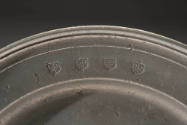
John, his eldest surviving child, was a highly successful entrepreneur and pewterer, dying in 1740 with an estate worth about £57,000. In 1737, he presented an imported English "spire" flagon to the Church of Christ in New Salem, Connecticut, which is now in the Foundation's collection (2026-21).Mark(s)Rim struck four times with Dolbeare's mark of "E*D" above four five-pointed stars, all in relief within a "home plate" shaped reserve (Jacobs-127, Wolf-243). Owner's initials of "A C" are struck incuse at the opposite side of the rim.ProvenanceSkinner's August Americana sale (Marlboro, MA), Aug.14, 2016, Lot 62; Hollis Brodrick (dealer), sold to Meredith Tonnesen (Reston, VA); 2026, given to The Colonial Williamsburg Foundation (Williamsburg, VA)