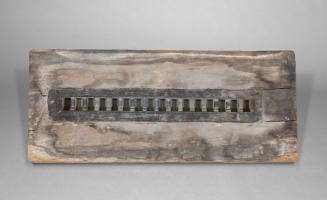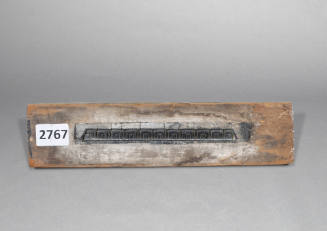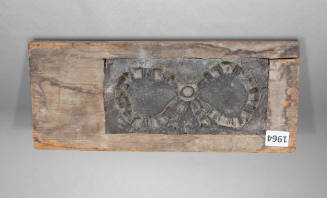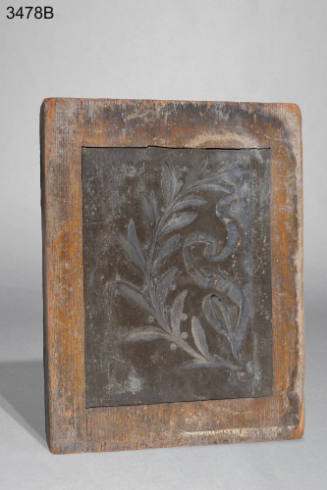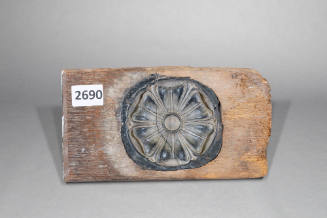
Composition Mould
OriginEngland or America
MediumResin; Pine
DimensionsWooden Base: 16” (L) x 10 1/4” (W) x 3” (T); Impression: 11 1/4" (L) x 5 3/8" (H) x 3/16” (D)
Credit LineGift of Mr. & Mrs. Elias Nassim
Object numberAF-X2023.2378
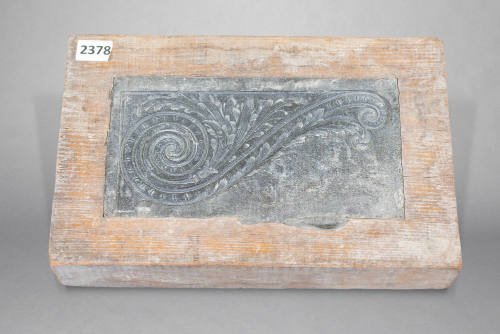
DescriptionIt is a resin mould depicting a large acanthus leaf scroll set into a wooden base. The scroll depicts two fronds of the acanthus leaf with the edges showing the veining. Both ends of the fronds are curled inward. The curled base of the large scroll is 4 1/4" (H) x 3 1/8" (W). The larger curl at the end of the frond is 1 3/8" (W) x 1 3/4" (H). The smaller curl is 7/8" in diameter.Label TextThis antique composition mould represents a trade that was practiced in Virginia during the Revolutionary period and into the 19th century. It depicts a common design found in upper class homes and public buildings. Composition was a substitute for more laboriously produced ornamental plaster and carved wood and stone. It is thought that the Adam brothers (Robert Adam 1728-1792) and John Adam (1721-1792)) played a major role in the initial manufacture of composition ornament on a grand scale. The Adam style demanded a large amount of delicate low-relief ornament. These moulds are for the production of such ornament in plaster, or in composition, usually a combination of whiting, glue, rosin and oil. The finished ornament was used on furniture and other objects as well as in the decoration of rooms.