
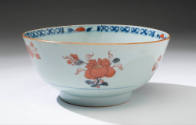
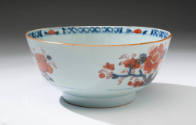
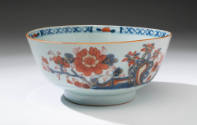
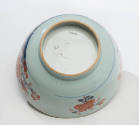
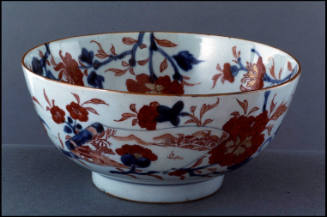
Punch Bowl
Dateca. 1765
OriginAsia, China, Jingdezhen
MediumHard-paste porcelain
DimensionsOH: 3 1/2"; OD: 7 9/16"
Credit LineMuseum Purchase
Object number1968-50
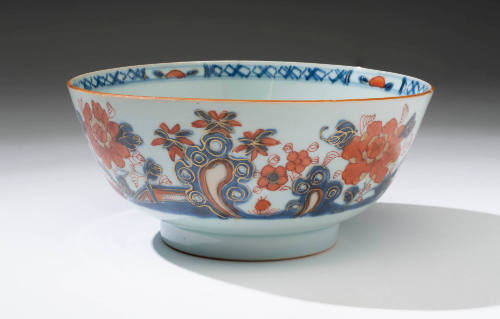
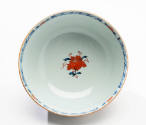
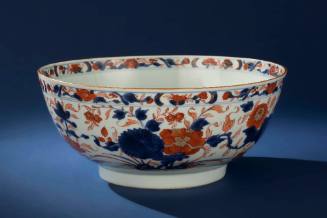
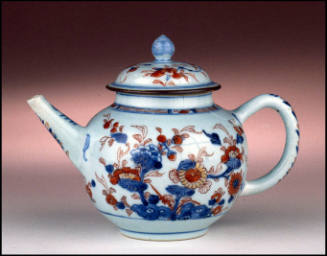
DescriptionCircular bowl with cylindrical foot ring; decorated in imari colors of underglaze blue, overglaze red and gold; on exterior: large peony spray, sylized fence, and pierced rockwork and one small peony spray, all underscored with a blue line; on interior rim; trellis band and demi-flowers; on interior bottom; small floral spray. Rim edged in sepia.Label TextPunch bowls like this were the heart of eighteenth-century entertaining, forming and maintaining friendships and important social and business connections. Both the drink and the word come from India. The word is derived from a Hindi word meaning ‘five’, the traditional number of ingredients in the beverage: water, sugar, rum or other spirits, spices, and citrus. Hosts were judged by their recipes as well as by their conduct in the punch ceremony and the equipment they employed. Punch bowls were produced in many materials and a broad range of sizes.
This Chinese export porcelain punch bowl is decorated in the Imari style, adapted from Japanese porcelains in the mid-1700s. The large iron-red enamel peony blooms and fence and rock highlights were added to the blue decoration in a second firing and the gilding in a third, making this style more expensive than the more common blue and white examples. References to "red" or "red and white" bowls and punch bowls appear in many probate inventories and records in the Virginia Tidewater area and throughout colonial America. Williamsburg store owner William Prentis owned four such bowls at the time of his death and Chinese Imari is also well-known from archaeological excavations elsewhere around the town.ProvenanceHyde, J.A. Lloyd 22 E. 60th St. NY
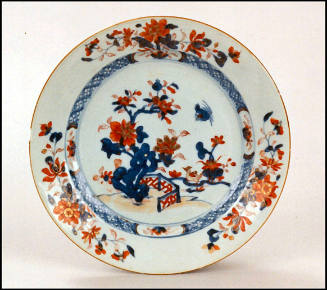
1730-1745
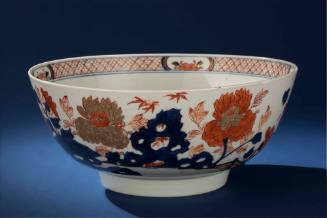
ca. 1730
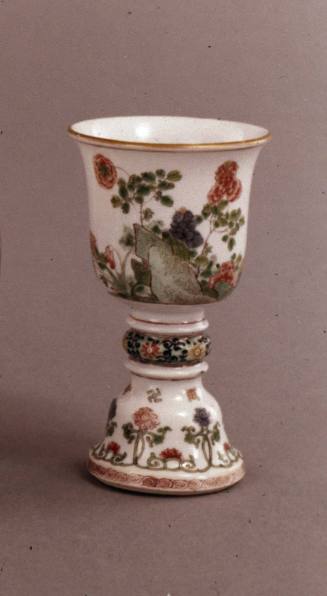
1660-1722
1750-1775
ca. 1730
ca. 1750
1780-1800
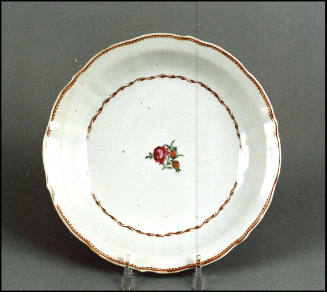
1780-1800
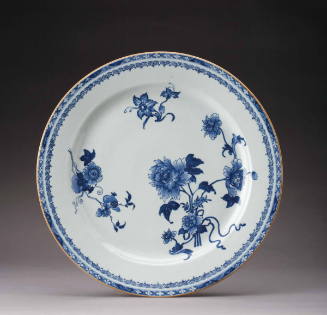
ca. 1750
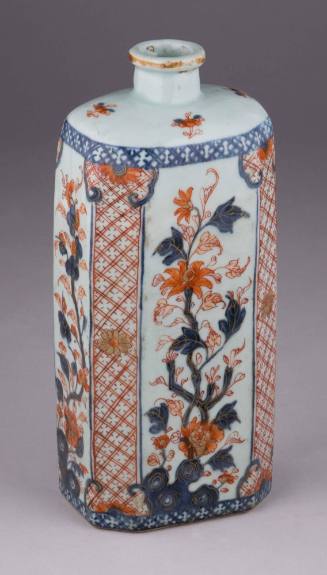
ca. 1730
ca. 1720
ca. 1745