
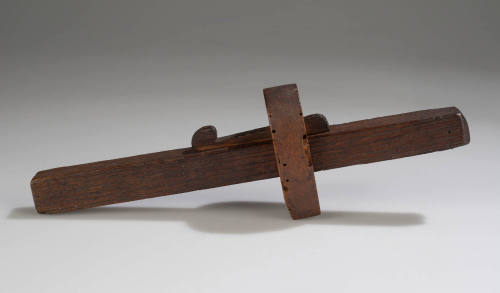
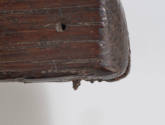
Marking Gauge
OriginAmerica or England
MediumOak, beech (est.), and steel
DimensionsOverall: 9 × 2 11/16 × 1 3/4 in (22.8 × 6.8 × 4.5cm)
Beam: 9" x 5/8" x 3/4 Fence: 2 5/8" x 1 3/4" x 11/16"
Beam: 9" x 5/8" x 3/4 Fence: 2 5/8" x 1 3/4" x 11/16"
Credit LineGift of Mr. Frank McGregor Smith.
Object number1986-268,52
DescriptionMarking gauge with rectangular sectioned beam, chamfered at the ends and set with a small cutting blade near one end. Ovoid sliding fence with flat bottom, secured by a sliding wedge. Other versions had two blades and were meant for laying out mortices and tenons.Label TextTo scribe a line which parallels the edge of a board, all one had to do was to set the sliding fence where desired and run the gauge down its edge, letting the tiny blade set near the tip of the beam do the work.ProvenanceFrom the George W. Cartwright II tool chest (1986-268,1). He immigrated from London to Ossining, New York in 1819. Cartwright's fitted tool chest contained chisels, planes, sharpening stones, and implements for marking, measuring, carving, and veneering. Many had been made before Cartwright was born, indicating that he probably inherited the tools or bought them secondhand. A substantial number of these tools remain with the chest today.
1710-1740
1780-1800
1760-1780
1790-1840
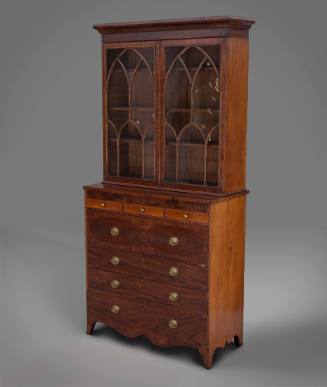
1800-1815
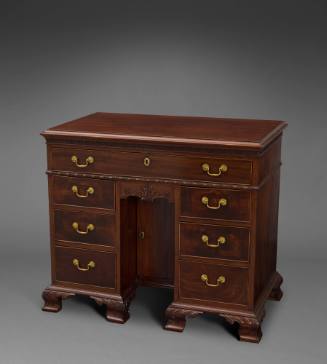
1760-1780
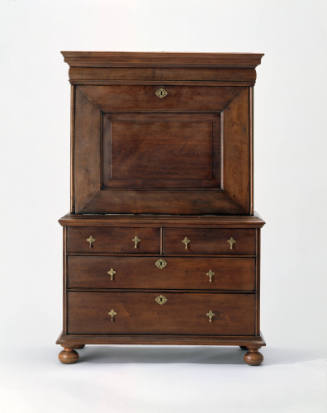
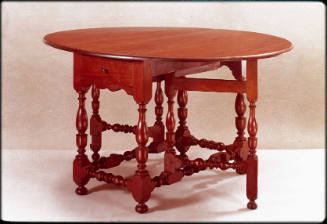
ca. 1725
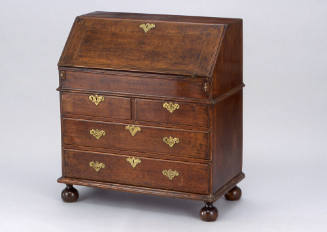
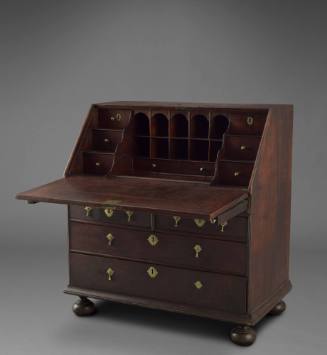
1700-1720
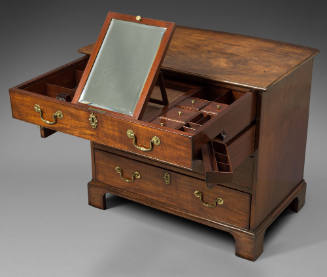
ca. 1770