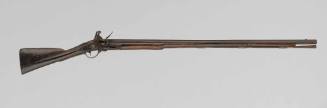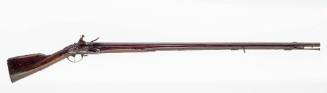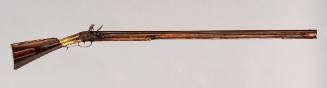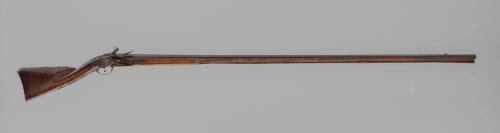
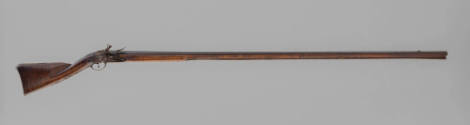
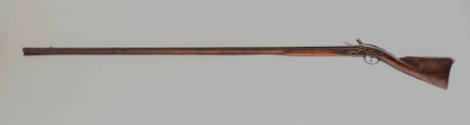
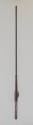
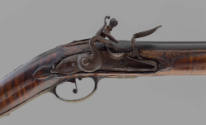
Hudson Valley Fowler
Dateca. 1710-1720
MediumWood, iron, steel, and brass
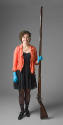
DimensionsOverall: 78 1/4"; Barrel: 61 3/4" x .74 caliber; Lock: 6 1/8" x 1 1/8" Weight: 12 1/2" lbs.
Credit LineMuseum Purchase, The Friends of Colonial Williamsburg Fund
Object number2024-175
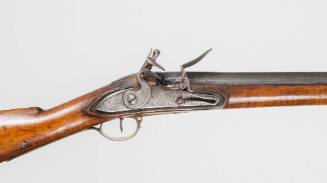
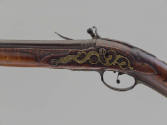
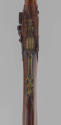
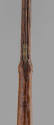
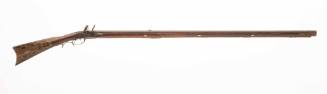
DescriptionEarly 18th c. Hudson Valley "Dutch" Fowler with a round-face Dutch lock, a very long Dutch barrel, ornamented Dutch cast brass mounts including a dragon sideplate, and a relief-carved American curly-maple stock. Characteristic buttstock with a projecting heel and large flats on each side of the comb.Label TextAmongst the earliest, uniquely American firearms built during the colonial period are the outrageously long bird-hunting guns made in the Hudson River Valley. Furthermore, these are the only idiosyncratic guns which are attributable to the "New York Dutch."During the late 17th century, all sorts of wares were imported and smuggled from the Netherlands into what was formerly New Netherlands, spanning from the New York City area to the north and west of to Albany. Amongst the flow of materials into the former Dutch colony were the components of hunting guns, including brass hardware and ready-made barrels and locks. These were built into long fowlers by local gunsmiths using locally sourced wood and decorated to meet the prevalent tastes of their clientele.
The first generation of these fowling guns were based on the "swan guns" used in the Netherlands, and often exceed six feet in length. They have massive buttstocks and barrels set with a heavy moulded breech which thins down rapidly, helping to create the balance needed to aim and fire such an unwieldy shoulder arm. Many have a projecting boss at the heel of the buttplate, meant to provide a strong bearing surface for the loading sequence, which requires the gun's butt to rest on the ground.
Colonial Williamsburg's Hudson Valley fowler is a superlative example, dating from the opening decades of the 18th century. Built around imported Dutch parts, it is stocked in curly maple and carved in the baroque taste, with aprons surrounding the triggerguard, tail pipe, lock and tang mortices, the sideplate flat and the rammer channel. The cast brass mounts, embellished with engraving and punch-work, are highlighted by an openwork sideplate made in the form of a serpent scrolling towards the front sidenail and a fluted and beveled triggerguard.Mark(s)Breech struck with a single Amsterdam proof.ProvenancePrior to July 2024, Tom Grinslade Collection; [Bonham's, Sale ARM24061MR-30233, July 2, 2023, Lot 1034, Marlborough, MA]; 2024 - present, purchased by The Colonial Williamsburg Foundation (Williamsburg, VA)
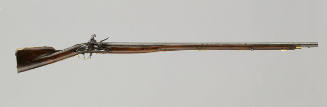
ca. 1730-1740
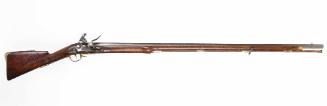
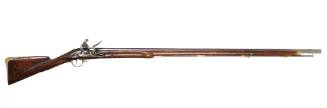
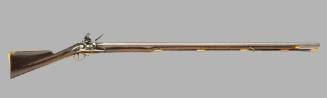
ca. 1700-1710
ca. 1700-1750