
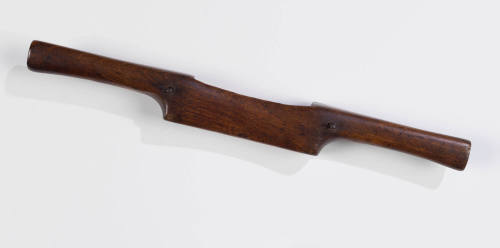
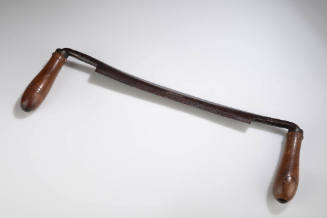
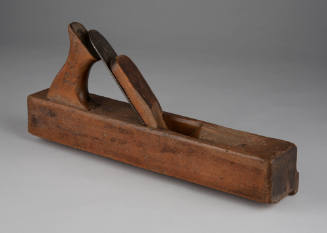
Spokeshave
Date1800-1820
OriginEngland
MediumWood, steel, brass, and iron
DimensionsOverall: 11 7/16 × 1 3/8 × 1 5/16 in (29.1 × 3.5 × 3.3cm)
Credit LineGift of Mr. Frank McGregor Smith.
Object number1986-268,64
DescriptionSpokeshave of conventional form with a double-tanged blade secured through a double-handled beech stock. The mouth is proteced by a brass sole secured by a pair of iron screws.Label TextThe early spokeshave has a miniature version of a drawknife’s blade and is used in a similar fashion. Its wooden stock allows for a greater control of how deep the blade cuts, making this tool perfect for much finer work than the drawknife. Though its name suggests it’s for making wheel spokes, it has many more uses.Inscription(s)Blade marked "CAST STEEL."ProvenanceFrom the George W. Cartwright II tool chest (1986-268,1). He immigrated from London to Ossining, New York in 1819. Cartwright's fitted tool chest contained chisels, planes, sharpening stones, and implements for marking, measuring, carving, and veneering. Many had been made before Cartwright was born, indicating that he probably inherited the tools or bought them secondhand. A substantial number of these tools remain with the chest today.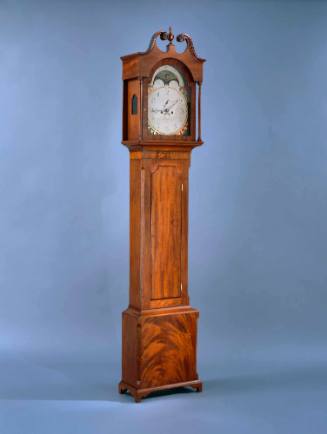
1750-1800
1790-1810