
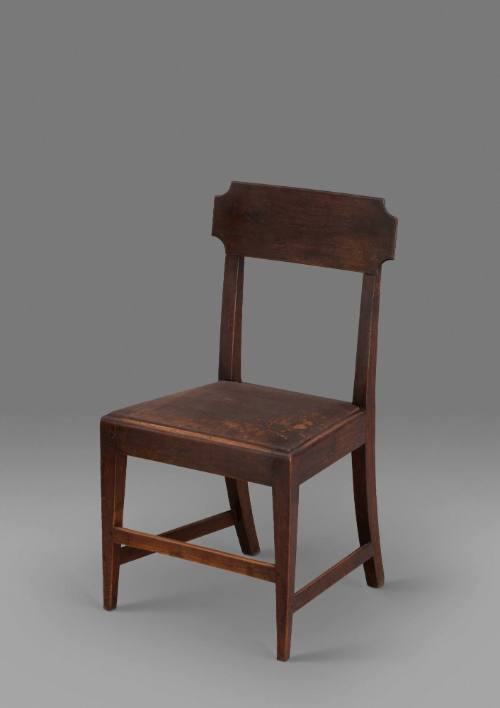
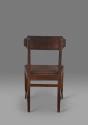
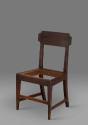
Side Chair
Date1815-1825
Possibly by
James Dinsmore
1771 - 1830
Possibly by
John Neilson
MediumBlack walnut, yellow pine, cotton, leather, horsehair
DimensionsOverall: 86.7 x 48.3 x 40.1cm (34 1/8 x 19 x (seat depth)15 13/16in.)
Credit LineMuseum Purchase, The Sara and Fred Hoyt Furniture Fund and The Friends of the Colonial Williamsburg Collections Fund
Object number2015-164
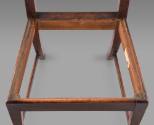
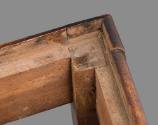
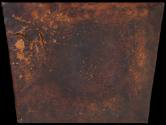
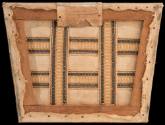
DescriptionSide chair with rectangular tablet back with incurved corners screwed from rear to tapered stiles; trapezoidal slipseat with original leather upholstery; top edges of front, rear and side seat rails rounded; tapered straight legs; front and side rectangular stretchers, front stretcher higher than side, no rear stretcher.Upholstery: Two front to back and two side to side webbing strips of multi colored plain wove cotton are nailed (not visible) to the top faces of slip seat rails; cotton foundation fabric nailed (not visible) to top faces of slip seat rails; horsehair stuffing; top cotton fabric nailed to bottom faces of slip seat rails; leather nailed to sides of slip seat rails.Label TextThis tablet-back walnut side chair with its original leather upholstered slip seat descended along with eight other chairs in the Cabell, Cocke, and Campbell families of Piedmont Virginia. While the chair's origin remains unclear, the maker may have been inspired by French designs. A chair of a similar form, a "siege hemicycle," was made by Georges Jacob of Paris in 1786. Tablet-back chairs inspired by both English and French designs became quite popular in America beginning in the early 19th century. Typically the American examples have a lower stay rail across the back, an element found lacking on both this Piedmont Virginia chair and the Jacob examples. This walnut chair may be a streamlined version of other American examples, or it may be a closer approximation of a French chair. The basic joinery and thick stock used in this chair, however, indicates the heavier hand of a rural joiner.
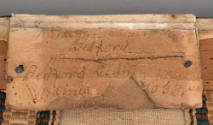
Although Piedmont resident Thomas Jefferson is known for his sojourn in France and his interest in French decorative arts, this chair does not appear to be connected to his joinery at Monticello as was previously thought. Two other walnut chairs and two very similar cherry chairs all with Piedmont family connections are in the Monticello collection.Inscription(s)Cardboard label nailed to underside of front of slipseat in two different inks & handwriting: “R. Kenna Campbell;/Bedford/Warminster Nelson County/ Bedford County, Va./Virginia no 33.” The R. Kenna Campbell, Warminster, Nelson County, Va. are in one handwriting/ink. Warminster, Nelson County is struck through suggesting that is an earlier location.ProvenanceOne of a set of nine extant walnut chairs that descended in the Cabell and Campbell families of Piedmont, Virginia (Nelson, Bedford, and Fluvanna Counties). It may have originally been owned by Joseph Carrington Cabell (1778-1856) and Mary Walker Carter Cabell (ca.1780-1863) of Liberty Hall and Edgewood, Nelson County, VA. Family tradition asserts that the chairs descended in the Cabell family, but two other examples of this walnut chair in the Monticello collection descended in the Cocke family presumably from John Hartwell Cocke of Bremo, Fluvanna County, VA.
ca. 1730
1695-1725
ca. 1765
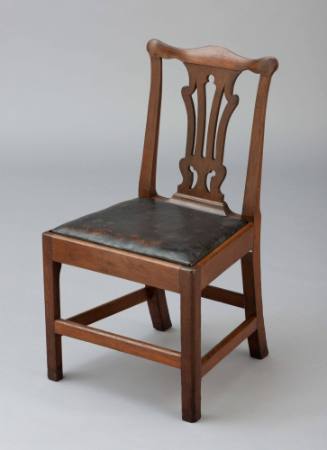
1771-1776
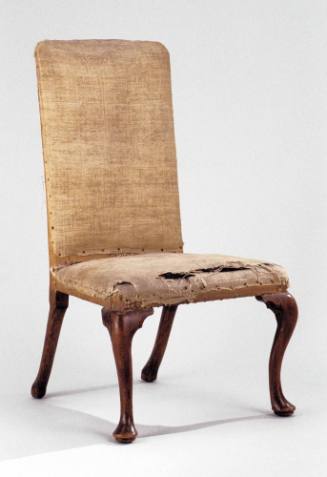
1710-1730
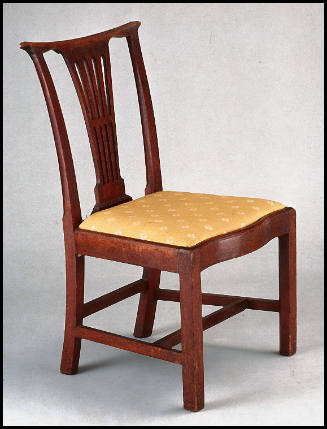
1760-1780
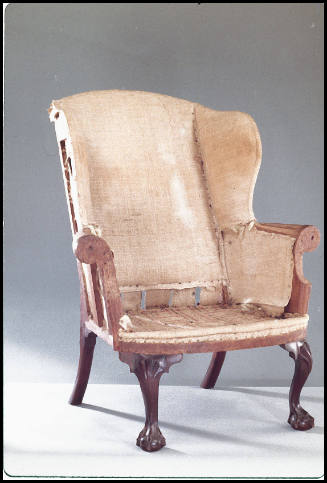
1750-1770
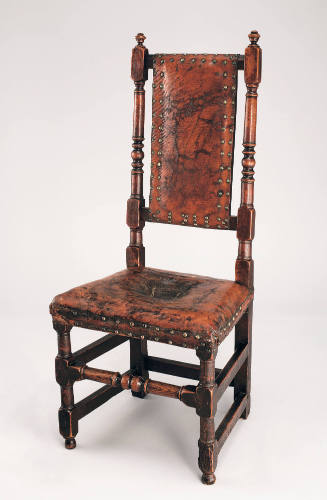
ca. 1700
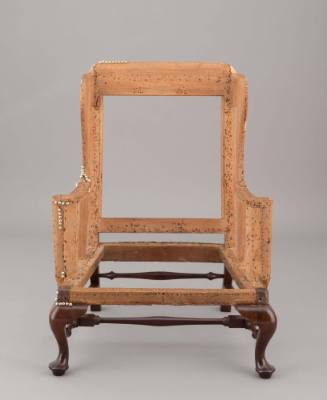
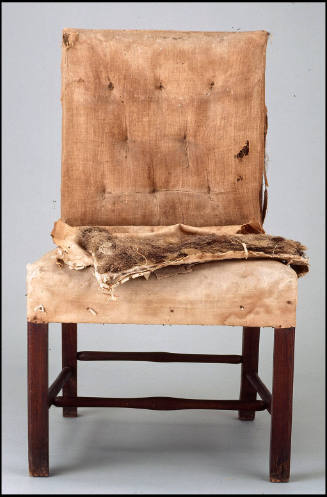
ca. 1765