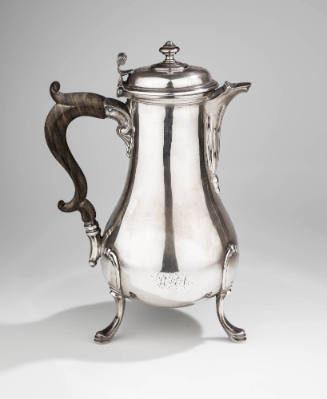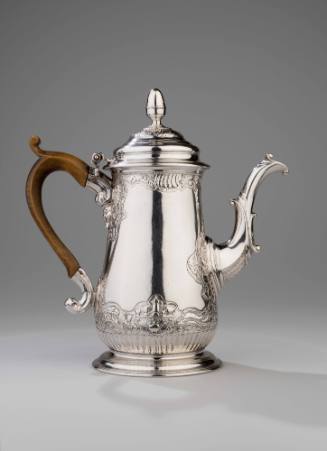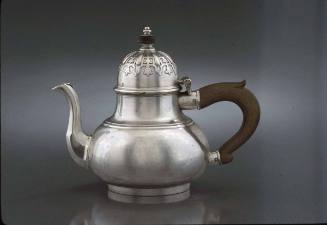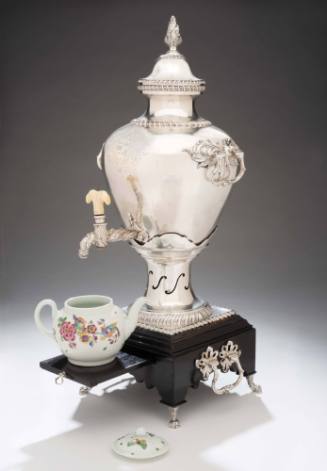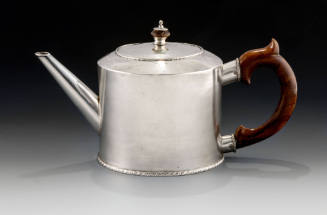
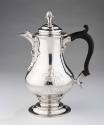

Coffee Jug
Date1756-1766
Marked by
Halstead & Myers
American, 1756 - 1766
MediumSilver; wood
DimensionsOH: 11 7/16”; OW (including handle and spout): 8 3/8”; ODiam (at belly): 5 ¾”
Credit LineMuseum Purchase, The Friends of Colonial Williamsburg Collections Fund
Object number2020-30
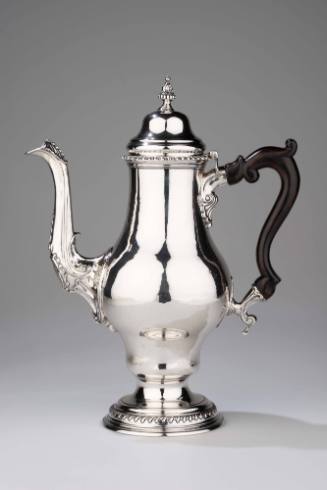
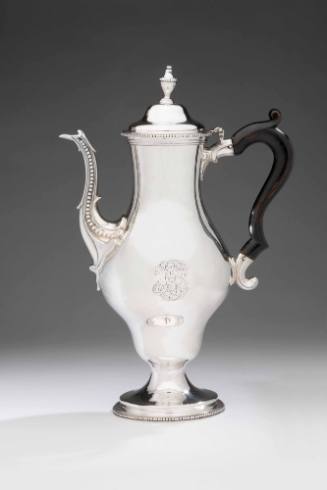
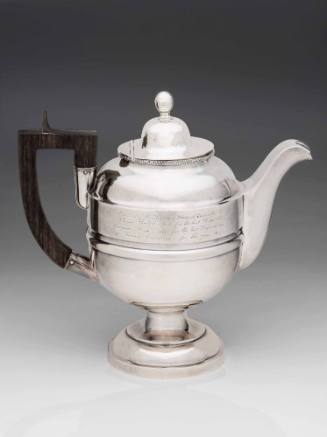
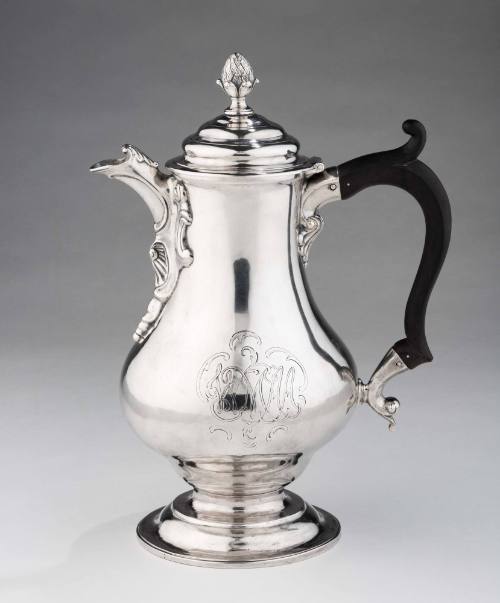
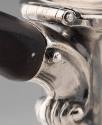
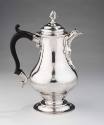
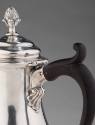
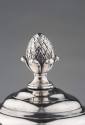
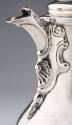
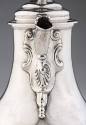
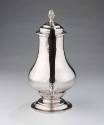
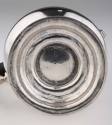
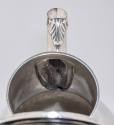
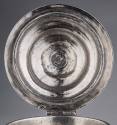
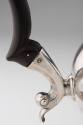
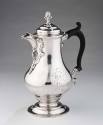
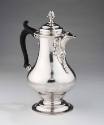
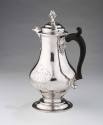
DescriptionSilver coffee jug: Stepped circular foot supports double-bellied, baluster body with short, high-set, cast and seamed spout. Spout ornamented with furl at top and rococo shell below, the whole framed by symmetrical scrolls flanking a pendant drop. Hinged stepped and domed lid with bud-shaped finial and small vent hole. Two cast and seamed scrolled handle sockets, the upper with a shell juncture, hold a (later) C-scroll wood handle with furl at top. Wood handle affixed with silver pins through silver socketsLabel TextA coffee jug is distinguished from a coffee pot by its short spout set high on the body. Although not uncommon in eighteenth-century English and Continental silver, this is the only known example of an American coffee jug. Made by the partnership of Halstead & Myers, it dates to their working period of 1756-1766. The jug retains elements of the baroque in its broad stance, symmetrically scrolled spout, and carefully balanced script cypher, but its double-bellied body and stepped, domed lid heralds the rococo style. Mid-eighteenth-century silver coffee jugs are similar in form and size to beer jugs, but unlike vessels for alcoholic beverages, coffee jugs always have wooden or insulated handles.The formal business relationship between Benjamin Halstead and Myer Myers lasted no more than ten years but is noteworthy in several respects. It was the first non-familial silversmithing partnership in New York and the first collaboration in the American colonies to employ a single mark representing both parties. Benjamin Halstead was a jeweler and retailing silversmith whose surviving works consist primarily of small-scale items. In contrast, Myer Myers was the leading silversmith in New York City during the eighteenth century, with approximately five hundred extant works from his shop. He was active in the craft for almost fifty years and is known today for his production of rare forms such as candlesticks, beer jugs, and bottle stands, as well as large scale pierced items including a cake basket and a dish ring. An active member of the city’s Jewish community, Myers also fabricated items for religious use including the only known sets of American-made rimmonim or Torah bells. The alliance of these two craftsmen was mutually advantageous: Myers gained greater access to a wider pool of non-Jewish clients, while Halstead’s presumed investment of capital was enhanced by the success of partnership's output.
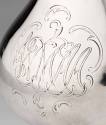
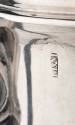
Inscription(s)Engraved with double-lined interlaced script “WMAA” with scroll embellishments on proper left belly of bodyMark(s)Marked vertically in relief “H&M” in a rectangle on proper right of body beside upper handle socket [See Barquist, Myer Myers, mark 11, p. 258]ProvenanceVendor: S. J. Shrubsole Corp.