
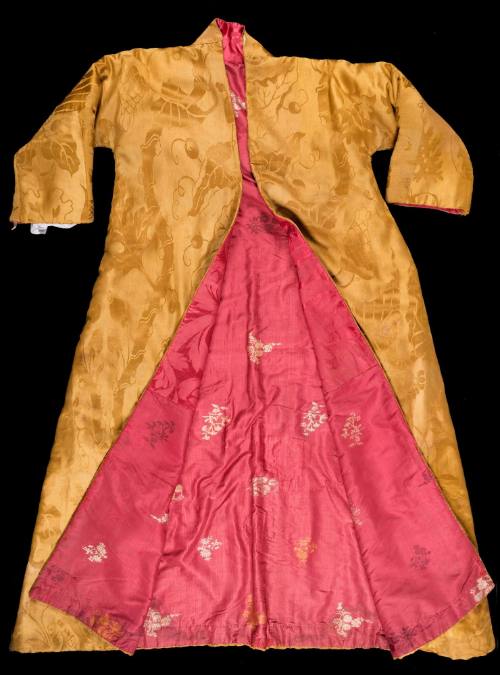
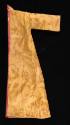
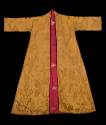
Wrapping Gown
DateEarly 18th century
OriginEngland
MediumGold silk damask lined with red woven silk; woolen inner lining.
DimensionsOverall: 58 1/2 x 54 1/2in.
Credit LineMuseum Purchase
Object number2010-20
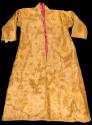
DescriptionMans' gown, cut in kimono fashion with standing collar, center-front opening without closures and loose sleeves intended to be folded back in cuffs. Gown is constructed of yellow silk damask in bold bizarre pattern of stems, flowers, and pear-shaped fruit in very long repeat of 70". Cuffs and upper front opening are faced with red silk damask intended to be visible when worn. Garment is lined with red-ground textile brocaded or inlaid with silk in widely scattered floral springs. Interlined with woven napped wool.Label TextThere is some evidence that men's gowns made loose and cut "kimono-fashion," like this example, were more often called gowns, not banyans. The term banyan may refer to men's long garments cut with shaped sleeves and more closely fitted to the body.ProvenanceSaid to have been worn by Thomas Severne, Esq. (b. July 9 1644; d. November 1739). The auction catalog (Sotheby's Belgravia, 9/24/1980, Lot 3) stated that Severne was Gentleman of the Bedchamber to King William III, though this has not been corroborated. Ex. Collection Castle Howard.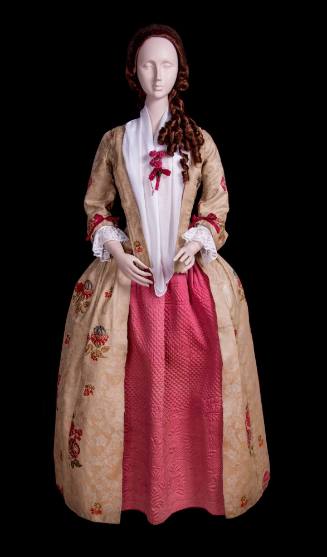
1750-1765
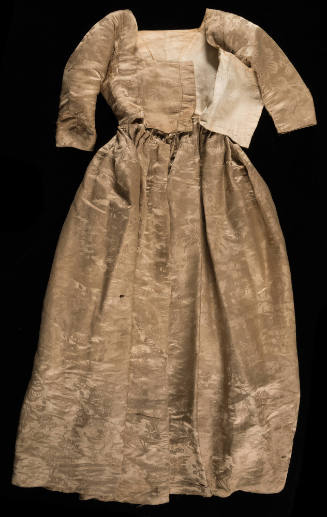
1740-1760; remade ca. 1780
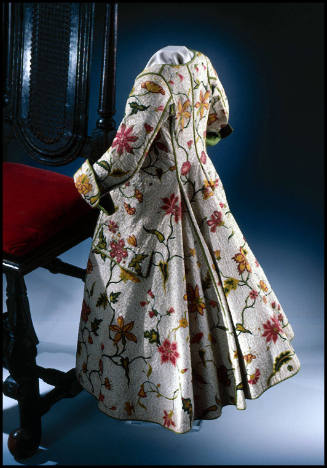
ca. 1710
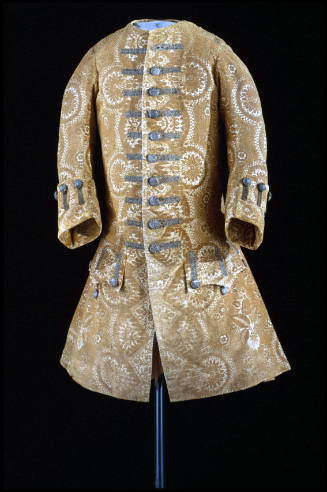
ca. 1730
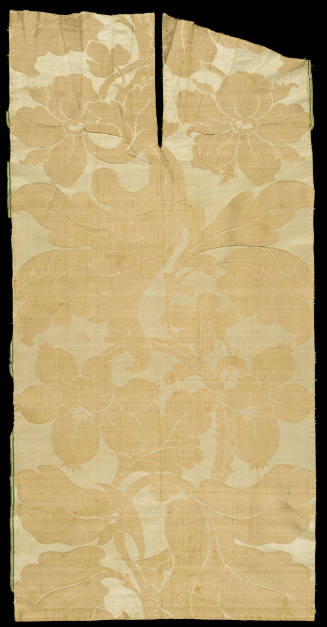
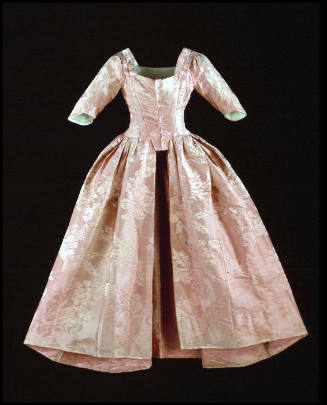
1747-1750 (textile); 1760-1775 (gown) altered later
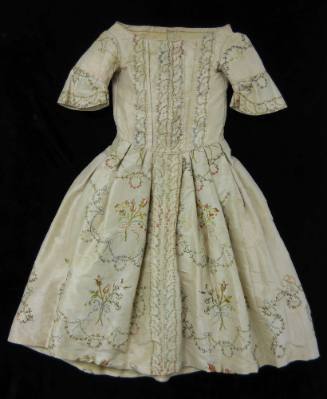
ca. 1850 from 1790-1810 textile
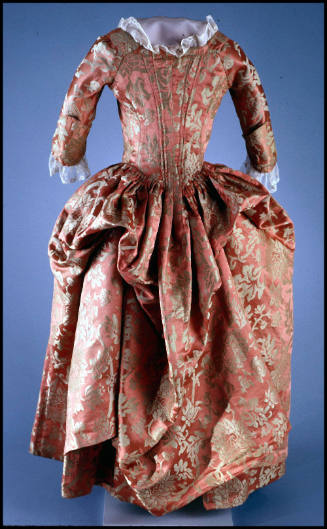
1740-1760 (silk); remodeled in 1770s
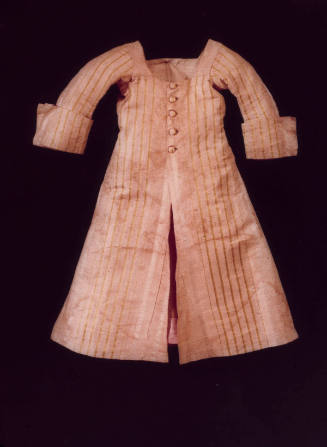
1740-1750

1790-1820
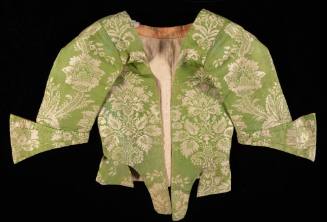
1760-1780
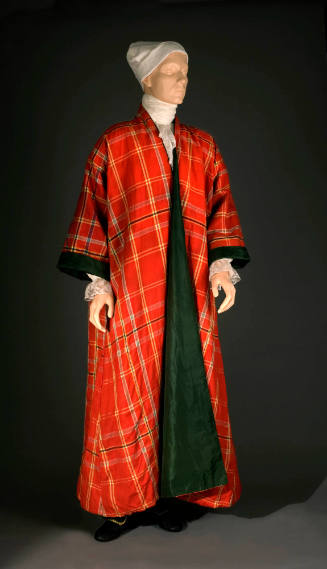
1770-1810