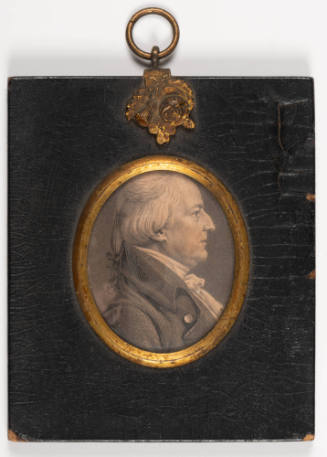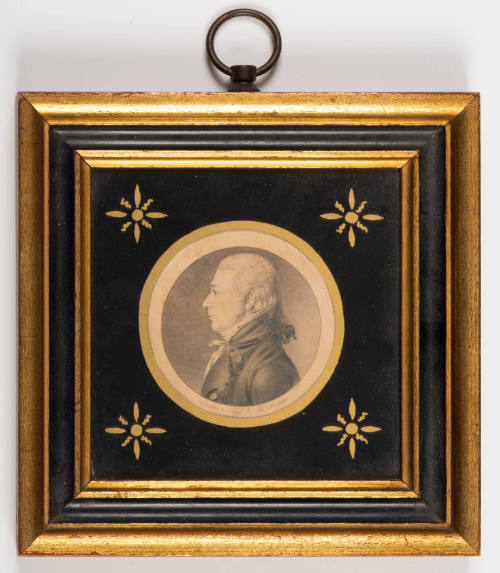
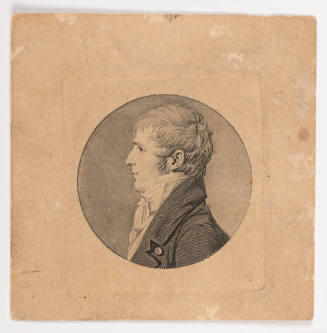
Portrait of Robert Carter (1774-1805)
Date1801
Artist
Charles Balthazar Julien Fevret de Saint-Memin
1770 - 1852
MediumMezzotint with line engraving and etching on wove paper
DimensionsFramed: 6 1/4 × 6 1/4 in (15.87 × 15.87cm)
Credit LineMuseum Purchase
Object number2009-141
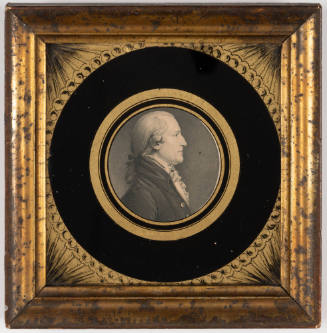
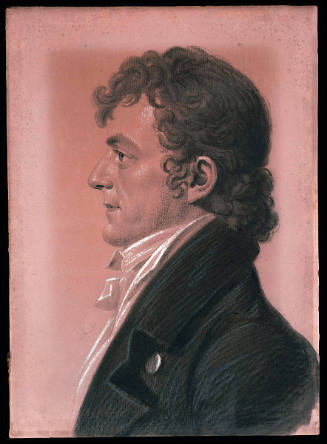
DescriptionProfile portrait of Robert Carter facing left. The lower margin reads: "Drawn & engr.d by S.t Memin"Label TextThis engraving depicts Robert Hill Carter (1774-1805), a member of the prominent Carter family of Virginia. A member of the Virginia planter class, Carter lived with his wife Mary Nelson Carter (1774-1803) at Shirley Plantation in Charles City, Virginia. In 1801, while Robert Carter was studying medicine at the University of Pennsylvania, the couple both sat for French artist and engraver Charles Balthazar Julein Fevret de Saint-Memin (1770-1852). Saint-Memin was a French émigré and former military officer who fled France during the French Revolution. The Saint-Memin family planned to travel to their plantation on Saint-Domingue but abandoned that plan when the Haitian Revolution began. Ending up in British North America, Saint-Memin was a prolific artist traveling up and down the East Coast, drawing more than 800 portraits. He created his portraits with a physiognotrace, a mechanical drawing instrument that artists used to accurately draw portraits. Sitters could purchase the life-size drawings that the physiognotrace produced as well as small engravings of the duplicated portrait. Saint-Memin also made custom frames for many of his clients' portraits. Most of the frames were gilded and the glass decorated with black paint and gold leaf.
With the revival of neoclassicism during the Federal period, Americans increasingly sought out profile portraiture. This style of portraiture was viewed as honorific as it alluded to the Roman Republic and the virtue of its leaders. When Saint-Memin engraved Robert Carter's likeness, he operated a studio in Philadelphia at No. 12 South Third Street. Mary Nelson Carter died in 1803, the same year that Robert Carter graduated from University of Pennsylvania's medical school. After his wife's death, Carter traveled to Europe and studied medicine in London and Paris. In 1805, he became sick and died while in Paris. In 1814, Saint-Memin returned to France permanently with his family after the overthrow of Napoleon and the restoration of the Bourbon monarchy. Upon leaving, he destroyed his physiognotrace and ended his career as an artist. Later, in 1817, Saint-Memin became the director of the Museum of Fine Arts in Dijon, France.ProvenanceDates unknown, probably descended through the Wickham-Carter family (Hickory Hill, Hanover County, VA); Before 2009, Alexander Reeves Fine Art (Richmond, VA); 2009-present, purchased by The Colonial Williamsburg Foundation (Williamsburg, VA).
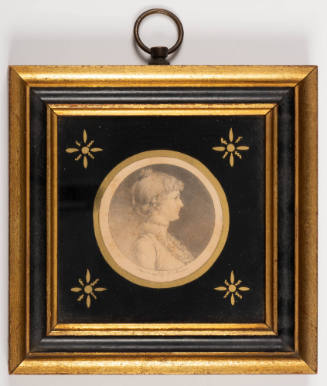
Charles Balthazar Julien Fevret de Saint-Memin
1801
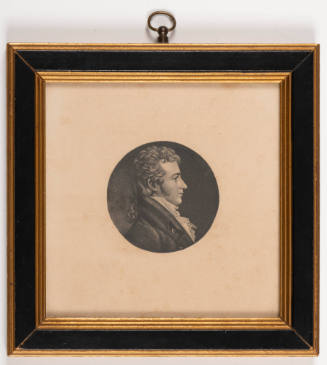
Charles Balthazar Julien Fevret de Saint-Memin
1800-1900
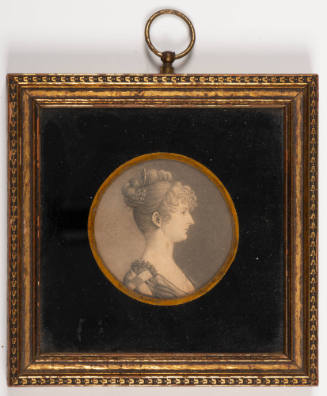
Charles Balthazar Julien Fevret de Saint-Memin
1808
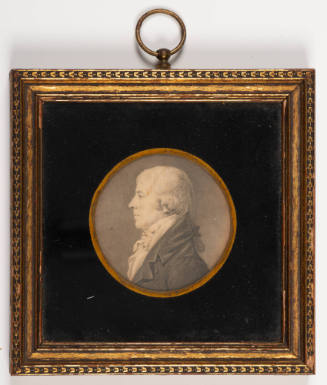
Charles Balthazar Julien Fevret de Saint-Memin
1808