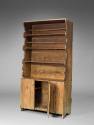
Dresser
Date1700-1780
MediumYellow pine
DimensionsOH: 76 1/2"; OW: 40 1/4"; OD: 50 1/4"
Credit LineMuseum Purchase
Object number1953-401
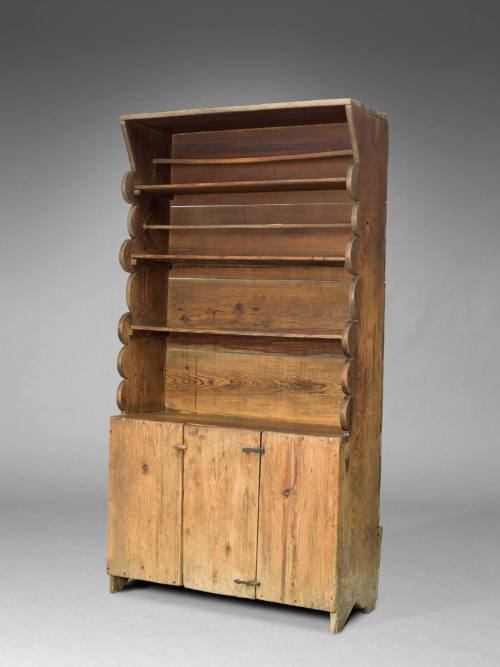
DescriptionAppearance:Dresser: flat, rectangular top supported by pair of tall, straight sides with bodly cut out scallops along front edge of open section; three plain shelves set into front of upper section; upper two shelves both have restraining rods doweled into sides above shelves; lower half has straight front with single, narrow door at center hinged at right on original strap hinges with wood fastener at left; interior contains single shelf on each side; bottom of each side cut out in triangular pattern with shaped, rear edge.
Construction:
The top is nailed from above to the edges of the sides. The back is comprised of six horizontal butt joined boards nailed to the edges of the sides, with the lowest nailed from the back and screwed from the inside to a supplemental board on the inside of the back that is relieved in the center of the lower edge with the ends extending to the floor where they butt join the sides to strengthen the back feet. The case bottom rests on this board and is secured with face nails from the sides. The sides extend to the floor where they form feet separated by a triangular relieved section.
On the upper section of the case, the shelf supports are nailed into the sides and the shelves are nailed to the shelf supports. The dish rails are chamfered on one edge and are rounded at each end to fit into through mortises. The dish rails are held in place with extended pins fit in holes at each end of the rails, immediately inside the case.
On the lower section of the case, the top of the cupboard is notched and nailed to the upper edge of the sides immediately below the lowest scallop, nailed to the sides with face nails from the sides into the edges of the top, and nailed to the back from the back with one nail. The two fixed panels on the front of the cupboard are face nailed to the edges of the cupboard sides, top and bottom.
Inside the cupboard, shelf supports for the shelves behind each fixed panel are nailed to the fixed panel, side and back. The shelves rest on the supports but are not fixed to them.
The door is hung on wrought iron pintle hinges, nailed to the door, with pintles in the proper right fixed panel. When closed, the door is secured with a wooden turn latch.
The dresser is made entirely of yellow pine secured with wrought nails.ProvenanceAccording to dealer piece came from "Carolina". Willis Stallings apparently stated that this piece came from Albermarle Sound area of North Carolina, the same area as cupboard 1954-386. The two pieces bear little resemblance to each other. (See note attached to old catalog sheet in object file.)
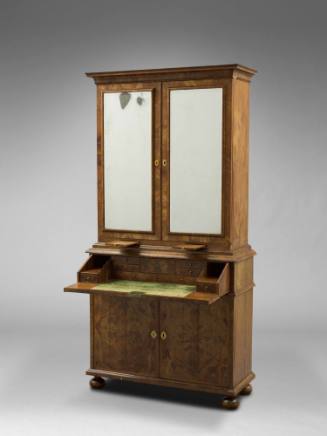
1705-1715
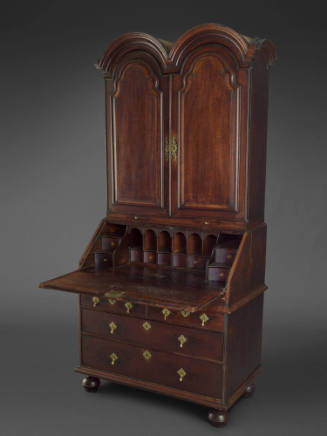
1700-1730
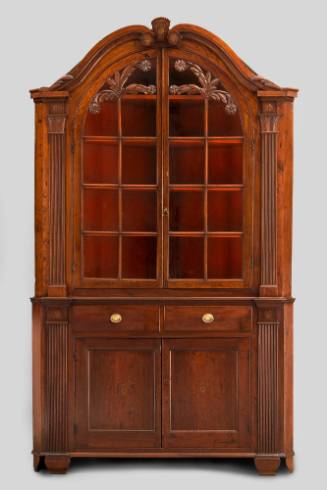
1800-1815
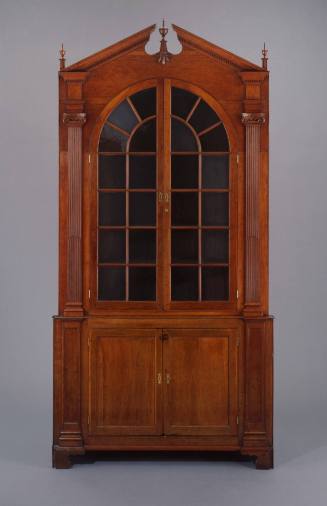
1790-1800
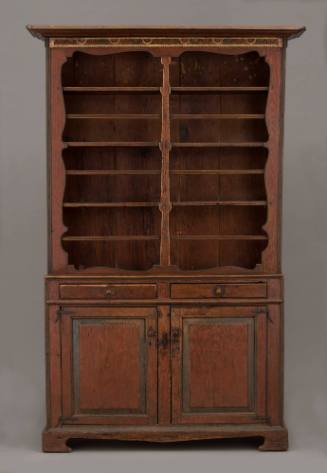
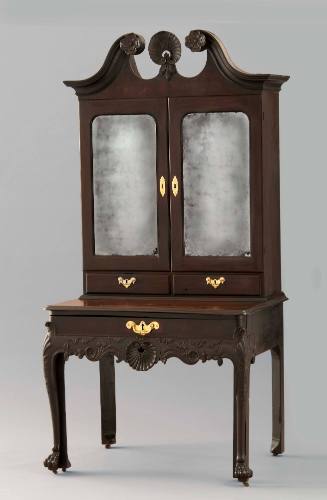
ca. 1740
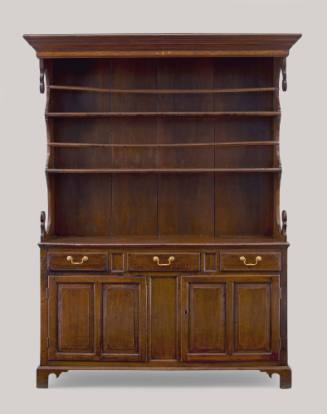
1790-1810
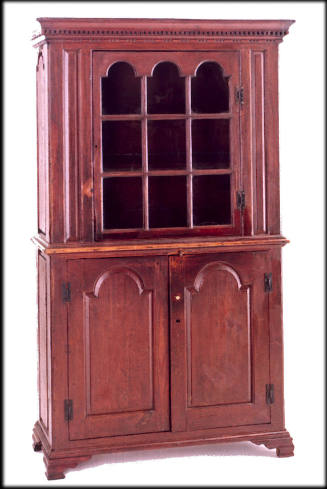
ca. 1790
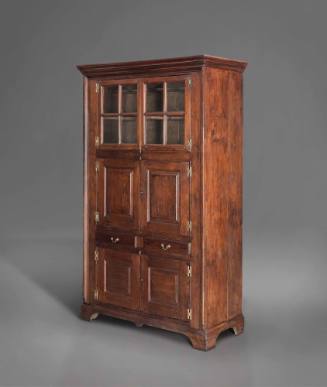
1765-1780
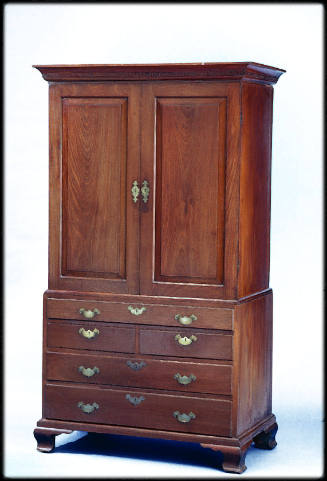
1760-1780
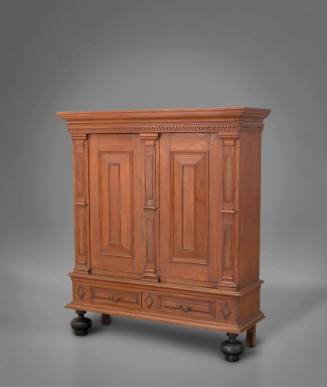
ca. 1798