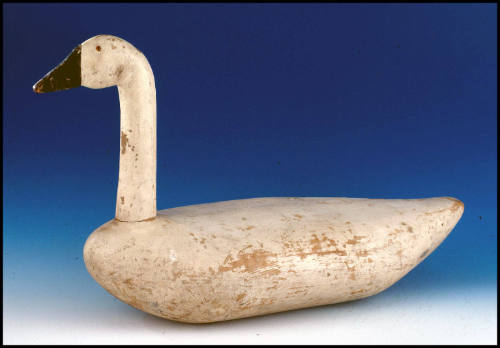
Whistling Swan
Date1930-1935
Attributed to
John Vickers
1901 - 1974
MediumPainted Atlantic white cedar with glass eyes
Dimensions15 3/4" X 28" X 11"
Credit LineMuseum Purchase
Object number1962.702.1
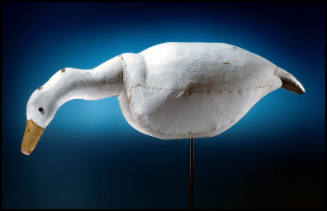
DescriptionThis solid carved swan decoy has rather crude lines. The body is long and flat with a protruding chest. The neck of the swan is very straight, a nail in the bottom of the decoy holds it in place. The neck and head are carved from a single piece of wood. The bill is seperatedly carved and held in place by a dowel that runs from the tip of the bill through the head. The swan has two glass eyes. The entire decoy is painted white, with the exception of the black bill.Label TextJohn Vickers was a Cambridge, Maryland police officer who primarily carved Canada geese, canvasbacks, and black ducks beginning in the late 1920s. He is probably best known today for the swans that were intended as confidence decoys, so called because they usually depict birds that flush easily; their presence signals that waters are safe, thus attracting other water fowl to the hunter. Vickers gave his earliest whistling swan decoys rounded bottoms like this example. By adding small weights these birds remained relatively stable in the water. Their periscope-like necks and handsomely swelling bodies endow these swans with a grace that distinguishes them from the works of other carvers on Maryland's Eastern Shore.
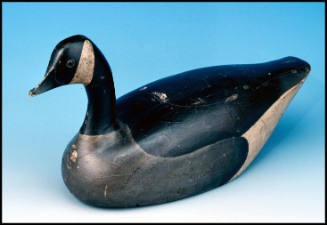
ca. 1900
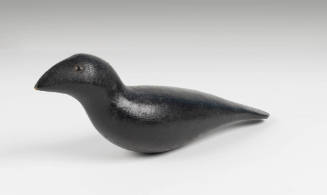
1900
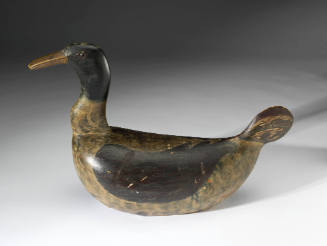
Late 19th century
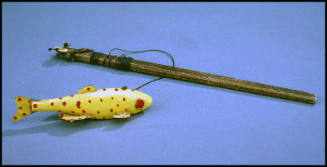
Early 20th century