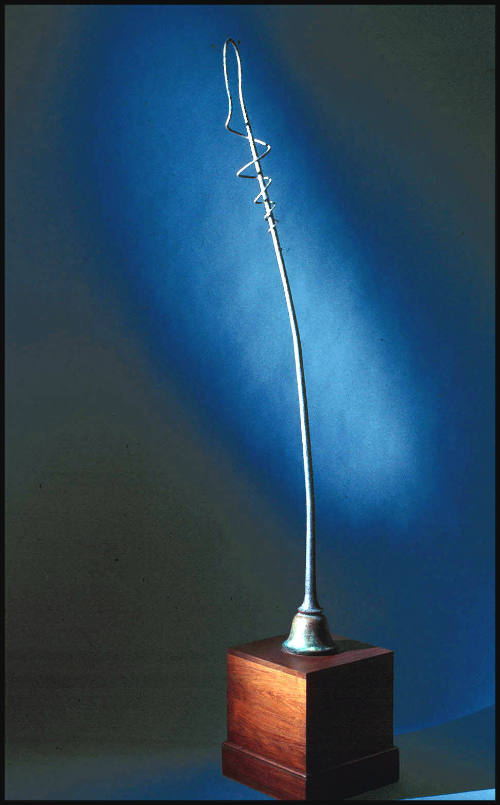
Saddler's Shop Sign: Carriage Whip
DateProbably 1860-1880
OriginAmerica
MediumIron shaft with copper alloy collar
DimensionsOverall (including integral section usually hidden by base): 92 3/4in. (235.6cm)
Other ("bell" that masks juncture of whip and base): 4 1/2 x 6 3/4in. (11.4 x 17.1cm)
Other ("bell" that masks juncture of whip and base): 4 1/2 x 6 3/4in. (11.4 x 17.1cm)
Credit LineMuseum Purchase
Object number1960.806.1
DescriptionA forged iron replica of a carriage whip. It stands vertically, the tip of the tapering whip looping over and spiraling around itself, the handle end flaring out to a lip above a separate, bell-shaped copper alloy base. The iron whip continues through the bell, its threaded end being secured to a modern wooden base via a nut. The lower portion hidden by the base is painted red, as is the nut.Artist unidentified.Label TextThe iron whip probably stood outside a shop that sold equestrian goods of all kinds: saddles, bridles, and harnesses. It matches the size of an actual leather carriage whip so did not rely on exaggerated scale to attract attention. Rather, its graceful, understated form alone catches the eye, the subtle curve of the shaft and the delicate spiraling loops of the tip conveying a tone of elegance that must have appealed to the most discriminating horseman.ProvenanceOwnership prior to AARFAM's vendor, Stony Point Folk Art Gallery, New York, NY, is undocumented.
Probably 1920-1940
Probably 1870-1890
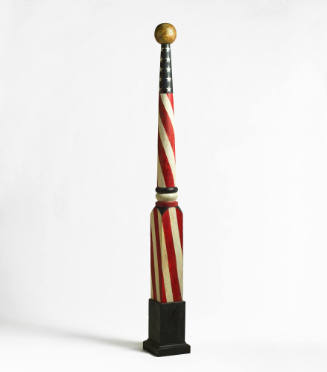
1875-1910
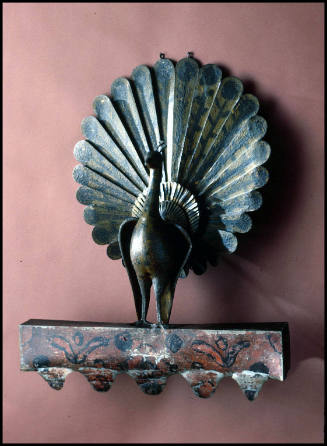
ca. 1825
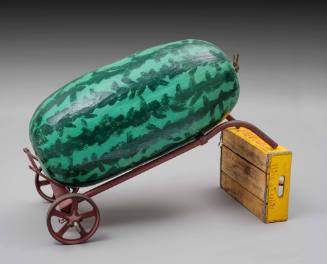
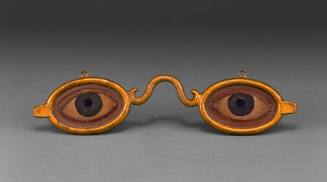
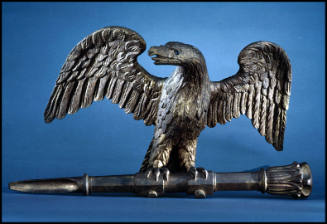
ca. 1850
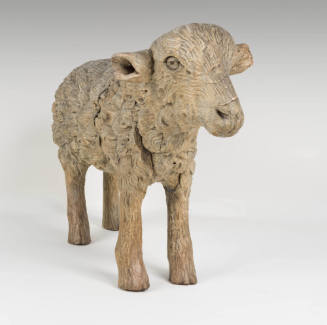
1800-1825 (probably)
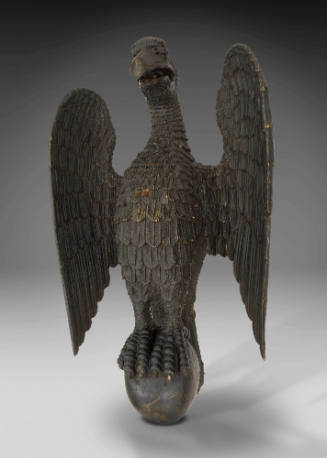
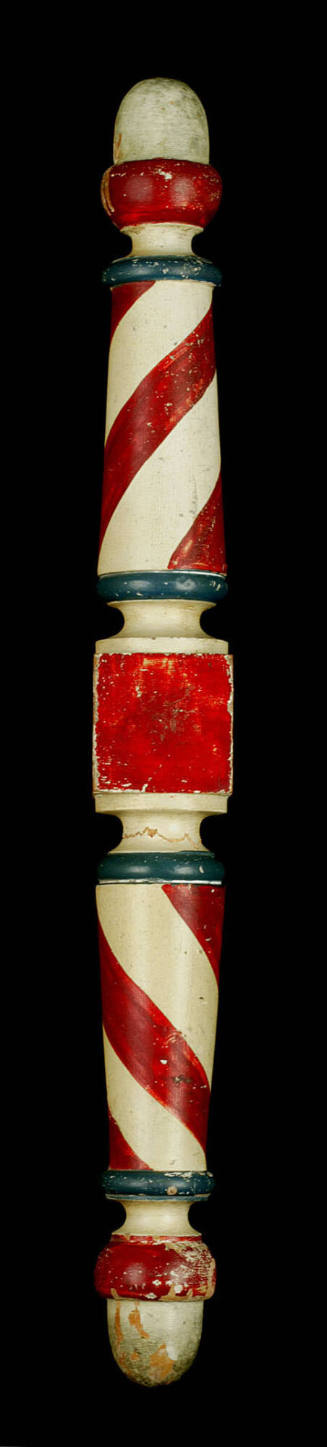
1830-1850