
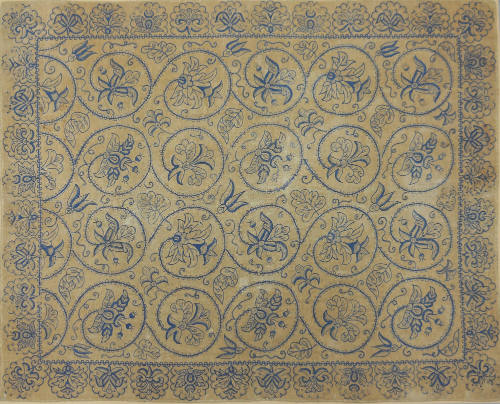
Wool Embroidered Table or Cupboard Cloth
Date1650-1675
OriginEngland
MediumCrewel wool emboridery on a twill-weave ground with linen warp and cotton weft
DimensionsW: 38" L: 48"
Credit LineMuseum Purchase
Object number1936-664
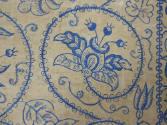
DescriptionThis is a wool embroidered table or cupboard cloth with an all over repeating pattern of circular coiling stems enclosing four types of stylized flowers with wavy tendrils and graceful leaves with turned-over edges; reciprocal undulating vine decorates stems, and forms the inside edge of border which is composed of scalloped-edge flower palmettes. The monochrome (woad or indigo blue) tightly-twisted crewels are worked in stem, buttonhole, split, and seed (speckling) stitches and French knots, on natural, now muddy, twill-woven linen/cotton ground. Remnants of original blue and white wool binding are still evident on what is probably the earliest textile in the collectionStitches: back, chain, flat, French knots, seed, single, stemLabel TextTable or cupboard covers, like this, were probably used to protect furniture on which family plate—dishes and other domestic utensils made of gold, silver, and other metals—were displayed. Dyed with woad or indigo, the crewel wool yarn is of English manufacture. The twill-weave ground was imported, perhaps from Bruges, Flanders.
Scrolling stem designs such as the pattern embroidered on the cover continued to be used for crewel embroidery after 1660. But by the end of the century, the delicate coils were replaced with patterns of gently curving stems and trees with large exotic leaves growing from mounts, artificial mounds of earth.”
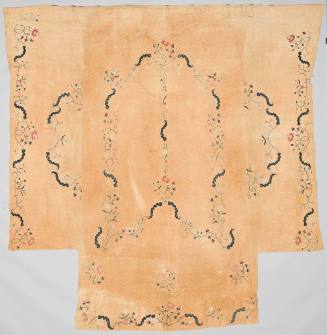
1750-1790, remade 1810-1830
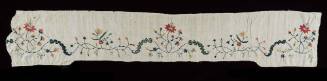
1750-1790
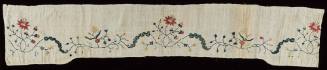
1750-1790
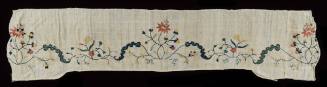
1750-1790
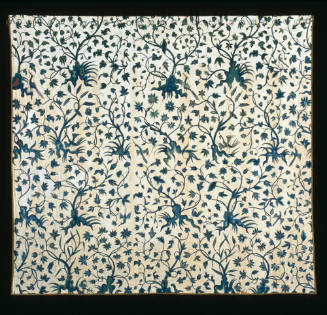
ca. 1680, remade later
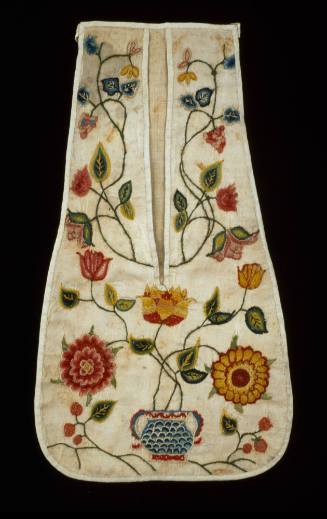
1740-1760, with later repairs
1740-1780

1740-1780
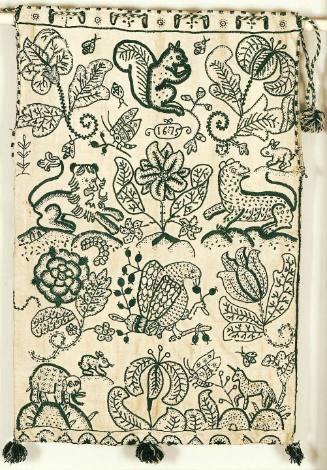
1675 (dated)
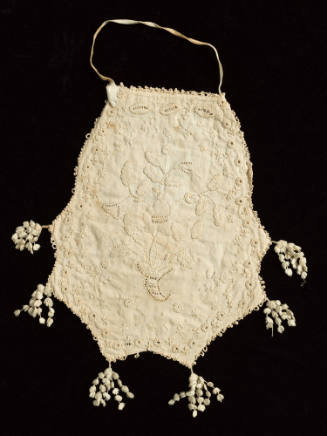
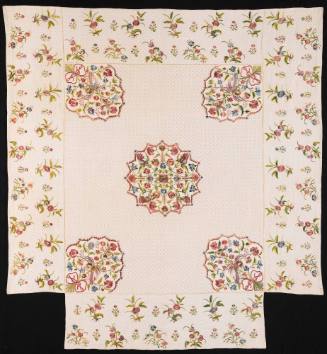
1710-1740
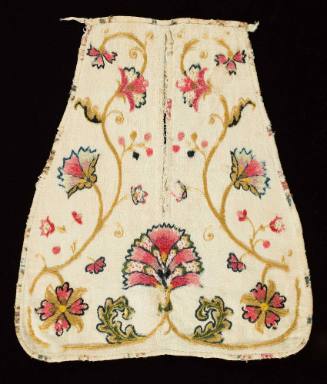
ca. 1760