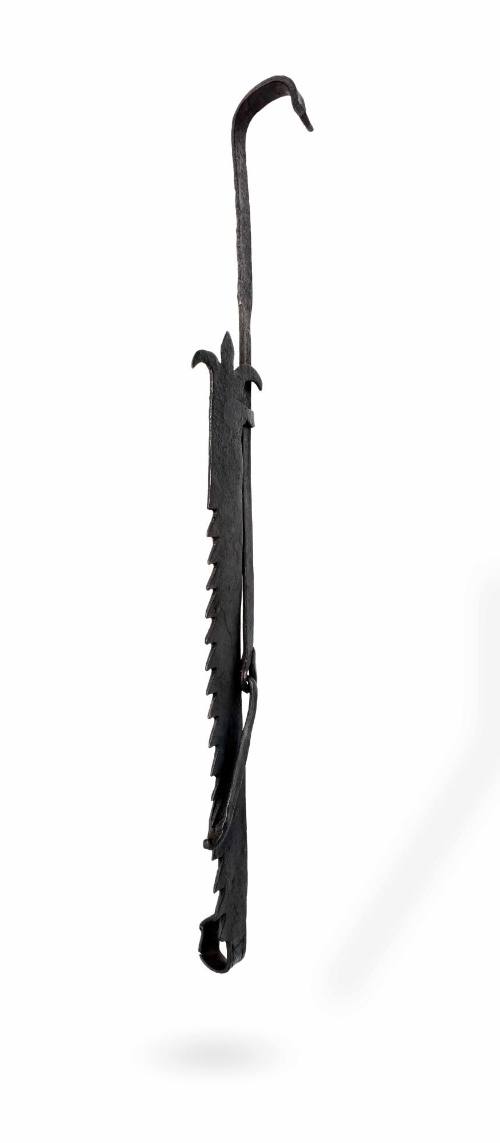
Saw Tooth Trammel
Dateca. 1750-1820
OriginAmerica
MediumWrought iron
DimensionsOverall (extended): 52 1/2in. (133.4cm)
Overall (unextended): 36 7/8in. (93.7cm)
Overall (across teeth): 4 3/4in. (12.1cm)
Overall (unextended): 36 7/8in. (93.7cm)
Overall (across teeth): 4 3/4in. (12.1cm)
Credit LineMuseum Purchase
Object number1995-106
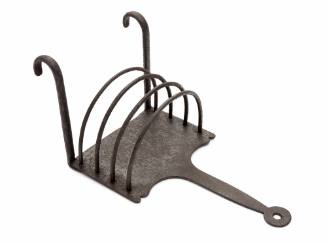
DescriptionWrought iron trammel composed of a narrow, tapering bar with a hook at its top and an adjustable lever linked to its bottom end by a loop. Broad saw tooth bar with a chiseled hook forged into its bottom, a fixed keeper welded to its top, and a fleur-de-lis terminus. Lever, which controls height by hooking into the teeth, is plain, and has a thickened tip.Label TextSet unseen above the fire in the early American kitchen was a wooden "lug pole" or an iron "trammel bar," spanning the width of the chimney's opening and acting as the primary support for the variety of cooking wares in use. Some sort of adjustable iron device was needed to hand the vessel from, and creative blacksmiths forged a variety of devices to fit the bill. While simple chains and hooks would work perfectly well, better devices called trammels were a popular and more convenient alternative, providing easier control over the height of the cooking vessel.Called a "saw tooth" trammel for it's obvious resemblance to the wood cutting tool, this clever device was no more or less effective than other types of trammels used in early fireplaces. It was, however, easier to use and more interesting to look at. This example sports a fleur-de-lis shaped terminal atop the saw tooth bar, in addition to a small amount of chiseled decoration.ProvenanceProvenance unknown, found in Palace Kitchen in 1981 during the refurnishing of the Palace and Palace Kitchen.
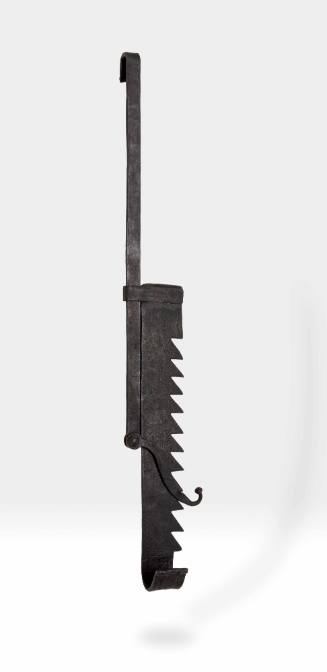
ca. 1750-1820
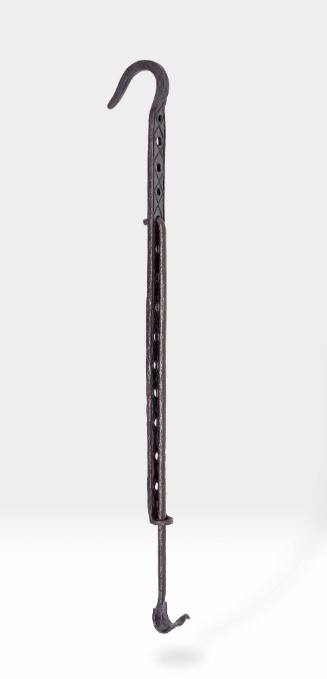
ca. 1750-1800
ca. 1770-1830
ca. 1750-1820
ca. 1708
ca. 1750-1850
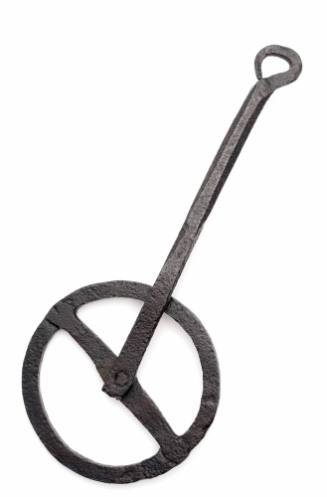
ca. 1770-1850
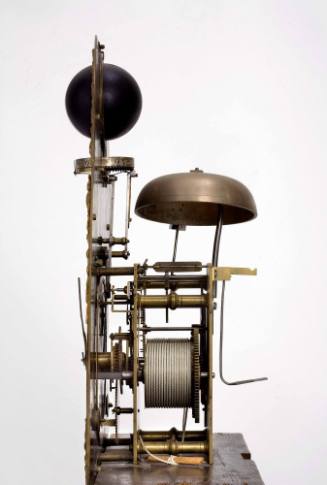
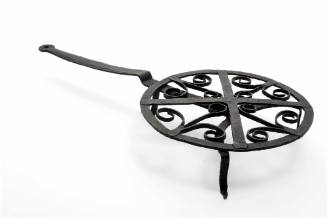
ca. 1770-1810
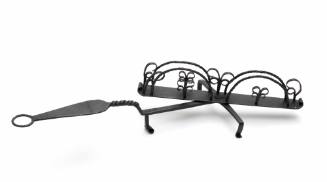
ca. 1750-1800
ca. 1780-1820