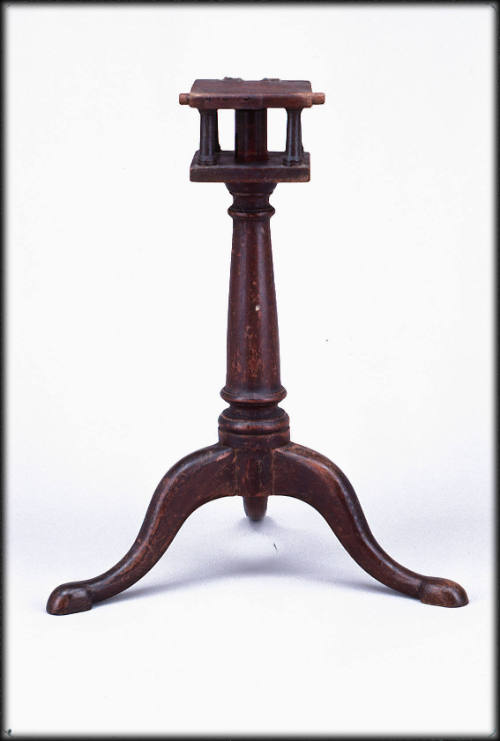
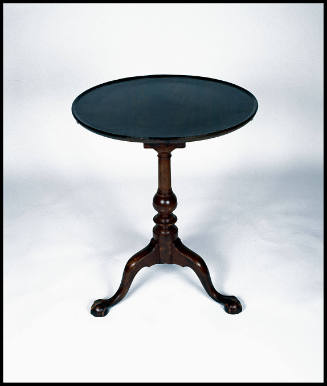
Tea table, fragment
Date1770-1780
Attributed to
Benjamin Bucktrout
d. 1813
MediumBlack walnut throughout
DimensionsOH: 27 1/4"; OW: 18 3/4"; OD: 16 1/2"
Credit LineMuseum Purchase
Object number1989-426
DescriptionAppearance: Tea table with round top (now missing) hinged to a revolving square birdcage with four columnar pillars; columnar and ring turned pedestal over three shaped cabriole legs with pad feet.Construction: legs are dovetailed into the base of pedestal; top section of pedestal has vertical mortise to hold wooden key that locks birdcage (and top) in place; birdcage is constructed of square top and bottom held together by four columns round tenoned into the top and bottom (some wedged); birdcage top has integral round tenons extending to the sides at the back which would typically join to the battens on the underside of the table top (table top missing); front edge of birdcage top has mortise for lock.Label TextWhile a substantial number of southern tea tables feature baluster-form shafts, many others are supported on columnar turnings derived from one of the five classical orders of architecture. A few of the shafts are elaborately fluted or carved, though most, including this and another eastern Virginia example (#1988-361), are relatively unadorned. Numerous urban and rural variations of these plainer forms, which were especially favored in the lower Chesapeake during the eighteenth century, survive. This tea table base with a Doric column descended in the family of Williamsburg cabinetmaker Benjamin Bucktrout (d. 1813). Tea tables of the same form were also popular in Newport, Rhode Island. The design, common in Britain as well, probably was transmitted to both Rhode Island and Virginia by British artisans.
The attenuated nature of the Doric column on this table lends it a vertical appearance not often seen on tea tables with baluster-form pillars.ProvenanceThe table descended in the family of Williamsburg cabinetmaker Benjamin Bucktrout.
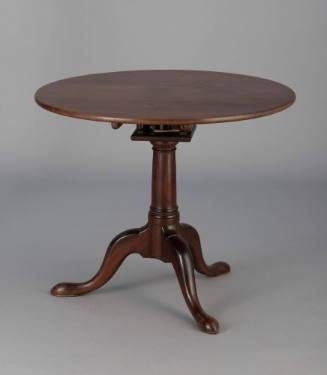
ca. 1760
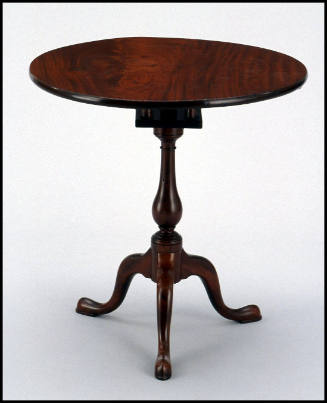
ca. 1775
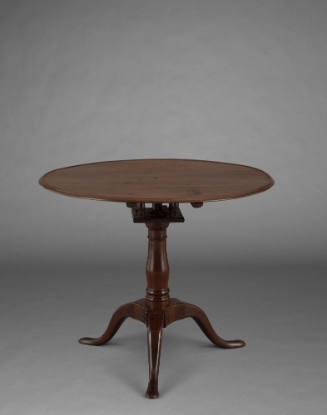
ca. 1738
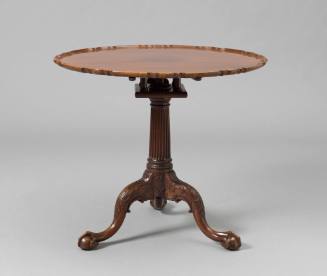
ca. 1770
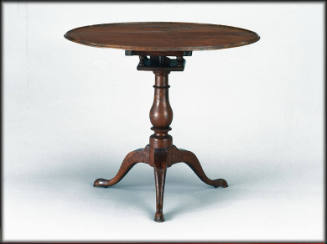
1740-1770
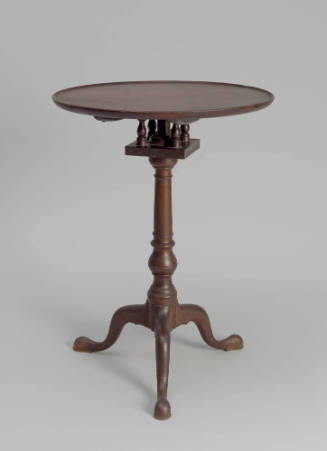
1760-1780
1755-1780
1760-1785
1760-1780
1750-1780
ca. 1750