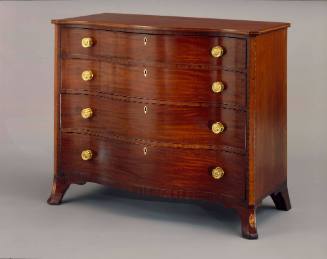
Tall chest of drawers
Date1775-1800
MediumBlack walnut, yellow pine, and tulip poplar.
DimensionsOH: 56 1/2"; OW: 40"; OD: 21 1/2"
Credit LinePartial gift of Mr. Edward T. Lacy.
Object number1994-208
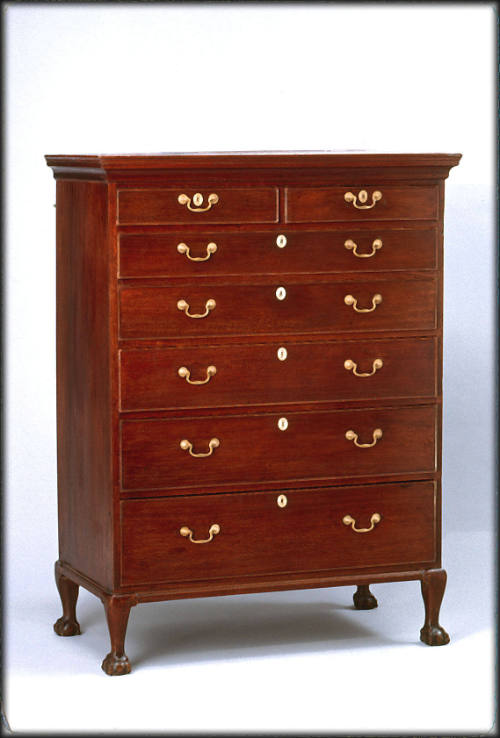
DescriptionAppearance: Tall chest with six graduated tiers of drawers comprised of two short over five full-width drawers; complex cornice molding; four straightened cabriole legs with ball-and-claw feet and scrolled knee blocks.Construction: The top and bottom boards are half-blind dovetailed to the case sides. The cornice is flush-nailed to the case. Horizontal lap-joined backboards are flush-nailed at the bottom and nailed into rabbets on the case sides and top. The drawer blades, shallow dustboards, and drawer runners are set into dadoes inside the case. Vertical strips are nailed to the leading edges of the case sides to cover the blade joints. Thin drawer stops are nailed onto the blades and dustboards. The drawers are dovetailed in the traditional way and have nailed-on cock beading. Their chamfered bottom panels are flush-nailed at the rear and set into grooves along the sides with full-length side glue blocks and widely spaced front blocks. The base molding is flush-nailed to the front and sides of the case and is further secured by bottom-mounted glue blocks. The legs are double-tenoned into large square blocks nailed to the underside of the bottom panel.
Materials: Black walnut case sides, drawer blades, drawer divider, drawer fronts, cock beading, legs, moldings, and front glue blocks on drawer bottoms; yellow pine top, back, bottom, drawer backs (except on topmost long drawer), drawer bottoms, drawer sides on large drawers, lower three dustboards, drawer runners, drawer stops, and some drawer glue blocks; tulip poplar drawer sides on top drawers, upper two dustboards, drawer back on upper long drawer, and remaining drawer glue blocks.Label TextBy the mid-eighteenth century, the number of furniture makers in many American cities had grown substantially. Some artisans responded by moving to smaller towns or rural areas where there was less competition. Others relocated as new western lands were opened for settlement. Whatever the reason, the result was the regular transfer of regional design and construction details from one place to another. An example of this process is seen in the work of North Carolina cabinetmaker Jesse Needham (ca. 1776-1840). At the age of seventeen, Needham moved from coastal Pasquotank County to Randolph County in the central Piedmont where he learned to build popular inland forms like tall chests of drawers on frames. However, the construction and decorative refinement of Needham's work continued to reflect his awareness of coastal furniture-making traditions. This suggests that migrating artisans did not discard all of the traditions they brought with them when they moved to a new area.
The present chest clearly represents the hand of a transient cabinetmaker. The piece has an oral tradition of ownership in a north central North Carolina family, and it does mimic the tall chest of drawers format that was so popular among the Germanic and rural British immigrants who settled the Carolina Piedmont. Other ties to the region appear in the open framing inside the chest, a common inland approach that differed from the coastal preference for full dustboards. Also linked to backcountry practices are the large, haphazard saw-kerfs on the inside faces of the drawer fronts and the irregular mixing of tulip poplar and yellow pine secondary woods within the case.
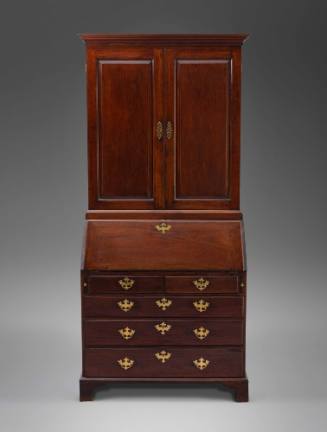
Yet the overall structural refinement of this piece and many of its decorative elements exhibit unmistakable ties to furniture from the King George County, Virginia, shop of Robert Walker (d. 1777). Although the tall chest of drawers was not a form produced in eastern towns and districts, the deeply coved cornice molding on this chest directly mirrors Walker examples (such as desk and bookcase acc. 1976-95), as does the attachment of the feet to the case with large, square, flush-nailed blocks. Other parallels with Walker's work are the profile of the base molding and the use of full-length glue blocks along the sides of the drawer bottoms and spaced blocks along the fronts. Most compelling of all, the shortened cabriole legs with their carved ball-and-claw feet and voluted knee blocks are clearly linked to Walker prototypes. There can be little doubt that the chest was made by an artisan who either trained under Walker or worked in his shop.
Relatively little is known about the apprentices, journeymen, and slaves who worked with Walker, but it is likely that artisans who were not enslaved eventually left his employ to establish their own businesses. The original neoclassical escutcheons on the chest and the absence of cut nails suggest a production date between the 1770s and the turn of the nineteenth century, a period in which large numbers of Tidewater Virginians were migrating to north central North Carolina. Perhaps the maker of the CWF chest was among them. This chest of drawers is clear reminder of the cultural mingling that such migrations produced in the southern backcountry.
Inscription(s)"1872" and "1898" are penciled on the side of the top right drawer. The numbers are by different hands.Mark(s)None.ProvenanceThe chest was received as a partial gift from Mr. and Mrs. Edward T. Lacy in 1994. They had acquired the piece from an antiques dealer who reported having purchased it from descendants of the original owners in north central North Carolina.
1765-1775
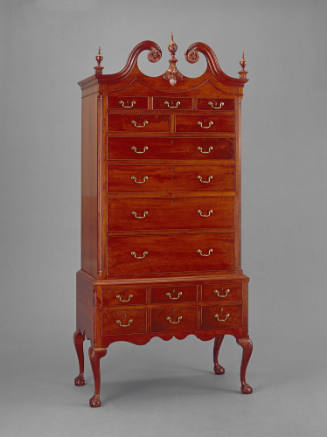
ca. 1795
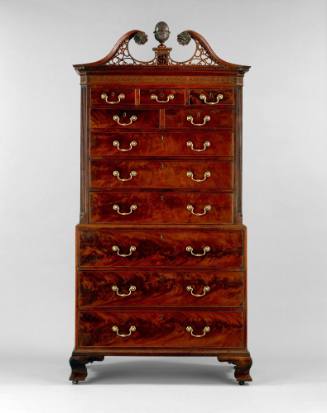
1765-1780
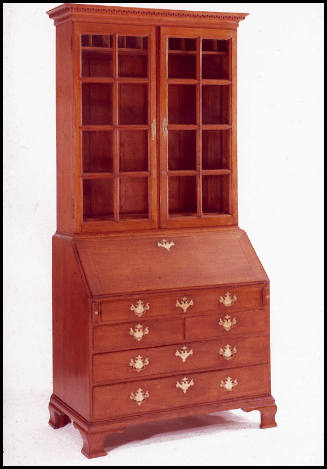
1760-1780
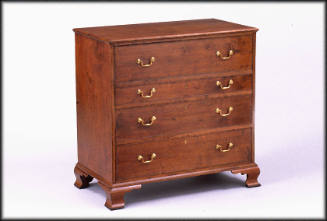
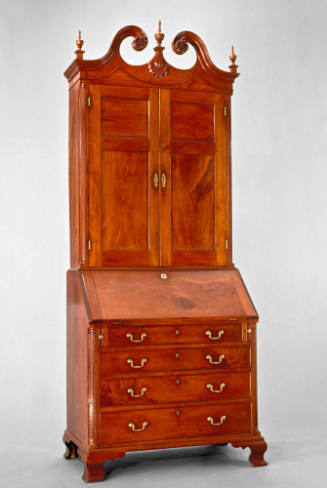
ca. 1795
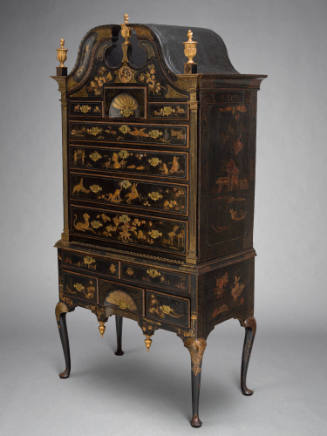
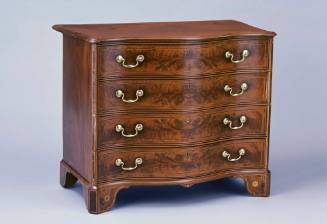
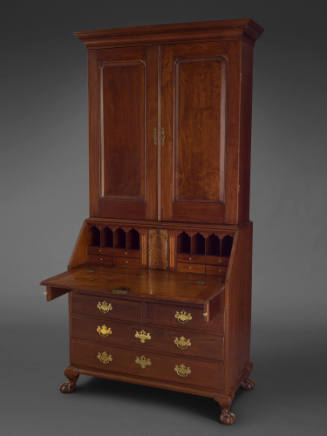
1790-1805