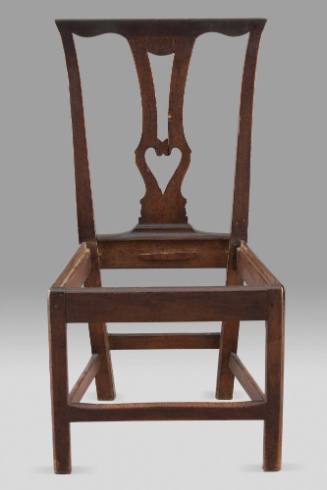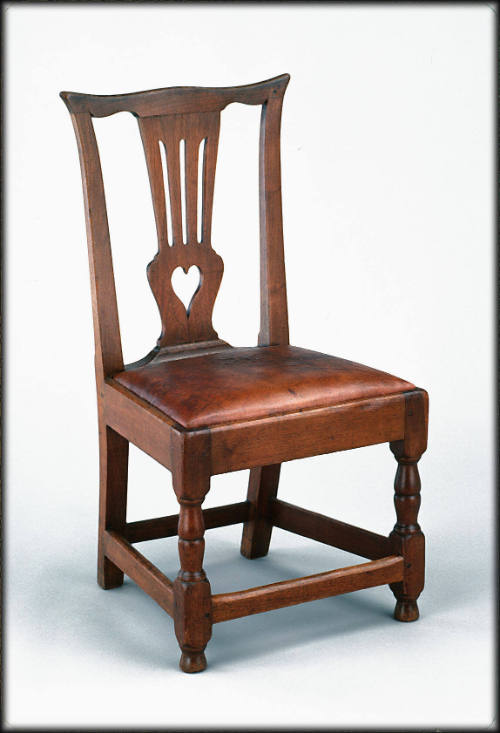
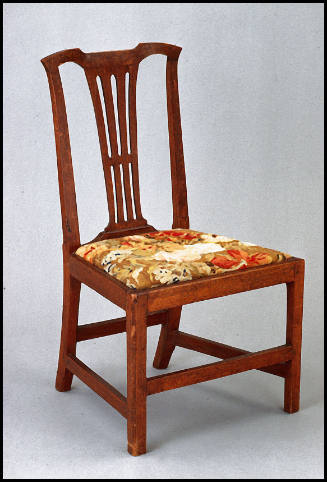
Side chair, splat- back
Date1765-1785
Attributed to
John Cornwell
MediumBlack walnut and yellow pine.
DimensionsOH. 36 3/4; OW. 19 3/8; SD. 16 1/2.
Credit LineMuseum Purchase
Object number1974-179
DescriptionConstruction: The chair uses conventional mortise-and-tenon joinery. All joints except those on the splat are through-pinned. The rear seat rail and the shoe are a single unit.Materials: Black walnut chair frame; yellow pine slip-seat frame.Label TextAlthough this unusual chair was made during the third quarter of the eighteenth century, it incorporates several design and construction details that were popular a century earlier. Elements characteristic of the late colonial period include the upper back assembly that features a pierced splat, molded shoe, and shaped crest rail. The base of the chair, with its heavily turned front legs, substantial seat rails, and box stretchers all set at the same level, is much more typical of the joined great chairs made in the mid- to late-seventeenth century. While the practice of mixing elements from such widely divergent styles was common among New England chairmakers, it was quite rare in the South at this period. Why the maker of this chair chose to combine these particular components is a mystery.
The chair's double-baluster leg turnings are of little help in determining its place of origin because the same motif was widely used on early southern tables, architectural fittings, and other forms. The object's back design and construction details tie it strongly to a group of chairs from the Southside Virginia counties of Greensville and Southampton, however. The group includes a set of three black walnut side chairs with integrated shoes and rear seat rails like those on the present chair, and splats and crest rails that are similarly conceived (CWF 1933-13). Among related pieces are a number of smoking chairs, most with ownership histories in or near Greensville and Southampton Counties. Two, noteworthy for their distinctively flared columnar arm supports, have splats directly connected to that on 1933-13 (MESDA research files 3056 and 10,912). A variety of other splat patterns appear in the group as well, including those on a pair of smoking chairs that once belonged to a rare set of four (CWF 1993-14, 1-2). Now part of the CWF collection, they have a long history of descent in Courtland, the seat of Southampton County.
Some of the structural and stylistic details on chairs from this rural shop may have been inspired by Petersburg furniture-making traditions. Petersburg, the nearest urban area of any size, served as the primary marketplace for many central Southside residents. Among the Petersburg cabinetmaking practices evident on some of the side chairs in this group are the sharply pointed or voluted ears and the distinctive stretcher arrangement on CWF 1933-10 and 1992-86.
New research suggests that these chairs were made by Quaker cabinetmaker John Cornwell of Sussex County, Virginia. Born around 1735 to Jacob Cornwell of Surry, John married Mary Symons Cornwell at the Black Water Monthly meeting in Surry in 1763 and moved to Sussex County. In 1776 he manumitted his slave, Cuffy, and in 1788 he married Lydia White at Perquimans MM and moved to Perquimans County, NC where he died around 1808. Cornwell is documented making a desk and coffins in the 1760s and 1770s for Southampton County and estates in Surry and Sussex Counties.
John Cornwell is one of a group of Quaker cabinetmakers working Southampton, Surry, and Sussex County, Virginia to whom chairs previously called the "Southampton County Chair Group" have been attributed. Other cabinetmakers identified in this group include John's step son Samuel Cornwell (c. 1755-1813) and Samuel Pretlow (1726-1782). Samuel Cornwall was married to Samuel Pretlow's niece, Sarah Bailey.
The attribution of these chairs to these men hinges on a set of chairs at MESDA (#2681.1) that descended in the Pretlow family from Ann (Scott) Pretlow (c.1770-1840) and her husband Joseph Pretlow (c.1765-1839).
Features that distinguish the work of John Cornwell's chairs are: a one part rear seat rail; no chamfer on the inner corners of the legs, and angular shaping (rather than rounded) on the rear stile.Inscription(s)None.Mark(s)The number "IIII" is chiseled into the front seat rail rabbet, and the slip-seat frame is marked "II."ProvenanceThe chair was purchased in 1974 from Ridgefield Antiques, Charlottesville, Va., which had acquired it from the estate of Mrs. Emma Williams Smith of that city.
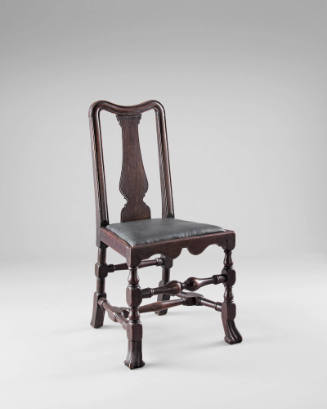
1695-1725
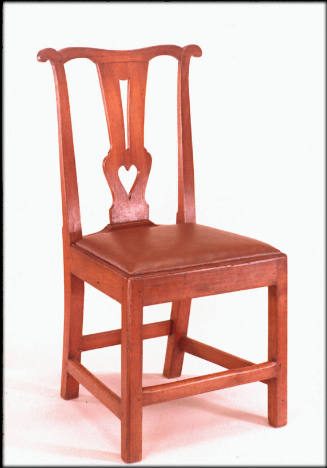
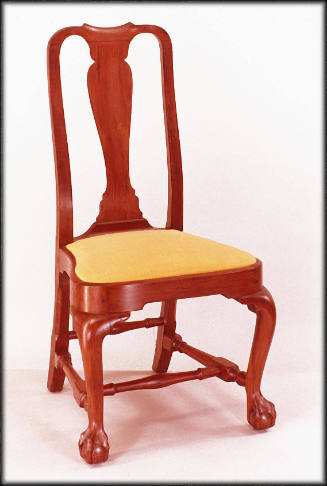
1730-1765
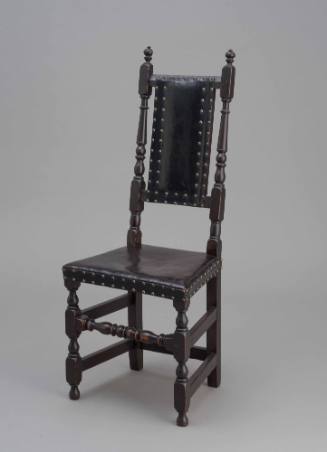
1705-1725
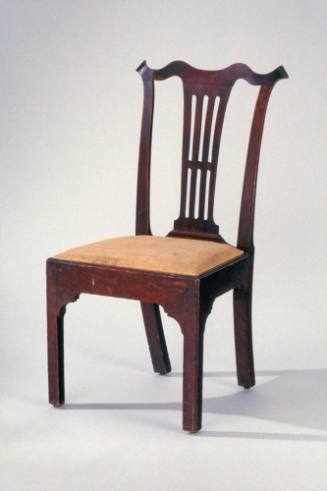
ca. 1780
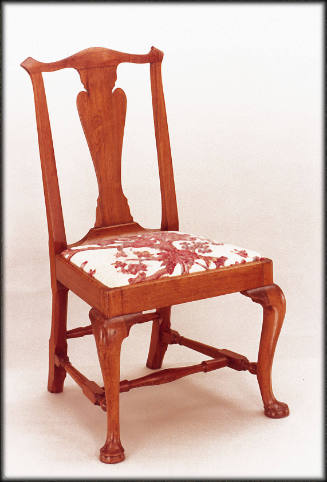
1760-1790
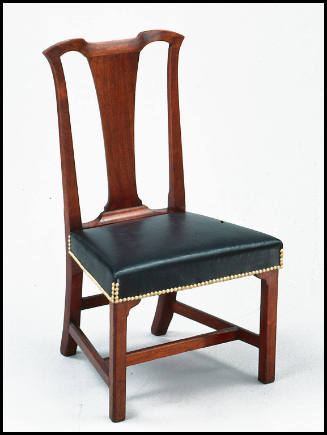
1765-1790
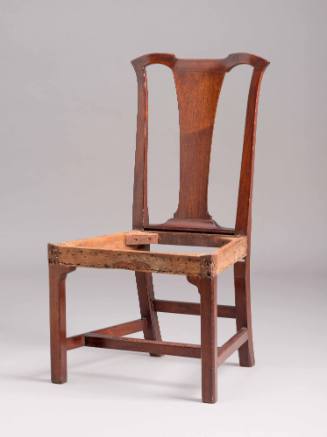
1765-1790
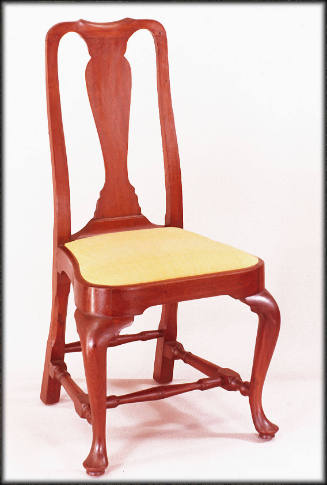
1730-1765
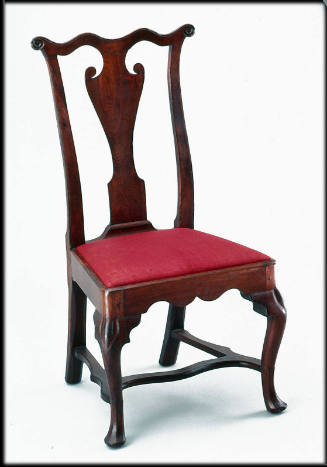
1755-1790