
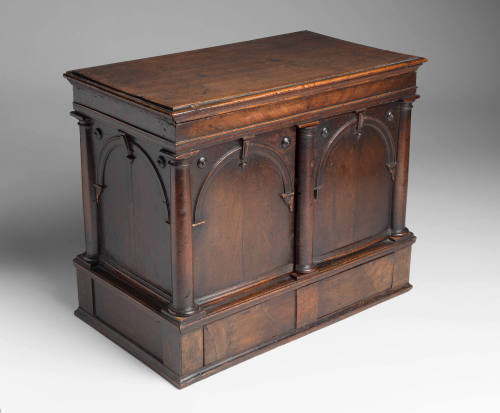
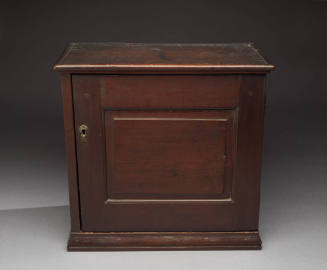
Spice Chest
Date1690-1710
OriginEngland or Europe
MediumWalnut, beech, oak, and deal
DimensionsOH: 13 1/2"; OW: 16 1/4"; OD: 9 1/2"
Credit LineMuseum Purchase
Object number1936-139
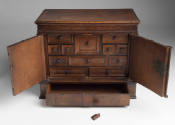
DescriptionSpice chest, architectural in design. The front elevation has cornice molding and frieze at top supported by three Doric columns across front with arches, keystones, and applied elements between. Secret drawer in base is fastened with a wooden pin behind the two hinged doors. The twelve small drawers of unequal size in the case have applied moldings and wooden knobs (replaced). The doors are fastened with a brass lock and are hinged on iron pins. The sides and back of the chest have the same architectural treatment. A wooden slide bolt in the front, proper left corner of the chest interior within the drawer cavity, secures the lid. The lid, with the front, back and proper left cornice molding attached, slides off the case to the proper left revealing a cavity behind the freize.Label TextSmall cabinets with interior drawers concealed behind a set of lockable doors were often used to store spices or other valuables. Widely referred to as spice boxes, these compact and portable cabinets were known in Britian by the turn of the sixteenth century and imported to America well before 1700. In addition to costly spices, currency, documents, jewelry, and personal accessories were stored in these boxes. It is likely that "spice box" accurately described the form's initial use and the name was retained when the multiple drawers and locking feature proved to be a convenient hiding place for all small valuables.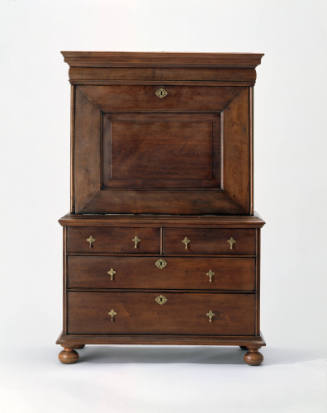
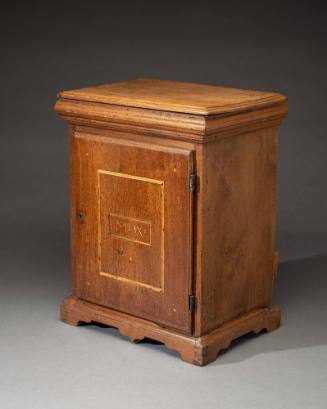
1791
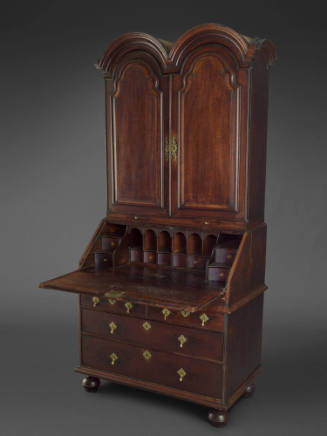
1700-1730
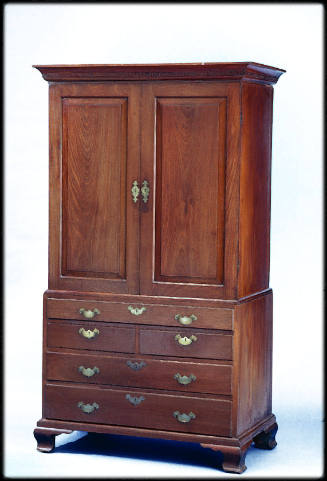
1760-1780
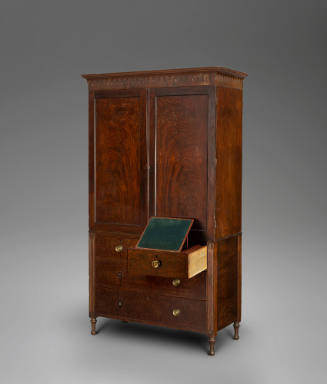
ca. 1810
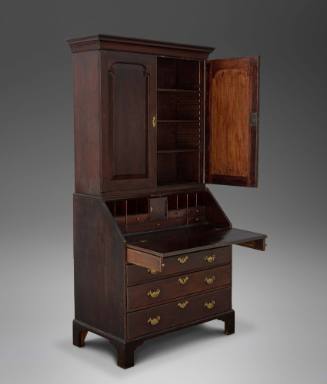
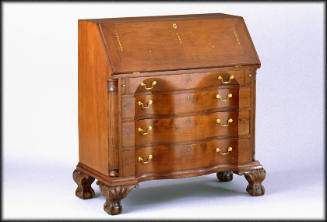
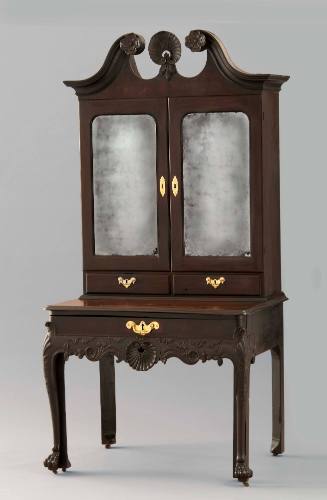
ca. 1740
1700-1750
1790-1810
ca. 1800