
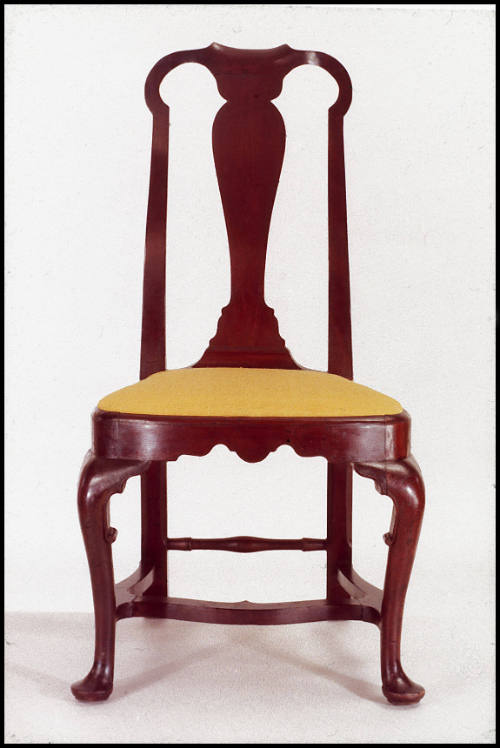
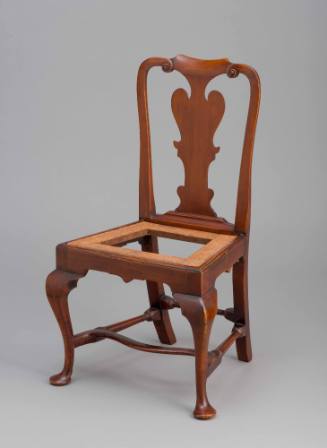
Side Chair, Splat-Back
Date1735-1760
MediumMahogany and maple
DimensionsOH: 42"; OW: 20 1/2"; OD: 16 1/2"
Credit LineMuseum Purchase
Object number1970-102
DescriptionAppearance: Side chair with concave yoke center top of crest flanked by one element at each side curving outward to form a circular corner, then inward to meet stiles; flat stiles flaring outward from top to bottom; vase-shaped splat; compass shaped seat with quarter-round molding at top edge and a series of scallops at center front; cabriole front legs with raised fillet at each side extending from bracket part way down leg to a volute and legs terminating in pad feet on a disc; back legs chamfered on each corner and flare to rear; flat, curved stretcher at each side and flat, curved medial stretcher; turned stretcher between back legs circular in cross section with bulbous central section; construction note: this chair was made without corner blocks.Woods: mahogany; maple slip seat frame.Label TextAround 1720, American furniture began to feature shapely curves. The "S" curve was considered the most elegant shape and was published as such by London artist and engraver William Hogarth in The Analysis of Beauty (1753). Many curvaceous Boston chairs were exported to Rhode Island, New York, and Virginia, influencing the designs of chairs produced there. This chair was probably made in Boston. However, it could be a Rhode Island example based an imported Boston prototype. At least 728 Boston chairs arrived in Virginia ports between 1727 and 1755.Mark(s)"III" carved into inside of front rail and into slip-seat frame.
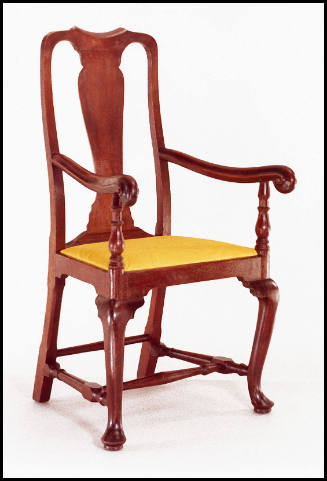
1730-1760
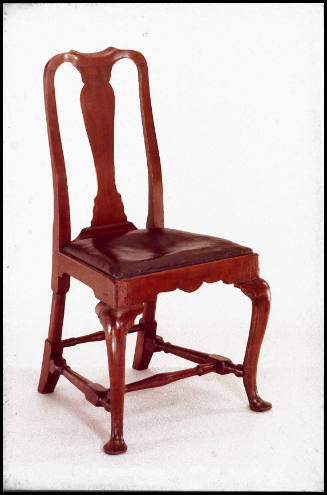
1730-1770
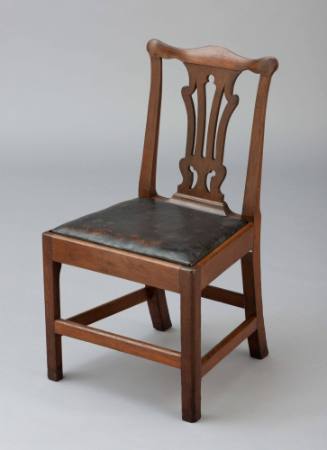
1771-1776
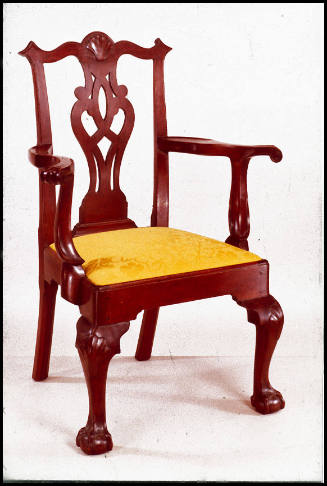
1760-1790
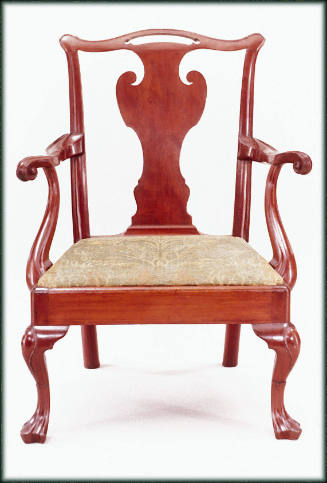
1740-1775
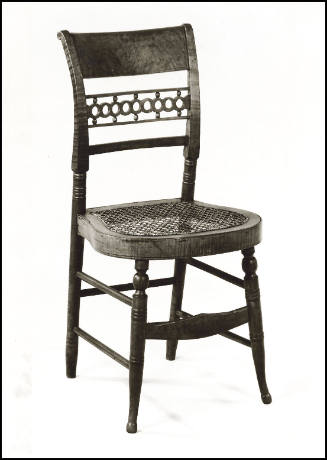
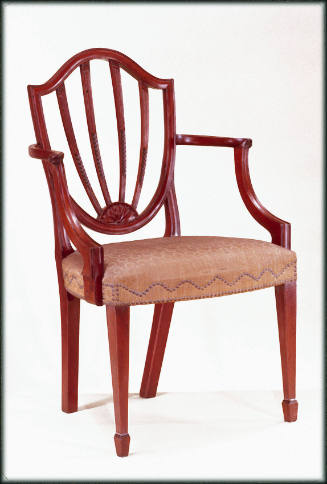
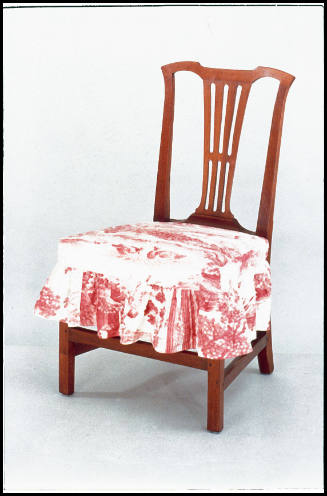
1760-1790
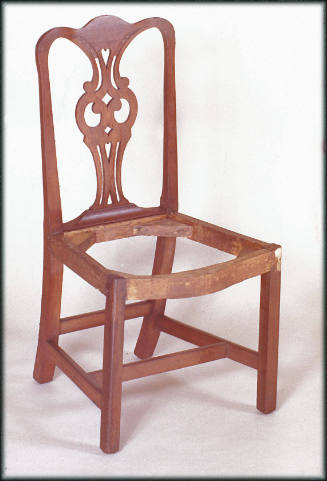
1780-1810
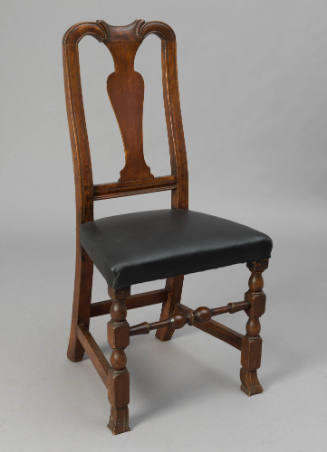
1730-1780
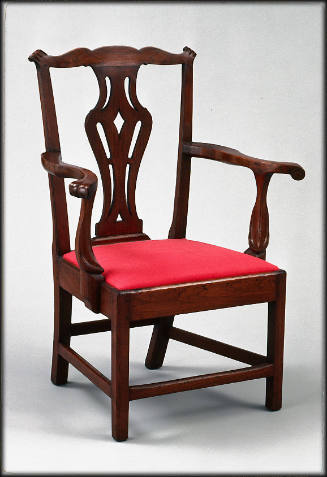
1760-1780
ca. 1750