
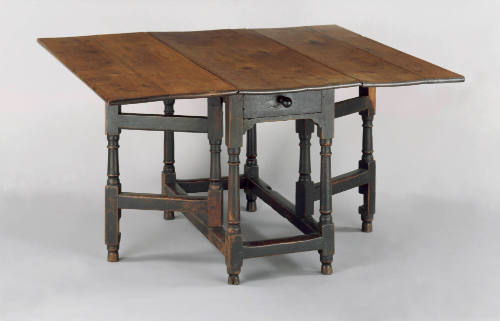
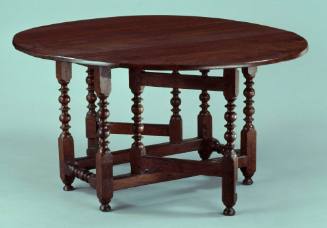
Gateleg dining table
Date1740-1755
MediumBlack walnut and yellow pine
DimensionsOH: 27" OW(open): 48 1/8" OW(closed): 17 3/4" OD: 43 3/4"
Credit LineMuseum Purchase
Object number1966-212
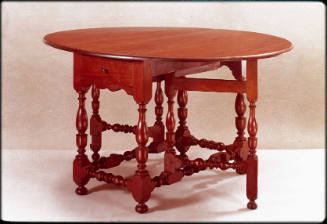
DescriptionAppearance: Rectangular gateleg dining table; single drawer; Doric columnar turned legs; flared feet. Construction: Pinned mortise-and-tenon joinery holds the frame together, and pinned through-tenons secure the hinged or gateleg assemblies, which in turn pivot on pintles set into round mortises. The top is screwed from below to two cross battens that are dovetailed into the frame. The replaced central drawer runner is tenoned into the rear rail and half-lapped onto the front, as was the original.Label TextColumnar turnings drawn from one of the five classical orders are frequently encountered on southern gateleg tables, although they are rare on tables from New England. The legs and gate stiles of this Maryland table are based on the Doric order. Detailed proportioning systems for columns were available in architectural treatises like William Salmon, Palladio Londinensis (1755), and records show that many colonial furniture makers relied on such publications. Even so, the columnar turnings on a significant proportion of gateleg tables appear short and out of proportion when compared to academic architectural models. Apparently joiners and turners readily abandoned correct architectural standards in order to squeeze decorative elements like columns between the structural rails and stretchers needed to support and operate the gateleg.
Research has identified a number of eastern Maryland gateleg tables with columnar leg turnings akin to those on the CWF table. Examples include a group of large tables with Doric legs that stand on distinctive ogee-shaped block feet (MESDA research file 8667). Although apparently from a different shop, many follow the CWF table in their incorporation of through-tenoned gates, shaped end rails, and double-H-framed gate assemblies that lap-join the rails and stretchers when closed.
In addition to this table's similarity to other Maryland tables, its attribution is further based on its discovery early in this century on St. George Island in St. Mary's County near the southern tip of the state. An important suite of mid-eighteenth-century Maryland side chairs with the same idiosyncratic foot turning also has a history in St. Mary's, just a few miles up the Potomac River (Md. Historical Soc. acc. 66.37.1). Made of black walnut and tulip poplar, the chairs were originally owned by the Thomas family and remained at Deep Falls, their circa 1745 residence, until 1966.
While the turned gateleg base of this table clearly parallels those made in the early eighteenth century, its original rectangular top and rule-jointed leaves are strong indications that it was produced later. Round or oval tops for dining tables were passing out of fashion by the 1750s, and the rule joint had long since begun to replace the earlier tongue-and-groove method for hinging table leaves. Combining an up-to-date top with a conservative and somewhat old-fashioned base may represent either the maker's gradual adoption of newer forms or the specific request of a customer.Inscription(s)None.Mark(s)None.ProvenanceThe table was sold to CWF in 1966 by John Christoffell, who purchased it between 1941 and 1945 from the residents of an early farmhouse on St. George Island in St. Mary's Co., Md. The table had been in that house when the owners acquired the farm many years earlier.
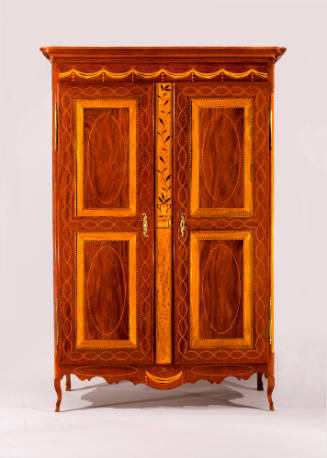
1800-1820
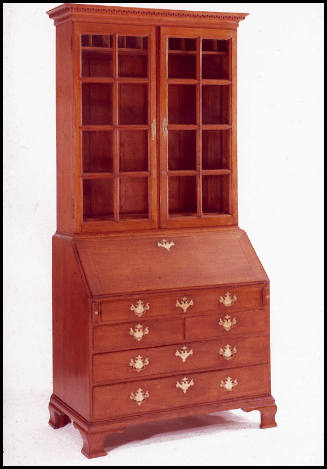
1760-1780
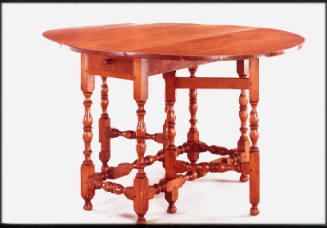
1715-1740
1700-1730
1760-1775
1797 (dated)
1770-1790
ca. 1725
1710-1740
ca. 1795