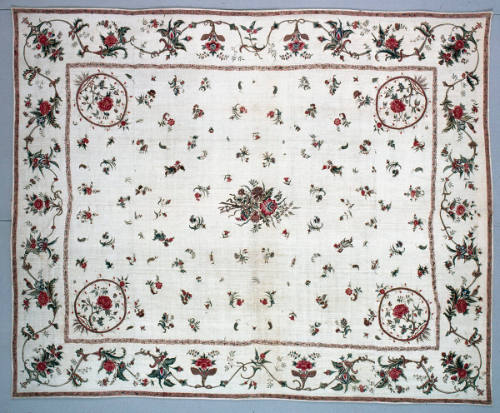
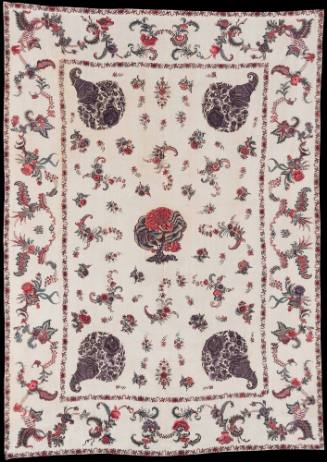
Counterpane or palampore, India chintz
Dateca. 1760
MediumCotton, mordant-printed and dyed
DimensionsW: 84"; L: 105"
Credit LineMuseum Purchase
Object number1964-437
DescriptionIndia chintz counterpane called in the eighteenth century a "palampore." A bouquet of flowers tied with a bowknot forms the center design; large circle spandrels in each of the four inner corners enclose Chinese-like peonies growing from grassy mounds, along with smaller flowers, buds and tendrils. The intervening field is strewn with small flower sprigs. The main border is an undulating vine including cornucopia-shapes filled with full-blown flowers, serrate and lanceolate leaves, buds, and wavy tendrils that meet at four corners in stylized bouquets. The inner and outer secondary borders are narrow leafy scrolls, small blossoms, and entwining stems. The palampore is printed in the technique of mordant-painting and resist-dying in colors of madder reds, purple, indigo blue, faded yellow, and black. Lined with natural tabby-woven linen.Label TextThis bed cover or "palampore" was made in India for export to the west. A stamp in the corner reads "VEIC" for the United East India Company that imported items such as this to western customers. Printed chintzes such as this were highly prized and expensive because of their beauty and washability.Mark(s)VEIC within 4 diamonds stamped in 2 places, bottom right border.
1840-1860
1725-1740, later printed edges
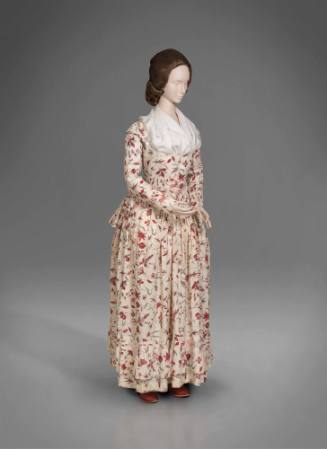
ca. 1790
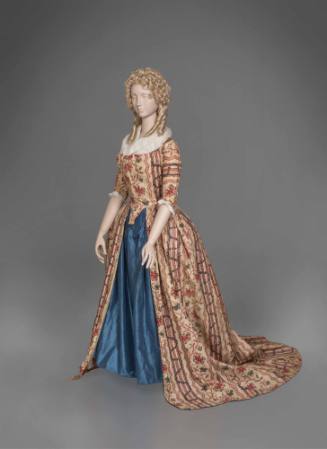
1780-1790
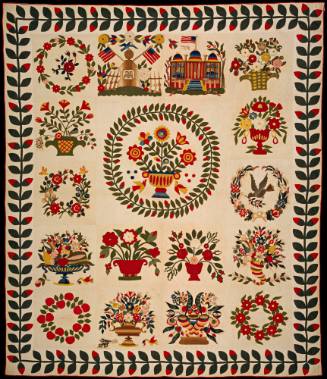
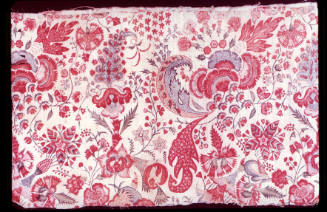
1710-1730
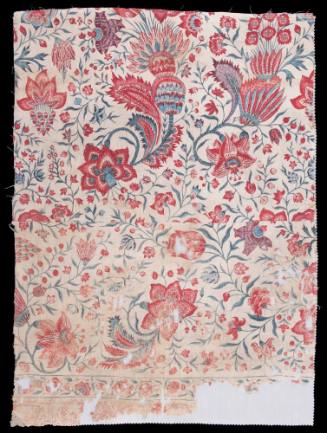
1710-1720
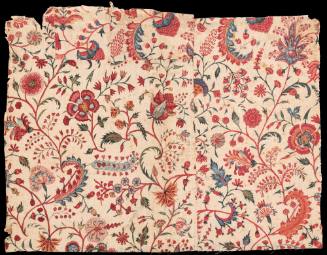
1710-1730
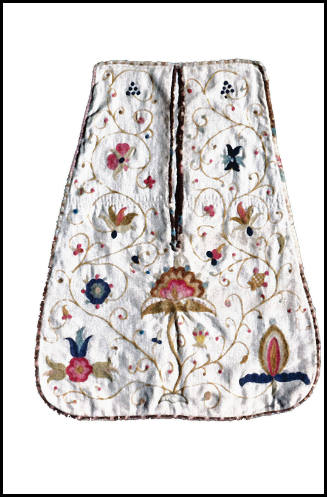
1740-1770
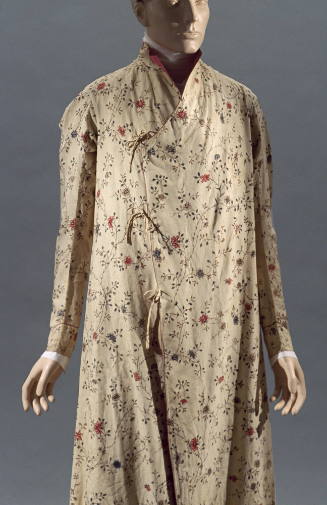
1770-1810