
Stomacher
Date1720-1740
OriginEngland
MediumRibbed silk, embroidered with silk and metallic threads, trimmed with metallic tape and cord; backed with woodblock-printed cotton with a few stray linen fibers (in the upper portion) and all linen (in the tabs).
Dimensions8 1/2 in x 14 in
10 in wide with yellow tabs extended.
10 in wide with yellow tabs extended.
Credit LineMuseum Purchase
Object number1993-45
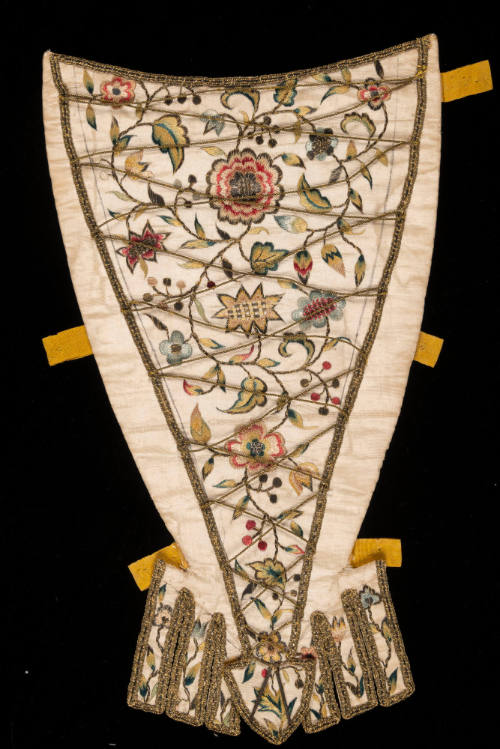
DescriptionWoman's stomacher of triangular shape with curved sides and top, with elongated decorative tabs at bottom waistline. Stomacher is white ribbed silk, embroidered with silks in tightly-coiling floral and leaf pattern, overlaid with gold metallic tape and cord laced across the embroidery. Stomacher comes to arrowhead peak at bottom, flanked by three tabs on either side of the center point. Borders of the stomacher are plain, undecorated silk, with yellow ribbed tabs, three on each side, for pinning to gown. The back or lining of the stomacher is two different woodblock printed textiles in coiling floral pattern with dots shading the leaves and serrated flowers, crudely printed in dark brown on white (possibly once purple). The textile backing the main portion of the stomacher is cotton (with a few stray linen fibers); the backing of the tabs is linen printed in a very similar pattern. There is a shallow pocket at the top of the stomacher between the front and the backing.Label TextEarly printed cottons seldom survived the years of laundering and daily wear. Dark colors of black, brown, or purple were especially vulnerable due to the long-term damaging effects of the mordants used to dye the colors. The rare printed textile on the back endured only because it was used to line the embroidered stomacher that was worn infrequently and saved for its beauty.Fiber, Fabric, and Fortune:
In an April 1786 letter describing the latest fashions in London, Abigail Adams noted that "the light from the lustres is more favorable to beauty than daylight," recognizing the impact of candlelight on the metallic features of clothing. In 1799, the London-based "Lady's Magazine" praised the "glittering effect of gold and silver" embroidered on women's dresses, presenting "a blaze of ornamental beauty."
This stomacher, shimmering with metallic embroidery and tape, filled in the center front opening of a woman's gown. Over time, many of the metallic threads that once sparkled have tarnished and darkened.
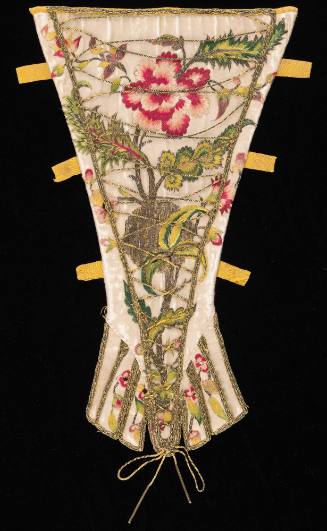
1720-1740
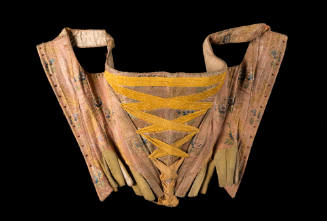
1740-1760
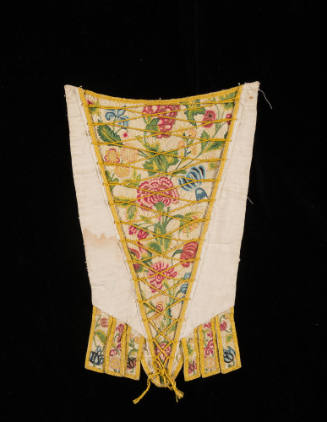
1725-1740
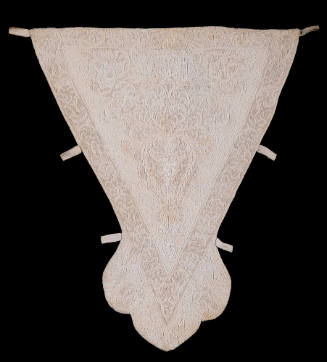
ca. 1700-1750
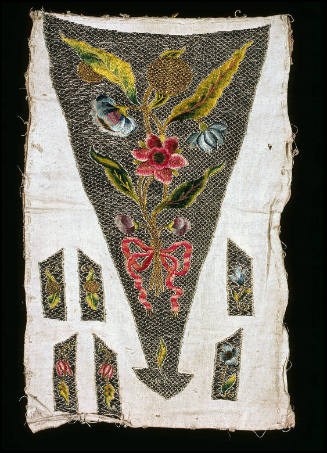
1700-1740
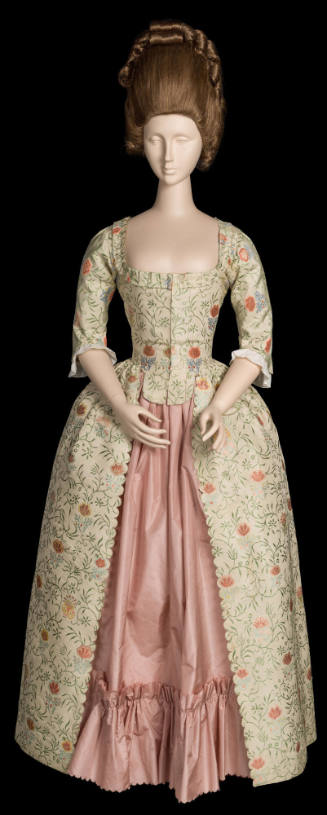
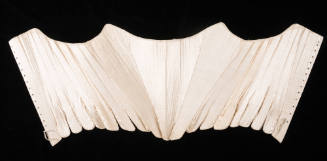
1770-1785
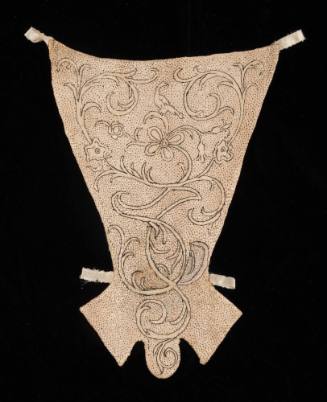
1700-1730
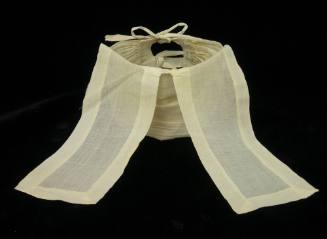
1780-1830
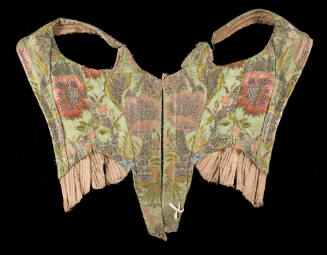
1735-1745
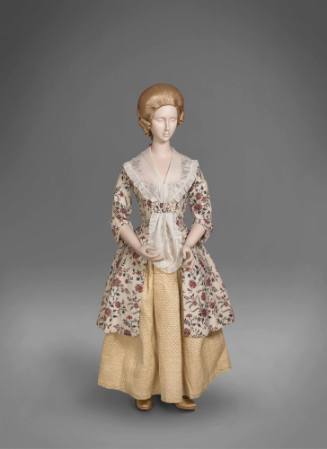
1775-1785
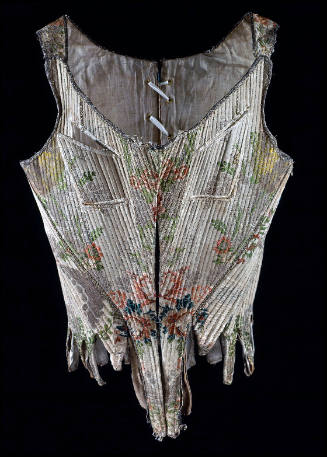
1770-1780