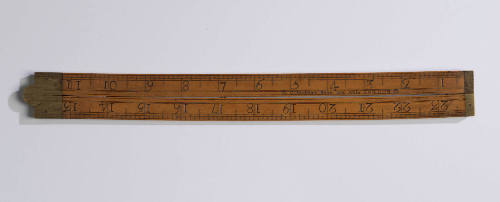
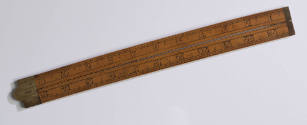
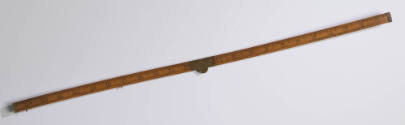
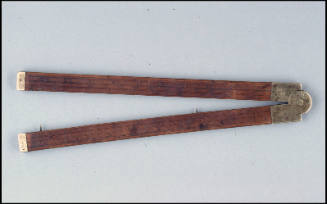
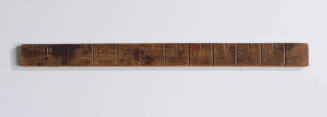
Two Foot Folding Rule
Dateca. 1773
Maker
Christopher Stedman
OriginEngland, London
MediumBoxwood and brass
DimensionsOverall (Closed): 12 3/16 × 1 5/16 × 3/16 in (31 × 3.3 × 0.5cm)
Overall (Open): 23 7/8 × 7/8 × 3/16 in (60.6 × 2.3 × 0.5cm)
Overall (Open): 23 7/8 × 7/8 × 3/16 in (60.6 × 2.3 × 0.5cm)
Credit LineMuseum Purchase
Object number1957-123,18
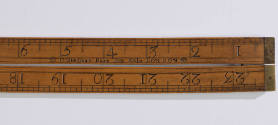
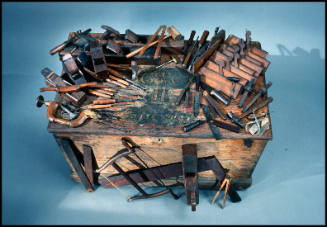
DescriptionFolding rule with a sheet brass hinge and sheet brass protected ends to the equal foot-long legs. Held closed by a pair of brass pins. Numbered and graduated on both sides, down to the 1/8 inch.Label TextRules like this pristine example were amongst the most common tools used by the early woodworker. By the late 17th c., folding boxwood and brass rules had become the standard, and were still being produced in huge numbers until the middle of the 20th century. This signed rule survives as part of a chest of tools purchased early in 1773 from the London shop of Thomas Hewett, an Ironmonger and Brazier.Mark(s)Stamped "C. Stedman Best Box Rule LONDON" flanked by a rose on either end.ProvenancePart of the original contents of tool chest 1957-123,1-24, purchased by an unknown party on February 13, 1773 from William Hewlett, a London Ironmonger and Brazier. According to the original bill of sale, this rule cost one shilling.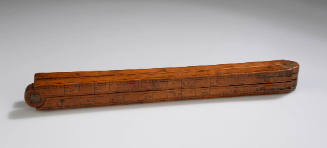
1700-1800
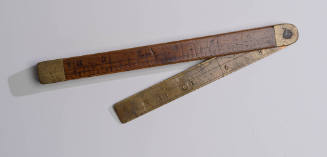
1678 (dated)
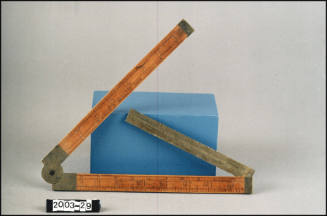
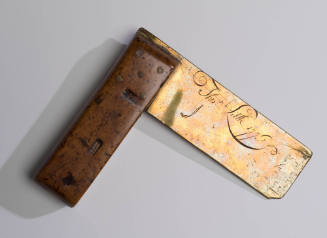
ca. 1776
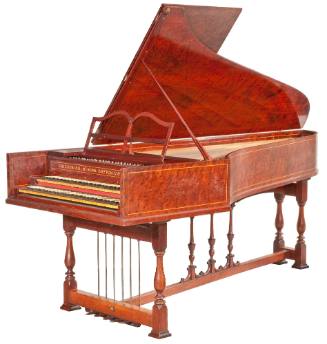
ca. 1796
1800-1850
1750-1820