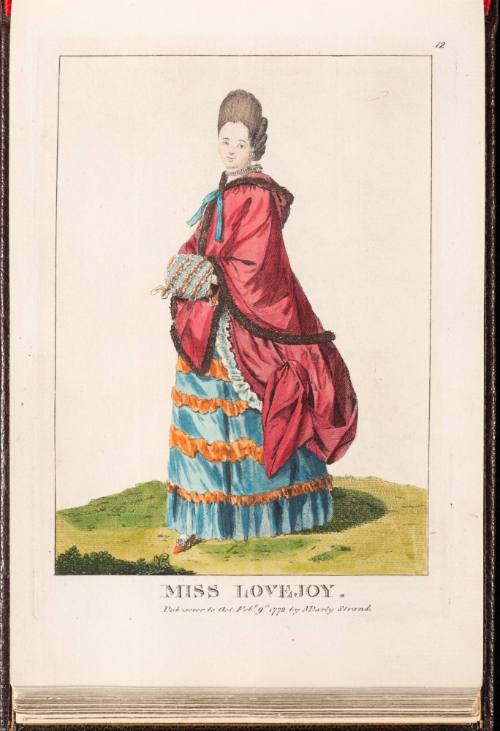
Miss Lovejoy
Date1772
Maker
M. Darly
Publisher
Mary Darly
1760 - 1781
Publisher
Matthew Darly
ca. 1720 - 1780
OriginEngland, London
MediumHand-colored etching
DimensionsOverall: 8 11/16 × 5 5/8in. (22.1 × 14.3cm)
Other (Plate): 7 × 5in. (17.8 × 12.7cm)
Other (Plate): 7 × 5in. (17.8 × 12.7cm)
Credit LineMuseum Purchase
Object number1955-62,38
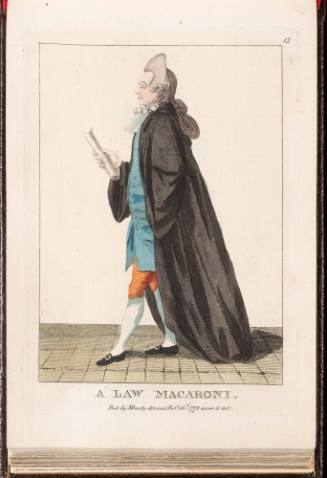
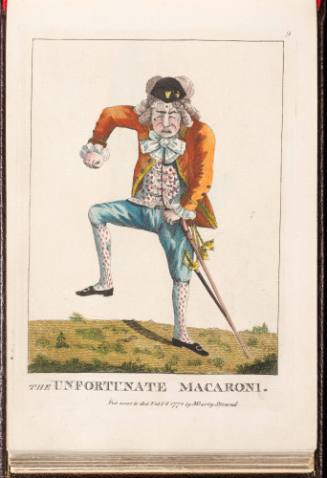
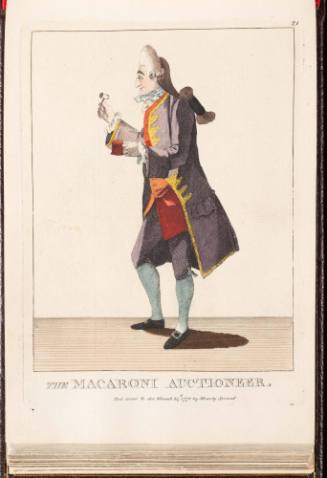
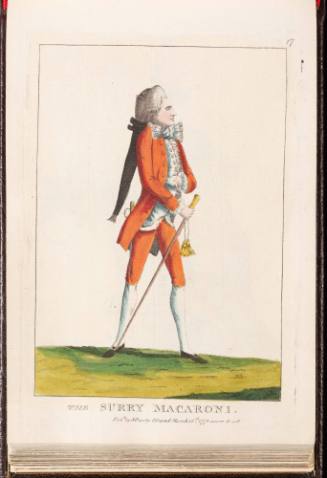
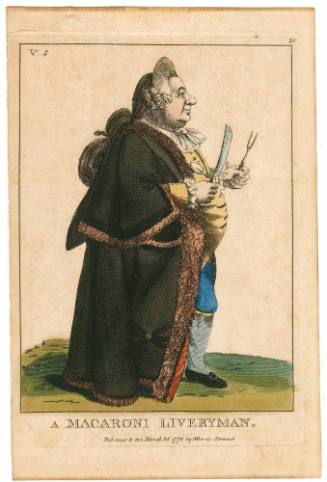
DescriptionUpper right corner reads: "12"Lower margin reads: "MISS LOVEJOY. / Pub accor to Act Feb.y 9.th 1772 by MDarly Strand."Label TextThe print is plate 12 from volume II of six volumes of Mary and Matthew Darly's "24 Caricatures by Several Ladies Gentleman Artists &c." The title "Miss Lovejoy" is thought to refer to a bagnio or brothel in the Piazza, Covent Garden known as Lovejoy's that was well-known at the time.
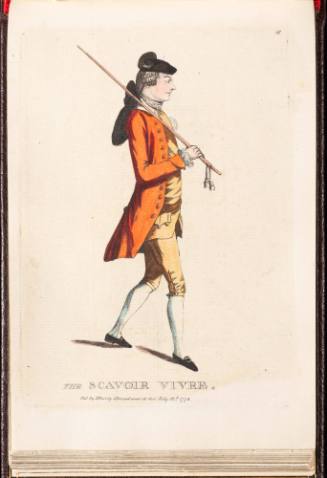
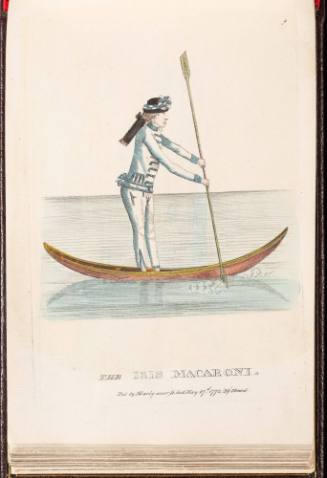
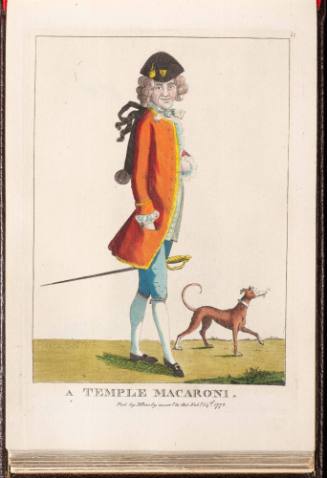
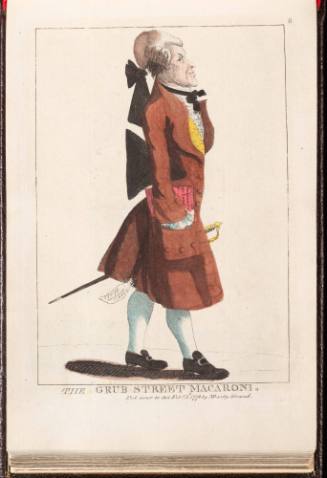
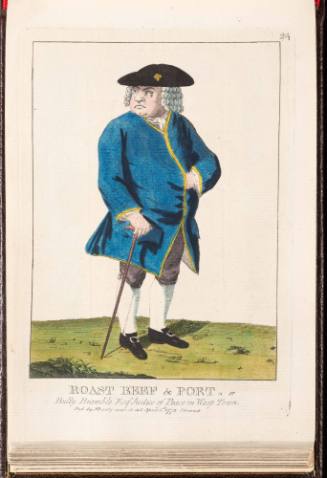
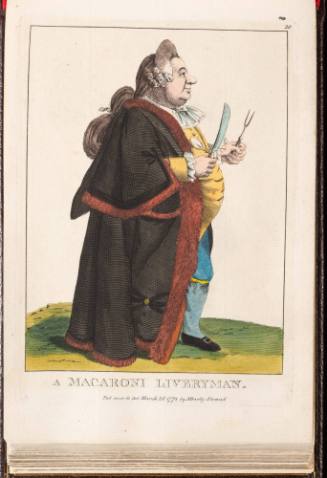
The Darly's were a husband-and-wife team capitalized on the craze for caricatures, the practice of making a likeness with exaggerated mannerisms or features to create a comic effect, a form that was brought back by aristocratic Britons who visited Italy on the Grand Tour. The Darly’s catered to this audience by publishing a prolific assortment of caricature prints during the 1770s. Many of the Darly's satirized the manners and fashions of the macaroni, a term used to describe a sub-culture of fashionably dressed men during the period, and subsequently, regardless of subject, the Darly's prints were known as "macaroni prints."
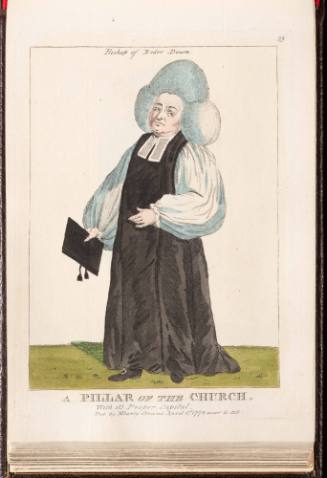
Their most famous work was their encyclopedic "Caricatures" which included prints of macaroni’s as well as other interesting characters, such as macaronis, all based on their own drawings and those submitted to them by amateur artists lambasting their friends, artists, and other figures in London life. The front page of Volume I describes them as “…a Series of Drol[l] Prints consisting of Heads, Figures, Conversations and Satires upon the follies of the Age…” These prints were published in groups of 24, in six volumes that were published between 1771 and 1773. Colonial Williamsburg owns volumes 1-4.ProvenanceBefore 1955, the Old Print Shop (New York, NY); 1955-present, purchased by the Colonial Williamsburg Foundation (Williamsburg, VA).